rhode Peptide Lip Treatment Versus LUSH Lip Balm
This anti-aging lip moisturizer is formulated around Butyrospermum Parkii Butter and Palmitoyl Tripeptide-1 to soften the look of wrinkles and hydrate lips.
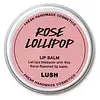
This barrier-repair lip moisturizer is formulated around Butyrospermum Parkii Butter and Ricinus Communis Seed Oil to strengthen the lip barrier and hydrate lips.


What's inside
What's inside
 Key Ingredients
No key ingredients
Benefits
Concerns
Ingredients Side-by-side
Hydrogenated Polyisobutene
EmollientDiisostearyl Malate
EmollientButyrospermum Parkii Butter
Skin Conditioning






Polybutene
Microcrystalline Wax
Emulsion StabilisingSynthetic Beeswax
Emulsion Stabilising
Synthetic Wax
Abrasive
Octyldodecanol
Emollient
Hydrogenated Poly(C6-14 Olefin)
EmollientPolyglyceryl-2 Triisostearate
Emulsifying
Dimer Dilinoleyl Dimer Dilinoleate
EmollientGlyceryl Behenate/Eicosadioate
Emollient
Triethyl Citrate
Masking

Tocopherol
Antioxidant





Tocopheryl Acetate
Antioxidant
Tetrahexyldecyl Ascorbate
Antioxidant



Palmitoyl Tripeptide-1
Skin Conditioning
Orbignya Oleifera Seed Oil
Emollient
Theobroma Grandiflorum Seed Butter
Skin Conditioning
Lactic Acid
Buffering


Tribehenin
Emollient
Stevioside
MaskingEthylhexyl Palmitate
Emollient
Sorbitan Isostearate
Emulsifying
Synthetic Fluorphlogopite
Disteardimonium Hectorite
StabilisingO-Cymen-5-Ol
Antimicrobial
Hydrogenated Polyisobutene, Diisostearyl Malate, Butyrospermum Parkii Butter, Polybutene, Microcrystalline Wax, Synthetic Beeswax, Synthetic Wax, Octyldodecanol, Hydrogenated Poly(C6-14 Olefin), Polyglyceryl-2 Triisostearate, Dimer Dilinoleyl Dimer Dilinoleate, Glyceryl Behenate/Eicosadioate, Triethyl Citrate, Tocopherol, Tocopheryl Acetate, Tetrahexyldecyl Ascorbate, Palmitoyl Tripeptide-1, Orbignya Oleifera Seed Oil, Theobroma Grandiflorum Seed Butter, Lactic Acid, Tribehenin, Stevioside, Ethylhexyl Palmitate, Sorbitan Isostearate, Synthetic Fluorphlogopite, Disteardimonium Hectorite, O-Cymen-5-Ol
Theobroma Grandiflorum Seed Butter
Skin Conditioning
Butyrospermum Parkii Butter
Skin Conditioning
Ricinus Communis Seed Oil
Masking
Citrus Limon Peel
MaskingCitrus Aurantium Dulcis Peel Cera
EmollientPrunus Amygdalus Dulcis Oil
Skin Conditioning
Cocos Nucifera Oil
Masking
Euphorbia Cerifera Cera
Astringent
Carthamus Tinctorius Seed Oil
Masking
Copernicia Cerifera Wax
Rosa Damascena Flower Oil
Masking

Citrus Aurantium Sinensis Fiber
Emulsion StabilisingRosa Damascena Flower Water
Masking
Cinnamal
Perfuming
Citral
Perfuming
Citronellol
Perfuming
Geraniol
Perfuming
Limonene
Perfuming
Linalool
Perfuming
Aroma
Theobroma Grandiflorum Seed Butter, Butyrospermum Parkii Butter, Ricinus Communis Seed Oil, Citrus Limon Peel, Citrus Aurantium Dulcis Peel Cera, Prunus Amygdalus Dulcis Oil, Cocos Nucifera Oil, Euphorbia Cerifera Cera, Carthamus Tinctorius Seed Oil, Copernicia Cerifera Wax, Rosa Damascena Flower Oil, Citrus Aurantium Sinensis Fiber, Rosa Damascena Flower Water, Cinnamal, Citral, Citronellol, Geraniol, Limonene, Linalool, Aroma
Reviews
Ingredients Explained
These ingredients are found in both products.
Ingredients higher up in an ingredient list are typically present in a larger amount.
This ingredient is also known as shea butter. It is a plant-derived extract from the nuts of the Africa shea tree and one of the most well-studied emollients.
Because it has a high concentration of fatty acids (primarily oleic, stearic, and linoleic) it is able to form a protective barrier on the skin's surface. This helps seal in moisture and prevents transepidermal water loss (TEWL).
In vitro research found an increase in skin hydration by 58% and a decrease in TEWL by 37.8% after 24 hours of applying this ingredient (pretty impressive for a single ingredient!).
Besides hydration, shea butter also contains triterpenes that have anti-inflammatory potential. In particule, lupeol cinnamate has shown the highest anti-inflammatory activity in vivo.
Shea butter also contains vitamins A and E which may contribute to antioxidant activity.
While Shea Butter has an SPF rating of about 3-4, it is not a sunscreen replacement.
This ingredient may not be fungal acne safe because its fatty acids fall within the C11-C24 range that the Malassezia yeast can metabolize.
This ingredient shows up on a lot of "pore-clogging" lists but there's no real evidence behind that. It doesn't even have a comedogenic rating from an actual study; the numbers you'll find online come from blogs citing other blogs.
Ratings for other ingredients mostly come from a 1980s rabbit ear test. This test doesn't translate well to human skin or to real products because the ingredient sits at a much lower percentage.
Some people still find it breaks them out. So if that's you, definitely trust your skin. Just know this one's based on experience and not evidence.
Learn more about Butyrospermum Parkii ButterThis ingredient is also known as cupuacu butter. It's a soft, creamy plant fat that works as a skin-conditioning agent and often marketed as the plant-based alternative to lanolin.
The composition of this butter is dominated by oleic acid, stearic acid, and smaller amounts of palmitic, linoleic, and arachidic acids. There's also a useful dose of phystosterols.
That fatty-acid-and-sterol combo is why this ingredient behaves like a richer cousin of shea butter: the lipids reinforce the skin's surface and slow water loss while the sterols help support the barrier.
There's some early research too: a mouse study found cupuacu butter emulgels had antioxidant activity and a measurable photoprotective effect against UVB damage.
Overall, this is a well-tolerated ingredient but those prone to congestion might prefer formulations with lower concentrations.
Fungal acne: Cupuacu butter's fatty acids are mostly "locked up" in triglycerides that Malassezia can't easily feed on, but the yeast can slowly break these down to access the free fatty acids. Therefore, ingredient may not be fungal acne safe.
Learn more about Theobroma Grandiflorum Seed Butter

