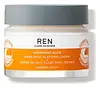
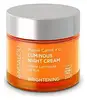
REN Clean Skincare Overnight Glow Dark Spot Sleeping Cream Versus Andalou Naturals Purple Carrot and Vitamin C Luminous Night Cream
This brightening night moisturizer is formulated around Aloe Barbadensis Leaf Juice and Daucus Carota Sativa Root Extract to brighten dull-looking skin and hydrate skin.


What's inside
What's inside
 Key Ingredients
No key ingredients
Benefits
Concerns
Ingredients Side-by-side
Water
Skin ConditioningCoco-Caprylate/Caprate
Emollient
Cetyl Alcohol
Emollient


Cetearyl Alcohol
Emollient


Cetyl Phosphate
EmulsifyingGlycerin
Humectant


Isodecyl Neopentanoate
EmollientSimmondsia Chinensis Seed Oil
Emollient
Squalane
Emollient
Arginine
Masking
Benzyl Alcohol
Perfuming





Panthenol
Skin Conditioning

Glycogen
HumectantSodium Dehydroacetate
Preservative
Dehydroacetic Acid
Preservative
Parfum
Masking
Sucrose
Humectant
Plankton Extract
Skin ConditioningLecithin
Emollient
Citric Acid
Buffering

Sodium Hydroxide
BufferingCitral
Perfuming
Limonene
Perfuming
Linalool
Perfuming
Water, Coco-Caprylate/Caprate, Cetyl Alcohol, Cetearyl Alcohol, Cetyl Phosphate, Glycerin, Isodecyl Neopentanoate, Simmondsia Chinensis Seed Oil, Squalane, Arginine, Benzyl Alcohol, Panthenol, Glycogen, Sodium Dehydroacetate, Dehydroacetic Acid, Parfum, Sucrose, Plankton Extract, Lecithin, Citric Acid, Sodium Hydroxide, Citral, Limonene, Linalool
Aloe Barbadensis Leaf Juice
Skin Conditioning
Water
Skin ConditioningDicaprylyl Carbonate
EmollientLinum Usitatissimum Seed Oil
Perfuming
Cetyl Alcohol
Emollient
Stearyl Alcohol
Emollient
Ethylhexyl Palmitate
Emollient
Vaccinium Macrocarpon Fruit Juice
Skin ConditioningGlyceryl Stearate
Emollient
Malus Domestica Fruit Cell Culture Extract
Skin ConditioningDaucus Carota Sativa Root Extract
Skin Conditioning
Sodium Hyaluronate
Humectant
Helianthus Annuus Seed Oil
Emollient
Theobroma Cacao Seed Butter
Emollient
Allantoin
Skin Conditioning
Tocopherol
Antioxidant


Magnesium Ascorbyl Phosphate
Antioxidant


Persea Gratissima Oil
Skin Conditioning
Rosa Canina Fruit Oil
Emollient
Oenothera Biennis Oil
Emollient
Squalane
Emollient
Camellia Sinensis Leaf Extract
Antimicrobial
Riboflavin
Cosmetic ColorantPhenethyl Alcohol
MaskingEthylhexylglycerin
Skin ConditioningRubus Idaeus Fruit
AstringentEthyl Vanillate
Perfuming
Citrus Aurantium Dulcis Peel Oil
Masking
Aloe Barbadensis Leaf Juice, Water, Dicaprylyl Carbonate, Linum Usitatissimum Seed Oil, Cetyl Alcohol, Stearyl Alcohol, Ethylhexyl Palmitate, Vaccinium Macrocarpon Fruit Juice, Glyceryl Stearate, Malus Domestica Fruit Cell Culture Extract, Daucus Carota Sativa Root Extract, Sodium Hyaluronate, Helianthus Annuus Seed Oil, Theobroma Cacao Seed Butter, Allantoin, Tocopherol, Magnesium Ascorbyl Phosphate, Persea Gratissima Oil, Rosa Canina Fruit Oil, Oenothera Biennis Oil, Squalane, Camellia Sinensis Leaf Extract, Riboflavin, Phenethyl Alcohol, Ethylhexylglycerin, Rubus Idaeus Fruit, Ethyl Vanillate, Citrus Aurantium Dulcis Peel Oil
Ingredients Explained
These ingredients are found in both products.
Ingredients higher up in an ingredient list are typically present in a larger amount.
Cetyl Alcohol is a fatty alcohol. Fatty Alcohols are most often used as an emollient or to thicken a product.
Its main roles are:
Though it has "alcohol" in the name, it is not related to denatured alcohol or ethyl alcohol.
The FDA allows products labeled "alcohol-free" to have fatty alcohols.
This ingredient may not be fungal acne safe. It is a primary fatty alcohol with a chain length above 12 carbons. A study from 2019 show Malassezia can feed on fatty alcohols in this range, so it may trigger fungal acne in those prone to it.
Learn more about Cetyl AlcoholSqualane is the hydrogenated and shelf-stable form of squalene (a lipid that naturally occurs in human sebum).
It is an emollient and skin conditioning agent that is able to integrate seamlessly into the skin's lipid barrier without clogging pores.
This is due to how structurally similar it is to what your skin already produces.
Though it is mostly an emollient that helps soften and hydrate skin, it also has some humectant and occlusive action. Humectants help the skin retain moisture while occlusives seal it in, making squalane a triple-threat moisturizer.
Research shows it has antioxidant capabilities that help protect against stressors like UV exposure, specifically UVA induced oxidative stress. This study also found that it supports collagen biosynthesis in human dermal fibroblasts.
No clinical study has reported significant adverse effects and irritation reactions are very rare from this ingredient (even at 100% concentration).
Overall, it's a fantastic ingredient for hydration and is suitable for all skin types.
This depends on the source. Squalane can be derived from both plants and animals. Most squalane used in skincare comes from plants.
Please note: the source of squalane is only known if disclosed by the brand. We recommend reaching out to the brand if you have any questions about their squalane.
Read more about squalene with an "e".
Though squalane is often called an oil, it’s technically not one. It is a hydrocarbon, meaning it is only made of carbon and hydrogen. True oils are triglycerides and made of fatty acids and glycerol.
The term “oil-free” isn’t regulated so companies can define it however they want. Some exclude all oils, while others just avoid mineral oil or comedogenic oils.
Squalane has a comedogenic rating of 1 from the original 1972 study that tested raw ingredients under occlusion on rabbit ears. This system is not standardized or peer-reviewed, and using the raw ingredients is very different from how diluted cosmetic formulations are used on human skin.
A comedogenic rating of 1 means it is "unlikely to clog pores" according to the original rating system.
The overall formula of a product matters more than the individual ingredients on whether or not it will cause clogged pores.
Learn more about SqualaneWater. It's the most common cosmetic ingredient of all. You'll usually see it at the top of ingredient lists, meaning that it makes up the largest part of the product.
So why is it so popular? Water most often acts as a solvent - this means that it helps dissolve other ingredients into the formulation.
You'll also recognize water as that liquid we all need to stay alive. If you see this, drink a glass of water. Remember to stay hydrated!
Learn more about Water

