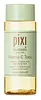
This brightening toner is formulated around Ascorbic Acid and Camellia Sinensis Leaf Extract to brighten dull-looking skin and soften the look of wrinkles.

What's inside
What's inside
 Key Ingredients
Benefits
Concerns
Ingredients Side-by-side
Water
Skin ConditioningCitrus Grandis
Propanediol
Solvent

Glycerin
Humectant
Aloe Barbadensis Leaf Juice
Skin Conditioning

Ascorbic Acid
Antioxidant





Citrus Limon Peel Extract
EmollientCitrus Grandis Fruit Extract
Astringent
Citrus Nobilis Fruit Extract
MaskingCitrus Aurantium Dulcis Peel Extract
Emulsion Stabilising
Camellia Sinensis Leaf Extract
Antimicrobial

Daucus Carota Sativa Root Extract
Skin Conditioning
Beta-Carotene
Skin ConditioningFerulic Acid
Antimicrobial
Tocopherol
Antioxidant
Calophyllum Inophyllum Seed Oil
Antimicrobial


Mentha Piperita Extract
CleansingMicrocitrus Australis Fruit Extract
Skin ConditioningMicrocitrus Australasica Fruit Extract
Citrus Glauca Fruit Extract
HumectantCaffeine
Skin Conditioning
Sodium Hyaluronate
Humectant
Leuconostoc/Radish Root Ferment Filtrate
Antimicrobial
Melaleuca Alternifolia Flower/Leaf/Stem Extract
Skin ConditioningCitrus Junos Peel Extract
Skin ConditioningCaprylic/Capric Triglyceride
Masking
Glycine Soja Oil
Emollient


Phospholipids
Skin Conditioning
PEG-40 Hydrogenated Castor Oil
Emulsifying
Sodium Benzoate
Masking
Potassium Sorbate
Preservative
Citric Acid
Buffering
Disodium EDTA
ChelatingPhenoxyethanol
Preservative
Ethylhexylglycerin
Skin ConditioningSodium Citrate
BufferingSodium Hydroxide
BufferingWater, Citrus Grandis, Propanediol, Glycerin, Aloe Barbadensis Leaf Juice, Ascorbic Acid, Citrus Limon Peel Extract, Citrus Grandis Fruit Extract, Citrus Nobilis Fruit Extract, Citrus Aurantium Dulcis Peel Extract, Camellia Sinensis Leaf Extract, Daucus Carota Sativa Root Extract, Beta-Carotene, Ferulic Acid, Tocopherol, Calophyllum Inophyllum Seed Oil, Mentha Piperita Extract, Microcitrus Australis Fruit Extract, Microcitrus Australasica Fruit Extract, Citrus Glauca Fruit Extract, Caffeine, Sodium Hyaluronate, Leuconostoc/Radish Root Ferment Filtrate, Melaleuca Alternifolia Flower/Leaf/Stem Extract, Citrus Junos Peel Extract, Caprylic/Capric Triglyceride, Glycine Soja Oil, Phospholipids, PEG-40 Hydrogenated Castor Oil, Sodium Benzoate, Potassium Sorbate, Citric Acid, Disodium EDTA, Phenoxyethanol, Ethylhexylglycerin, Sodium Citrate, Sodium Hydroxide
Polybutene
Diisostearyl Malate
EmollientHydrogenated Polyisobutene
EmollientPolyethylene
Abrasive
Vp/Hexadecene Copolymer
Cera Microcristallina
Emulsion StabilisingMica
Cosmetic ColorantEthyl Vanillin
MaskingPentaerythrityl Tetra-Di-T-Butyl Hydroxyhydrocinnamate
Antioxidant
Phospholipids
Skin Conditioning
Limonene
Perfuming

Aroma

Hyaluronic Acid
Humectant
Saccharomyces Cerevisiae Extract
Skin Conditioning
Sodium Chondroitin Sulfate
Skin ConditioningTocopherol
Antioxidant
Citral
Perfuming
Diamond Powder
Abrasive
Dicalcium Phosphate
Abrasive
Tripeptide-29
Skin Conditioning
Tin Oxide
Abrasive
CI 77891
Cosmetic ColorantIron Oxides
CI 15850
Cosmetic ColorantCI 19140
Cosmetic ColorantCI 15985
Cosmetic ColorantCI 42090
Cosmetic ColorantPolybutene, Diisostearyl Malate, Hydrogenated Polyisobutene, Polyethylene, Vp/Hexadecene Copolymer, Cera Microcristallina, Mica, Ethyl Vanillin, Pentaerythrityl Tetra-Di-T-Butyl Hydroxyhydrocinnamate, Phospholipids, Limonene, Aroma, Hyaluronic Acid, Saccharomyces Cerevisiae Extract, Sodium Chondroitin Sulfate, Tocopherol, Citral, Diamond Powder, Dicalcium Phosphate, Tripeptide-29, Tin Oxide, CI 77891, Iron Oxides, CI 15850, CI 19140, CI 15985, CI 42090
Reviews
Ingredients Explained
These ingredients are found in both products.
Ingredients higher up in an ingredient list are typically present in a larger amount.
Phospholipids are a family of skin-identical lipids that makeup the structural backbone of every cell membrane in your body.
In cosmetics, they function as skin conditioning agents with emulsifier and surfactant properties. They're typically sourced from soybean or sunflower lecithin (or sometimes egg yolk or marine sources).
Because they mirror the lipids naturally found in the deeper layers of your skin, topical phospholipids help reinforce the lipid matrix, reduce transepidermal water loss, and leave skin feeling conditioned.
They're also used to form liposomes, or tiny self-assembling vesible used to stabilize actives like vitamin c or retinol. This helps these ingredients integrate into the upper layers of skin more easily.
Phospholipids are compatible with everything and the CIR Expert Panel has concluded them to be safe at current use levels.
Some types of phospholipids include:
Learn more about PhospholipidsTocopherol is a fat-soluble antioxidant known as Vitamin E.
You'll find this ingredient in the vast majority of skincare (for good reason). It works to neutralize free radicals, or unstable molecules generated by UV exposure, pollution, and other environmental stressors, before they can cause oxidative damage to your skin cells.
Topically applied tocopherol has been shown to protect against UV damage by ramping up the skin's own natural defense enzymes.
It also acts as a skin conditioning agent; some studies show that regular topical use can improve the skin's water-binding capacity over 2-4 weeks.
This ingredient is especially loved for being a team player. When combined with Vitamin C, the photoprotective effect of both ingredients roughly doubles and the combo also helps reduce UV-induced DNA damage.
This ingredient has some brightening potential but it's more of a prevention ingredient than spot-fader. Cell studies show it can slow down melanin production but it's worth noting that it's not the most powerful brightener out there.
In formulations, it also serves as a stabilizer that helps protect other oxidation-prone ingredients from degrading.
Concentrations usually range from 0.1-1% in most leave-on products.
Learn more about Tocopherol

