Nivea A Kiss of Recovery Medicated Lip Care SPF 15 Versus Nivea Blackberry Shine Melt-In Moisture Lip Balm
This barrier-repair lip moisturizer is formulated around Dimethicone and Butyrospermum Parkii Butter to strengthen the lip barrier and hydrate lips.
This barrier-repair lip moisturizer is formulated around Butyrospermum Parkii Butter and Ricinus Communis Seed Oil to strengthen the lip barrier and hydrate lips.

What's inside
What's inside
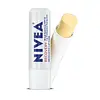 Key Ingredients
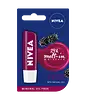
Benefits
Concerns
Ingredients Side-by-side
Dimethicone 1.2%
Emollient

Butyl Methoxydibenzoylmethane 2.5%
UV Absorber
Ethylhexyl Methoxycinnamate 6%
UV Absorber

Octocrylene 1.8%
UV Absorber
Octyldodecanol
Emollient
Ricinus Communis Seed Oil
Masking




Hydrogenated Rapeseed Oil
Emollient
Beeswax
Emulsion Stabilising

Cetyl Palmitate
Emollient
Butyrospermum Parkii Butter
Skin Conditioning
Polyglyceryl-3 Diisostearate
Emulsifying
Cetearyl Alcohol
Emollient
Bis-Diglyceryl Polyacyladipate-2
Emollient
Glycerin
Humectant
Menthol
Masking

Simmondsia Chinensis Seed Oil
Emollient
Persea Gratissima Oil
Skin Conditioning
Tocopheryl Acetate
Antioxidant


Panthenol
Skin Conditioning

Water
Skin ConditioningParfum
Masking
BHT
Antioxidant
Iron Oxides
Dimethicone 1.2%, Butyl Methoxydibenzoylmethane 2.5%, Ethylhexyl Methoxycinnamate 6%, Octocrylene 1.8%, Octyldodecanol, Ricinus Communis Seed Oil, Hydrogenated Rapeseed Oil, Beeswax, Cetyl Palmitate, Butyrospermum Parkii Butter, Polyglyceryl-3 Diisostearate, Cetearyl Alcohol, Bis-Diglyceryl Polyacyladipate-2, Glycerin, Menthol, Simmondsia Chinensis Seed Oil, Persea Gratissima Oil, Tocopheryl Acetate, Panthenol, Water, Parfum, BHT, Iron Oxides
Rubus Fruticosus Juice
AstringentCI 42090
Cosmetic ColorantCI 77491
Cosmetic ColorantCI 15850
Cosmetic ColorantCI 77891
Cosmetic ColorantAroma
Linalool
Perfuming
Benzyl Alcohol
Perfuming

BHT
Antioxidant
Silica
Abrasive


Mica
Cosmetic ColorantWater
Skin ConditioningGlycerin
Humectant
Polyglyceryl-3 Diisostearate
Emulsifying
Synthetic Wax
Abrasive
Isopropyl Palmitate
Emollient
Cera Microcristallina
Emulsion StabilisingButyrospermum Parkii Butter
Skin Conditioning
Candelilla Cera
Emollient
Hydrogenated Polydecene
EmollientPentaerythrityl Tetraisostearate
Emollient
Octyldodecanol
Emollient
Polyisobutene
Ricinus Communis Seed Oil
Masking
Rubus Fruticosus Juice, CI 42090, CI 77491, CI 15850, CI 77891, Aroma, Linalool, Benzyl Alcohol, BHT, Silica, Mica, Water, Glycerin, Polyglyceryl-3 Diisostearate, Synthetic Wax, Isopropyl Palmitate, Cera Microcristallina, Butyrospermum Parkii Butter, Candelilla Cera, Hydrogenated Polydecene, Pentaerythrityl Tetraisostearate, Octyldodecanol, Polyisobutene, Ricinus Communis Seed Oil
Reviews
Ingredients Explained
These ingredients are found in both products.
Ingredients higher up in an ingredient list are typically present in a larger amount.
BHT is a synthetic antioxidant and preservative.
As an antioxidant, it helps your body fight off free-radicals. Free-radicals are molecules that may damage your skin cells.
As a preservative, it is used to stabilize products and prevent them from degrading. Specifically, BHT prevents degradation from oxidation.
The concerns related to BHT come from oral studies; this ingredient is currently allowed for use by both the FDA and EU.
However, it was recently restricted for use in the UK as of April 2024.
Learn more about BHTThis ingredient is also known as shea butter. It is a plant-derived extract from the nuts of the Africa shea tree and one of the most well-studied emollients.
Because it has a high concentration of fatty acids (primarily oleic, stearic, and linoleic) it is able to form a protective barrier on the skin's surface. This helps seal in moisture and prevents transepidermal water loss (TEWL).
In vitro research found an increase in skin hydration by 58% and a decrease in TEWL by 37.8% after 24 hours of applying this ingredient (pretty impressive for a single ingredient!).
Besides hydration, shea butter also contains triterpenes that have anti-inflammatory potential. In particule, lupeol cinnamate has shown the highest anti-inflammatory activity in vivo.
Shea butter also contains vitamins A and E which may contribute to antioxidant activity.
While Shea Butter has an SPF rating of about 3-4, it is not a sunscreen replacement.
This ingredient may not be fungal acne safe because its fatty acids fall within the C11-C24 range that the Malassezia yeast can metabolize.
This ingredient shows up on a lot of "pore-clogging" lists but there's no real evidence behind that. It doesn't even have a comedogenic rating from an actual study; the numbers you'll find online come from blogs citing other blogs.
Ratings for other ingredients mostly come from a 1980s rabbit ear test. This test doesn't translate well to human skin or to real products because the ingredient sits at a much lower percentage.
Some people still find it breaks them out. So if that's you, definitely trust your skin. Just know this one's based on experience and not evidence.
Learn more about Butyrospermum Parkii ButterGlycerin (or glycerol) is a compound naturally found in your skin. It's a powerhouse humectant that pulls water into the stratum corneum.
Topically, glycerin does several things at once:
Your skin makes glycerin on its own (mostly from sebaceous oil breakdown) and shuttles it to your outermost layer of skin, or your epidermis, via aquaporin-3.
Aquaporin-3 is a transporter that is essential for normal skin hydration, elasticity, and repair. Interestingly, mice lacking in AQP3 have dry and less elastic skin that can be fully corrected with glycerin.
This ingredient is non-irritating, plays well with almost every ingredient, and works across all skin types. Typical use is anywhere between 3-10% but can go up to 79% in some leave-on products.
Just know very high concentrations (>40%) can feel tacky in low humidity.
Glycerin is the name for this ingredient in American English. British English uses Glycerol/Glycerine.
Learn more about GlycerinOctyldodecanol is a fatty alcohol sourced from plant oils like coconut or palm (or made synthetically).
It is:
You'll likely see this in many BHA products because this is the go-to solvent for salicylic acid.
This ingredient is typically used at levels between 2-20%.
Regarding fungal acne:
In 2019, this ingredient was tested against multiple Malassezia species (the yeast that causes fungal acne) and showed no growth.
Polyglyceryl-3 Diisostearate is a plant-derived, oil-soluble emulsifier. It keeps water-in-oil emulsions stable to prevent the ingredients from separating.
On the safety front, it's considered non-irritating and well-tolerated (it can even be found in formulations for baby skin).
This ingredient may not be fungal acne safe because research has shown that the Malassezia species can grow in the presence of fatty acid esters with chain lengths above C12 (and this one is C18).
While it does have a comedogenic rating of 4, the comedogenic rating scale was developed from rabbit ear models which has limited clinical relevance to human skin. Studies also show that comedogenic ingredients cannot predict how the overall formula will behave on human skin.
Learn more about Polyglyceryl-3 DiisostearateThis ingredient is also known as castor oil. It is a skin conditioning ingredient.
The star component of castor oil is ricinoleic acid, an unusual fatty acid that makes up ~80-92% of its composition.
In skincare, it is an emollient that dries down to a solid film with water-binding properties. This helps keep skin hydrated and helps reduce transepidermal water loss (TEWL).
A 2026 dermatology review pulls together its broader uses:
Human clinical testing found this ingredient to be non-irritating and non-sensitizing.
Because castor oil contains fatty acids in the C11-24 range, this ingredient may not be fungal acne safe.
At this time, the literature does not support castor oil in regrowing hair. A 2022 systematic review found no strong evidence that it supports hair growth and only weak evidence that it improves hair shine.
Castor oil itself carries "perfuming" and "masking" function tags according to the official CosIng database. This is because of its mild odor and odor-dampening properties.
Learn more about Ricinus Communis Seed OilWater. It's the most common cosmetic ingredient of all. You'll usually see it at the top of ingredient lists, meaning that it makes up the largest part of the product.
So why is it so popular? Water most often acts as a solvent - this means that it helps dissolve other ingredients into the formulation.
You'll also recognize water as that liquid we all need to stay alive. If you see this, drink a glass of water. Remember to stay hydrated!
Learn more about Water

