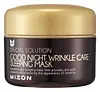
This anti-aging overnight mask is formulated around Butyrospermum Parkii Butter and Panthenol to soften the look of wrinkles and hydrate skin.
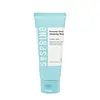
This hydrating overnight mask is formulated around Sodium Hyaluronate and Squalane to hydrate skin.

What's inside
What's inside
 Key Ingredients
Benefits
Concerns
Ingredients Side-by-side
Water
Skin ConditioningGlycerin
Humectant


Hydrogenated Polydecene
EmollientOctyldodecanol
Emollient
Neopentyl Glycol Diheptanoate
EmollientOlea Europaea Fruit Oil
Masking





Propanediol
Solvent
Cetearyl Alcohol
Emollient

Butyrospermum Parkii Butter
Skin Conditioning
1,2-Hexanediol
Skin Conditioning
Panthenol
Skin Conditioning

Cetearyl Olivate
Palmitic Acid
Emollient
Glyceryl Stearate
Emollient
Ammonium Acryloyldimethyltaurate/Vp Copolymer
Stearic Acid
Cleansing
Sorbitan Olivate
Emulsifying
Carbomer
Emulsion StabilisingTromethamine
BufferingButylene Glycol
Humectant
Xanthan Gum
EmulsifyingCamellia Japonica Flower Extract
EmollientEthylhexylglycerin
Skin ConditioningAdenosine
Skin Conditioning
Disodium EDTA
ChelatingNelumbo Nucifera Flower Extract
Skin ConditioningCoptis Japonica Root Extract
Skin ConditioningCentella Asiatica Extract
Cleansing
Propolis Extract
Skin Conditioning

Hydrolyzed Collagen
Emollient
Parfum
Masking

Water, Glycerin, Hydrogenated Polydecene, Octyldodecanol, Neopentyl Glycol Diheptanoate, Olea Europaea Fruit Oil, Propanediol, Cetearyl Alcohol, Butyrospermum Parkii Butter, 1,2-Hexanediol, Panthenol, Cetearyl Olivate, Palmitic Acid, Glyceryl Stearate, Ammonium Acryloyldimethyltaurate/Vp Copolymer, Stearic Acid, Sorbitan Olivate, Carbomer, Tromethamine, Butylene Glycol, Xanthan Gum, Camellia Japonica Flower Extract, Ethylhexylglycerin, Adenosine, Disodium EDTA, Nelumbo Nucifera Flower Extract, Coptis Japonica Root Extract, Centella Asiatica Extract, Propolis Extract, Hydrolyzed Collagen, Parfum
Water
Skin ConditioningDipropylene Glycol
HumectantGlycerin
Humectant
Glycereth-26
Humectant
Camellia Japonica Flower Extract
EmollientPaeonia Albiflora Flower Extract
TonicNelumbo Nucifera Flower Extract
Skin ConditioningNelumbo Nucifera Leaf Extract
Skin ConditioningNelumbo Nucifera Root Extract
Skin ConditioningNelumbo Nucifera Seed Extract
Antimicrobial
Sodium Hyaluronate
Humectant
Butylene Glycol
Humectant
1,2-Hexanediol
Skin Conditioning
Dipentaerythrityl Pentaisononanoate
EmollientDimethicone
Emollient
Carbomer
Emulsion StabilisingDimethicone/Vinyl Dimethicone Crosspolymer
Skin Conditioning
C12-14 Pareth-12
EmulsifyingHydroxyethyl Acrylate/Sodium Acryloyldimethyl Taurate Copolymer
Emulsion StabilisingSqualane
Emollient
Polysorbate 60
Emulsifying
Sorbitan Isostearate
Emulsifying
Tromethamine
BufferingAmmonium Acryloyldimethyltaurate/Vp Copolymer
Trehalose
Humectant
Tocopheryl Acetate
Antioxidant

Ethylhexylglycerin
Skin ConditioningDisodium EDTA
ChelatingPhenoxyethanol
Preservative
Water, Dipropylene Glycol, Glycerin, Glycereth-26, Camellia Japonica Flower Extract, Paeonia Albiflora Flower Extract, Nelumbo Nucifera Flower Extract, Nelumbo Nucifera Leaf Extract, Nelumbo Nucifera Root Extract, Nelumbo Nucifera Seed Extract, Sodium Hyaluronate, Butylene Glycol, 1,2-Hexanediol, Dipentaerythrityl Pentaisononanoate, Dimethicone, Carbomer, Dimethicone/Vinyl Dimethicone Crosspolymer, C12-14 Pareth-12, Hydroxyethyl Acrylate/Sodium Acryloyldimethyl Taurate Copolymer, Squalane, Polysorbate 60, Sorbitan Isostearate, Tromethamine, Ammonium Acryloyldimethyltaurate/Vp Copolymer, Trehalose, Tocopheryl Acetate, Ethylhexylglycerin, Disodium EDTA, Phenoxyethanol
Ingredients Explained
These ingredients are found in both products.
Ingredients higher up in an ingredient list are typically present in a larger amount.
1,2-Hexanediol is a synthetic liquid and another multi-functional powerhouse.
It is a:
- Humectant, drawing moisture into the skin
- Emollient, helping to soften skin
- Solvent, dispersing and stabilizing formulas
- Preservative booster, enhancing the antimicrobial activity of other preservatives
Ammonium Acryloyldimethyltaurate/Vp Copolymer is a synthetically created polymer. It's used as a film-forming agent and used to thicken the consistency of products.
Think of it as a supportive ingredient that helps your gel-creams feel silky, "cloud cream-like", and spread evenly without being greasy.
The Cosmetic Ingredient Review (CIR) Expert Panel evaluated it (along with 22 other acryloyldimethyltaurate polymers) and concluded it's:
Due to its large molecular size, it sits on the surface of skin rather than penetrating it.
Learn more about Ammonium Acryloyldimethyltaurate/Vp CopolymerButylene Glycol (or BG) is used within cosmetic products for a few different reasons:
Overall, Butylene Glycol is a safe and well-rounded ingredient that works well with other ingredients.
Though this ingredient works well with most skin types, some people with sensitive skin may experience a reaction such as allergic rashes, closed comedones, or itchiness.
Learn more about Butylene GlycolCamellia Japonica Flower Extract comes from the Japanese Camellia plant (a cousin of the green tea plant). This plant is native to East Asia and known as "Tsubaki" in Japanese.
It's a flower extract packed with flavonoids and phenolic acids that give it most of its skincare value. In lab tests on human skin cells, the ethanol extract of the flower mopped up free radicals and boosted the skin's own antioxidant enzymes.
A separate study found the flower extract had solid antioxidant activity and reduced the reactive oxygen species that urban air pollution triggers in skin cells.
Newer work also points at anti-aging and calming effects:
One 2025 paper tied the extract and its component hyperoside to collagen III and elastin production plus better skin-barrier protein expression. A mouse study on eczema-like skin found four weeks of topical camellia extract reduced inflammation and itch-related markers.
Just know that most of these studies are cell-culture and animal work and not human trials. For now, it's best to treat it as a nice supporting antioxidant rather than a headline active.
At this time, there's no published regulatory use-level for this specific ingredient; suppliers usually sell it as a water/glycerin-based extract used in the low single-digit percent range.
There's no published contact-allergy case reports for this ingredient but as with any botanical, a patch test is sensible if you react to plant extracts generally.
Learn more about Camellia Japonica Flower ExtractCarbomer is a synthetic thickening and gelling agent. It's basically the ingredient that gives a lot of serums, gels, creams, and sunscreens their smooth, non-sticky texture.
Although legally permitted at very high levels, carbomers are normally used at concentrations below 1%.
It also needs to be neutralized to actually thicken, and because it is a large molecule, it doesn't really penetrate the skin barrier.
Allergy-wise, the risk is very low. Clinical studies show carbomers have low potential for skin irritation/sensitization even at concentrations up to 100%.
A 2024 UK study patch-tested 1,302 patients and found true allergy to the parent group of carbomer to be rare with no confirmed relevant reactions.
Learn more about CarbomerDisodium EDTA is a chelating agent. It grabs onto and deactivates metal ions that sneak into your products from water, packaging, or air.
This ingredient mainly works behind the scenes and helps with:
On top of that, this ingredient can counteract the effects of hard water by binding to the minerals in it.
One thing worth knowing is that Disodium EDTA has been shown to be a mild penetration enhancer. It can help other ingredients absorb into skin more effectively which can be a double-edged sword (great for actives, but can also make the active too strong if you have sensitive skin).
Clinical patch testing showed no significant skin irritation at typical use concentrations and minimal dermal absorption.
You'll most likely see this ingredient near the end of an ingredient list. It's typically found in concentrations less than 1%.
Learn more about Disodium EDTAEthylhexylglycerin is created from glycerin. It is a multitasker ingredient that:
The CIR Expert Panel found minimal skin absorption or sensitization of any kind in a safety assessment. Though this ingredient is considered well-tolerated, a small number of cases of allergic dermatitis have been published since 2002. Just be sure to patch test if you are unsure.
Industry-reported use ranges from 8% in rinse-off products and 2% in leave-on formulations.
Learn more about EthylhexylglycerinGlycerin (or glycerol) is a compound naturally found in your skin. It's a powerhouse humectant that pulls water into the stratum corneum.
Topically, glycerin does several things at once:
Your skin makes glycerin on its own (mostly from sebaceous oil breakdown) and shuttles it to your outermost layer of skin, or your epidermis, via aquaporin-3.
Aquaporin-3 is a transporter that is essential for normal skin hydration, elasticity, and repair. Interestingly, mice lacking in AQP3 have dry and less elastic skin that can be fully corrected with glycerin.
This ingredient is non-irritating, plays well with almost every ingredient, and works across all skin types. Typical use is anywhere between 3-10% but can go up to 79% in some leave-on products.
Just know very high concentrations (>40%) can feel tacky in low humidity.
Glycerin is the name for this ingredient in American English. British English uses Glycerol/Glycerine.
Learn more about GlycerinNelumbo Nucifera Flower Extract is also known as Lotus Flower Extract and it's mainly valued as an antioxidant + soothing ingredient for skincare.
It's rich in polyphenols and flavonoids that protect skin against radical damage from UV rays and pollution.
Lab studies on human skin show it calms inflammation by reducing inflammatory signals in skin cells without causing cell damage.
Cell and formulation studies also point to whitening/brightening + anti-wrinkle effects; the extracts from the leaf, seed, and flower showed measurable elastase (wrinkle-related enzyme) and tyrosinase (pigment related enzyme) inhibition.
A cream containing lotus extract also no significant irritation and stayed stable over a month of storage.
Typical usage in cosmetics is usually on the lower end (~0.5-5%) depending on the formula.
Allergy-wise, this ingredient is considered low risk and often included in products made for sensitive/irritated skin. But like any plant extract, it carries a small possibility of contact allergy in people sensitive to plant extracts.
Learn more about Nelumbo Nucifera Flower ExtractTromethamine (aka THAM) is a synthetic amino acid that shows up in skincare as a helper ingredient.
It functions as a pH adjuster to help neutralize acidic ingredients and set a formula's pH to the right spot.
This matters a lot because a lot of actives (like vitamin C) needs a specific pH to work well and feel comfortable on skin.
Concentration use ranges from 0.1-1.0% depending on the formula.
Learn more about TromethamineWater. It's the most common cosmetic ingredient of all. You'll usually see it at the top of ingredient lists, meaning that it makes up the largest part of the product.
So why is it so popular? Water most often acts as a solvent - this means that it helps dissolve other ingredients into the formulation.
You'll also recognize water as that liquid we all need to stay alive. If you see this, drink a glass of water. Remember to stay hydrated!
Learn more about Water

