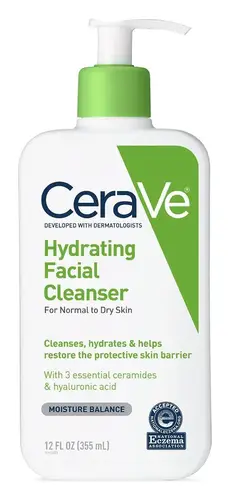
This glycolic acid foaming cleanser is formulated around Glycolic Acid to exfoliate and smooth skin.
This mild gel cleanser is mild enough to cleanse without leaving skin feeling tight or stripped.


What's inside
What's inside
 Key Ingredients
No key ingredients
Benefits
Concerns
Ingredients Side-by-side
Water
Skin ConditioningSodium Laureth Sulfate
Cleansing



Acrylamide/Sodium Acryloyldimethyltaurate Copolymer
Emulsion StabilisingCocamidopropyl Betaine
Cleansing

Cocamide DEA
Emulsifying
Isohexadecane
EmollientGlycolic Acid
Buffering









PEG-7 Glyceryl Cocoate
Emulsifying
Sodium Hydroxide
BufferingSodium Chloride
MaskingIsopropyl Myristate
Emollient

Aloe Barbadensis Leaf Juice
Skin Conditioning


Lactobacillus Ferment
Skin Conditioning
Alteromonas Ferment Extract
Skin Conditioning
Glycerin
Humectant
Lactic Acid
Buffering
Ethylhexylglycerin
Skin ConditioningPolysorbate 80
Emulsifying
PEG-20 Methyl Glucose Sesquistearate
Emulsifying
Butylene Glycol Oleate
EmollientGlycol Distearate
Emollient
Tocopherol
Antioxidant

Maltodextrin
Absorbent
Cocamide Mea
Emulsifying
Laureth-10
EmulsifyingDisodium EDTA
ChelatingPhenoxyethanol
Preservative
Sodium Benzoate
Masking
Benzoic Acid
Masking
Potassium Sorbate
Preservative
Parfum
Masking

Water, Sodium Laureth Sulfate, Acrylamide/Sodium Acryloyldimethyltaurate Copolymer, Cocamidopropyl Betaine, Cocamide DEA, Isohexadecane, Glycolic Acid, PEG-7 Glyceryl Cocoate, Sodium Hydroxide, Sodium Chloride, Isopropyl Myristate, Aloe Barbadensis Leaf Juice, Lactobacillus Ferment, Alteromonas Ferment Extract, Glycerin, Lactic Acid, Ethylhexylglycerin, Polysorbate 80, PEG-20 Methyl Glucose Sesquistearate, Butylene Glycol Oleate, Glycol Distearate, Tocopherol, Maltodextrin, Cocamide Mea, Laureth-10, Disodium EDTA, Phenoxyethanol, Sodium Benzoate, Benzoic Acid, Potassium Sorbate, Parfum
Ingredients Explained
These ingredients are found in both products.
Ingredients higher up in an ingredient list are typically present in a larger amount.
Benzoic Acid is an organic acid that shows up in cosmetics as a preservative. It helps keep a product from spoiling by holding back the growth of yeast, mold, and some bacteria.
This ingredient also functions as a fragrance ingredient that helps mask the unpleasant scent of other ingredients.
The way it works is worth understanding; benzoic acid works when the formula is acidic. It is able to sneak into a microbe's cell and mess up how it functions to stop it from growing in an acidic product.
However, the acid switches to an inactive form and stops working if a product isn't acidic enough (above ~5 pH). This is why you'll often see it in low pH products or teamed up with other preservatives to cover the gap.
Safety wise, it's one of the better studied preservatives out there.
The Cosmetic Ingredient Review Expert Panel has concluded this ingredient to be safe for use in cosmetic formulations at concentrations up to 5%.
A large international review found this ingredient had no effects on the human body and had low irritation potential.
Just so you know, real world use is usually much lower than the 5% ceiling (usually 1% of less).
The EU caps it at 2.5% in rinse-off products, 1.7% in oral care, and 0.5% in leave-on products.
One thing worth mentioning (it's nothing to worry about): some people get a little stinging or flushing where they apply it. This isn't a true allergy; it's a temporary and harmless reaction. This is the same kind of mild tingle you might notice from sorbic acid.
Learn more about Benzoic AcidDisodium EDTA is a chelating agent. It grabs onto and deactivates metal ions that sneak into your products from water, packaging, or air.
This ingredient mainly works behind the scenes and helps with:
On top of that, this ingredient can counteract the effects of hard water by binding to the minerals in it.
One thing worth knowing is that Disodium EDTA has been shown to be a mild penetration enhancer. It can help other ingredients absorb into skin more effectively which can be a double-edged sword (great for actives, but can also make the active too strong if you have sensitive skin).
Clinical patch testing showed no significant skin irritation at typical use concentrations and minimal dermal absorption.
You'll most likely see this ingredient near the end of an ingredient list. It's typically found in concentrations less than 1%.
Learn more about Disodium EDTAGlycerin (or glycerol) is a compound naturally found in your skin. It's a powerhouse humectant that pulls water into the stratum corneum.
Topically, glycerin does several things at once:
Your skin makes glycerin on its own (mostly from sebaceous oil breakdown) and shuttles it to your outermost layer of skin, or your epidermis, via aquaporin-3.
Aquaporin-3 is a transporter that is essential for normal skin hydration, elasticity, and repair. Interestingly, mice lacking in AQP3 have dry and less elastic skin that can be fully corrected with glycerin.
This ingredient is non-irritating, plays well with almost every ingredient, and works across all skin types. Typical use is anywhere between 3-10% but can go up to 79% in some leave-on products.
Just know very high concentrations (>40%) can feel tacky in low humidity.
Glycerin is the name for this ingredient in American English. British English uses Glycerol/Glycerine.
Learn more about GlycerinGlycol Distearate is an emulsifier and emollient that adds a "pearly" appearance to formulations.
That lustrous look you see in many shampoos is due to this ingredient: when cooled, it crystallizes into small platelets that reflect light to give products that rich, shimmering look.
This ingredient is considered safe at present practices of use and concentration and repeated insult patch test with 50% Glycol Distearate on 125 subjects found no evidence of skin irritation, hypersensitivity, or acute toxicity.
Typical use concentrations range from 0.1-10%.
Because it's an ester of stearic acid, it falls into the range that Malassezia likes to metabolize. This ingredient may not be fungal acne safe.
Learn more about Glycol DistearateSodium Benzoate is a preservative. It's used in both cosmetic and food products to inhibit the growth of mold and bacteria. It is typically produced synthetically.
Both the US FDA and EU Health Committee have approved the use of sodium benzoate. In the US, levels of 0.1% (of the total product) are allowed.
Sodium benzoate works as a preservative by inhibiting the growth of bacteria inside of cells. It prevents the cell from fermenting a type of sugar using an enzyme called phosphofructokinase.
It is the salt of benzoic acid. Foods containing sodium benzoate include soda, salad dressings, condiments, fruit juices, wines, and snack foods.
Studies for using ascorbic acid and sodium benzoate in cosmetics are lacking, especially in skincare routines with multiple steps.
We always recommend speaking with a professional, such as a dermatologist, if you have any concerns.
Learn more about Sodium BenzoateWater. It's the most common cosmetic ingredient of all. You'll usually see it at the top of ingredient lists, meaning that it makes up the largest part of the product.
So why is it so popular? Water most often acts as a solvent - this means that it helps dissolve other ingredients into the formulation.
You'll also recognize water as that liquid we all need to stay alive. If you see this, drink a glass of water. Remember to stay hydrated!
Learn more about Water