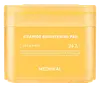
This brightening toner pad uses a pre-saturated pad with Niacinamide and Sodium Ascorbyl Phosphate to brighten dull-looking skin and fade the look of dark spots.
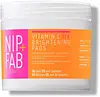
This brightening treatment pad uses a pre-saturated pad with Ascorbic Acid and Camellia Sinensis Leaf Extract to brighten dull-looking skin and refine skin texture.


What's inside
What's inside
 Key Ingredients
Benefits
Concerns
Ingredients Side-by-side
Water
Skin ConditioningDipropylene Glycol
HumectantNiacinamide
Smoothing











Glycereth-26
Humectant
1,2-Hexanediol
Skin Conditioning
Hippophae Rhamnoides Water
Masking
Hydroxyacetophenone
Antioxidant
Betaine
Humectant
Octyldodeceth-16
EmulsifyingHydroxyethyl Urea
Humectant
Allantoin
Skin Conditioning
Dipotassium Glycyrrhizate
Humectant
Trehalose
Humectant
Xanthan Gum
EmulsifyingHydroxyethylcellulose
Emulsion StabilisingPolyglyceryl-10 Laurate
Skin Conditioning

Disodium EDTA
ChelatingOlea Europaea Fruit Oil
Masking


Hydrogenated Lecithin
Emulsifying
Pelargonium Graveolens Flower Oil
Masking


Lavandula Angustifolia Oil
Masking
Anthemis Nobilis Flower Oil
Masking
Citrus Aurantium Dulcis Peel Oil
Masking
Juniperus Mexicana Oil
Masking
Riboflavin
Cosmetic ColorantSodium Ascorbyl Phosphate
Antioxidant
Pyridoxine Hcl
Skin ConditioningRetinol
Skin Conditioning
Tocopheryl Acetate
Antioxidant
Menadione
MaskingThiamine Hcl
MaskingCitronellol
Perfuming
Linalool
Perfuming
Geraniol
Perfuming
Limonene
Perfuming
Water, Dipropylene Glycol, Niacinamide, Glycereth-26, 1,2-Hexanediol, Hippophae Rhamnoides Water, Hydroxyacetophenone, Betaine, Octyldodeceth-16, Hydroxyethyl Urea, Allantoin, Dipotassium Glycyrrhizate, Trehalose, Xanthan Gum, Hydroxyethylcellulose, Polyglyceryl-10 Laurate, Disodium EDTA, Olea Europaea Fruit Oil, Hydrogenated Lecithin, Pelargonium Graveolens Flower Oil, Lavandula Angustifolia Oil, Anthemis Nobilis Flower Oil, Citrus Aurantium Dulcis Peel Oil, Juniperus Mexicana Oil, Riboflavin, Sodium Ascorbyl Phosphate, Pyridoxine Hcl, Retinol, Tocopheryl Acetate, Menadione, Thiamine Hcl, Citronellol, Linalool, Geraniol, Limonene
Water
Skin ConditioningPEG-7 Glyceryl Cocoate
Emulsifying

Ascorbic Acid
Antioxidant
PEG-40 Hydrogenated Castor Oil
Emulsifying
Phenoxyethanol
Preservative
Sodium Benzoate
Masking
Parfum
Masking
Potassium Sorbate
Preservative
Glycerin
Humectant
Disodium EDTA
ChelatingSodium Hydroxide
BufferingLimonene
Perfuming
Camellia Sinensis Leaf Extract
Antimicrobial
Coffea Arabica Seed Extract
Masking
Euterpe Oleracea Fruit Extract
Garcinia Mangostana Fruit Extract
Skin ConditioningHydrolyzed Lycium Barbarum Fruit Extract
Antioxidant
Morinda Citrifolia Fruit Extract
Skin Conditioning
Punica Granatum Fruit Juice
MaskingCI 15985
Cosmetic ColorantWater, PEG-7 Glyceryl Cocoate, Ascorbic Acid, PEG-40 Hydrogenated Castor Oil, Phenoxyethanol, Sodium Benzoate, Parfum, Potassium Sorbate, Glycerin, Disodium EDTA, Sodium Hydroxide, Limonene, Camellia Sinensis Leaf Extract, Coffea Arabica Seed Extract, Euterpe Oleracea Fruit Extract, Garcinia Mangostana Fruit Extract, Hydrolyzed Lycium Barbarum Fruit Extract, Morinda Citrifolia Fruit Extract, Punica Granatum Fruit Juice, CI 15985
Reviews
Ingredients Explained
These ingredients are found in both products.
Ingredients higher up in an ingredient list are typically present in a larger amount.
Disodium EDTA is a chelating agent. It grabs onto and deactivates metal ions that sneak into your products from water, packaging, or air.
This ingredient mainly works behind the scenes and helps with:
On top of that, this ingredient can counteract the effects of hard water by binding to the minerals in it.
One thing worth knowing is that Disodium EDTA has been shown to be a mild penetration enhancer. It can help other ingredients absorb into skin more effectively which can be a double-edged sword (great for actives, but can also make the active too strong if you have sensitive skin).
Clinical patch testing showed no significant skin irritation at typical use concentrations and minimal dermal absorption.
You'll most likely see this ingredient near the end of an ingredient list. It's typically found in concentrations less than 1%.
Learn more about Disodium EDTALimonene is the compound that gives citrus peel its smell.
In skincare, it shows up as a standalone fragrance ingredient or as a natural compound of citrus and other essential oils.
You'll typically see this ingredient used in very small amounts; anything above 0.001% in a leave-on product or 0.01% in a rinse-off has to be named on the label in the EU. The citrus oils that carry it sit around 0.5-1% in a finished formula.
Fresh limonene is a weak allergen; the real issue is that it slowly reacts with air and then breaks down from oxidation to create hydroperoxides (which are strong sensitizers). This is why suppliers are required to keep the peroxide value below 20 mmol.
Positive reactions in people being investigated for eczema vary:
It's worth skipping if you have a known fragrance allergy or a compromised barrier, but the risk is low for most people.
Older or long-opened products are also more likely to bother you than fresh ones due to oxidation.
Learn more about LimoneneWater. It's the most common cosmetic ingredient of all. You'll usually see it at the top of ingredient lists, meaning that it makes up the largest part of the product.
So why is it so popular? Water most often acts as a solvent - this means that it helps dissolve other ingredients into the formulation.
You'll also recognize water as that liquid we all need to stay alive. If you see this, drink a glass of water. Remember to stay hydrated!
Learn more about Water

