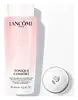
This hydrating toner is formulated around Squalane to hydrate skin.
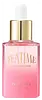
This hydrating oil is formulated around Simmondsia Chinensis Seed Oil and Bakuchiol to hydrate skin and brighten dull-looking skin.


What's inside
What's inside
 Key Ingredients
Benefits
Concerns
Ingredients Side-by-side
Water
Skin ConditioningGlycerin
Humectant


Malva Sylvestris Flower
Skin ConditioningRosa Centifolia Flower Water
Skin ConditioningSqualane
Emollient
Sodium Hyaluronate
Humectant

Sodium Hydroxide
BufferingHydroxyacetophenone
Antioxidant
Caprylyl Glycol
Emollient
Citric Acid
Buffering


Acrylates/C10-30 Alkyl Acrylate Crosspolymer
Emulsion StabilisingPotassium Sorbate
Preservative
Sodium Benzoate
Masking
Chlorphenesin
Antimicrobial
Parfum
Masking



Dicaprylyl Carbonate
EmollientCaprylic/Capric Triglyceride
Masking
Undecane
EmollientHydrogenated Polydecene
EmollientTridecane
Perfuming
Glycine Soja Oil
Emollient





Dicaprylyl Ether
Emollient
Simmondsia Chinensis Seed Oil
Emollient
Paeonia Albiflora Flower Extract
TonicCentaurea Cyanus Flower Water
Skin Conditioning
Prunus Persica Flower Extract
MoisturisingCamellia Japonica Seed Oil
Emollient
Helianthus Annuus Seed Oil
Emollient
Bakuchiol
Antimicrobial


Glutathione
Hydrolyzed Hyaluronic Acid
Humectant
Tocopherol
Antioxidant
Moringa Oleifera Seed Oil
Emollient
Eclipta Prostrata Extract
Skin Conditioning
Melia Azadirachta Leaf Extract
Skin ConditioningGlyceryl Caprylate
EmollientButylene Glycol
Humectant
Sodium Hyaluronate
Humectant
Sodium Acetylated Hyaluronate
Humectant
Water
Skin ConditioningMethylpropanediol
SolventPentaerythrityl Tetra-Di-T-Butyl Hydroxyhydrocinnamate
Antioxidant
1,2-Hexanediol
Skin Conditioning
Parfum
Masking
Dicaprylyl Carbonate, Caprylic/Capric Triglyceride, Undecane, Hydrogenated Polydecene, Tridecane, Glycine Soja Oil, Dicaprylyl Ether, Simmondsia Chinensis Seed Oil, Paeonia Albiflora Flower Extract, Centaurea Cyanus Flower Water, Prunus Persica Flower Extract, Camellia Japonica Seed Oil, Helianthus Annuus Seed Oil, Bakuchiol, Glutathione, Hydrolyzed Hyaluronic Acid, Tocopherol, Moringa Oleifera Seed Oil, Eclipta Prostrata Extract, Melia Azadirachta Leaf Extract, Glyceryl Caprylate, Butylene Glycol, Sodium Hyaluronate, Sodium Acetylated Hyaluronate, Water, Methylpropanediol, Pentaerythrityl Tetra-Di-T-Butyl Hydroxyhydrocinnamate, 1,2-Hexanediol, Parfum
Reviews
Ingredients Explained
These ingredients are found in both products.
Ingredients higher up in an ingredient list are typically present in a larger amount.
Parfum is a catch-all term for an ingredient or more that is used to give a scent to products.
Also called "fragrance", this ingredient can be a blend of hundreds of chemicals or plant oils. This means every product with "fragrance" or "parfum" in the ingredients list is a different mixture.
For instance, Habanolide is a proprietary trade name for a specific aroma chemical. When used as a fragrance ingredient in cosmetics, most aroma chemicals fall under the broad labeling category of “FRAGRANCE” or “PARFUM” according to EU and US regulations.
The term 'parfum' or 'fragrance' is not regulated in many countries. In many cases, it is up to the brand to define this term.
For instance, many brands choose to label themselves as "fragrance-free" because they are not using synthetic fragrances. However, their products may still contain ingredients such as essential oils that are considered a fragrance by INCI standards.
One example is Calendula flower extract. Calendula is an essential oil that still imparts a scent or 'fragrance'.
Depending on the blend, the ingredients in the mixture can cause allergies and sensitivities on the skin. Some ingredients that are known EU allergens include linalool and citronellol.
Parfum can also be used to mask or cover an unpleasant scent.
The bottom line is: not all fragrances/parfum/ingredients are created equally. If you are worried about fragrances, we recommend taking a closer look at an ingredient. And of course, we always recommend speaking with a professional.
Learn more about ParfumSodium Hyaluronate is the salt form of hyaluronic acid. It is a long sugar chain that is naturally found in your skin, joints, and connective tissue that maintains hydration and elasticity.
In skincare, it works as a humectant. It pulls water from the environment and deeper layers of skin and binds it to the surface.
Interestingly, the size of the molecule affects its behavior:
Some clinical evidence links low molecular weight versions to improved wrinkle depth, elasticity, anti-inflammatory effects, and barrier repair.
Many serums use a blend of both weights so you can get surface hydration plus longer-lasting and deeper effects.
You'll typically see concentrations between 0.1-2% for this ingredient.
Learn more about Sodium HyaluronateWater. It's the most common cosmetic ingredient of all. You'll usually see it at the top of ingredient lists, meaning that it makes up the largest part of the product.
So why is it so popular? Water most often acts as a solvent - this means that it helps dissolve other ingredients into the formulation.
You'll also recognize water as that liquid we all need to stay alive. If you see this, drink a glass of water. Remember to stay hydrated!
Learn more about Water

