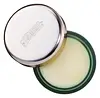
This barrier-repair lip moisturizer is formulated around Petrolatum and Aloe Barbadensis Leaf Extract to strengthen the lip barrier and hydrate lips.
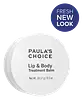
This barrier-repair lip moisturizer is formulated around Ricinus Communis Seed Oil and Petrolatum to strengthen the lip barrier and hydrate lips.

What's inside
What's inside
 Key Ingredients
Benefits
Concerns
Ingredients Side-by-side
Petrolatum
Emollient



Octyldodecanol
Emollient
Cera Microcristallina
Emulsion StabilisingOctyldodecyl Stearoyl Stearate
Emollient

Bis-Diglyceryl Polyacyladipate-2
Emollient
Polyglyceryl-10 Pentaoleate
Emulsifying
Phenyl Trimethicone
Skin Conditioning
Aloe Barbadensis Leaf Extract
Emollient

Algae Extract
Emollient

Malachite
Skin ConditioningTourmaline
Sesamum Indicum Seed Oil
Emollient
Eucalyptus Globulus Leaf Oil
Perfuming


Sesamum Indicum Seed Powder
Skin ConditioningMedicago Sativa Seed Powder
Skin ConditioningHelianthus Annuus Seedcake
Abrasive
Prunus Amygdalus Dulcis Seed Meal
Abrasive
Sodium Gluconate
ChelatingCopper Gluconate
Skin Conditioning
Calcium Gluconate
HumectantMagnesium Gluconate
Skin ConditioningZinc Gluconate
Skin Conditioning



Tocopheryl Succinate
Antioxidant
Niacin
SmoothingRicinus Communis Seed Oil
Masking
Glycine Soja Oil
Emollient
Phytosphingosine
Skin Conditioning

Trehalose
Humectant
Polybutene
Tocopheryl Acetate
Antioxidant

Cholesterol
Emollient
Glyceryl Distearate
Emollient
Water
Skin ConditioningGlycerin
Humectant
Menthyl PCA
HumectantOleic Acid
Emollient
Palmitic Acid
Emollient
Sodium Saccharin
MaskingSorbitan Sesquioleate
Emulsifying
CI 77220
Cosmetic ColorantSodium Bicarbonate
Abrasive
Parfum
Masking
Benzyl Benzoate
Antimicrobial
Limonene
Perfuming
Linalool
Perfuming
BHT
Antioxidant
CI 42090
Cosmetic ColorantCI 19140
Cosmetic ColorantPetrolatum, Octyldodecanol, Cera Microcristallina, Octyldodecyl Stearoyl Stearate, Bis-Diglyceryl Polyacyladipate-2, Polyglyceryl-10 Pentaoleate, Phenyl Trimethicone, Aloe Barbadensis Leaf Extract, Algae Extract, Malachite, Tourmaline, Sesamum Indicum Seed Oil, Eucalyptus Globulus Leaf Oil, Sesamum Indicum Seed Powder, Medicago Sativa Seed Powder, Helianthus Annuus Seedcake, Prunus Amygdalus Dulcis Seed Meal, Sodium Gluconate, Copper Gluconate, Calcium Gluconate, Magnesium Gluconate, Zinc Gluconate, Tocopheryl Succinate, Niacin, Ricinus Communis Seed Oil, Glycine Soja Oil, Phytosphingosine, Trehalose, Polybutene, Tocopheryl Acetate, Cholesterol, Glyceryl Distearate, Water, Glycerin, Menthyl PCA, Oleic Acid, Palmitic Acid, Sodium Saccharin, Sorbitan Sesquioleate, CI 77220, Sodium Bicarbonate, Parfum, Benzyl Benzoate, Limonene, Linalool, BHT, CI 42090, CI 19140
Ricinus Communis Seed Oil
Masking
Petrolatum
Emollient
Euphorbia Cerifera Wax
Lanolin
Emollient
C10-30 Cholesterol/Lanosterol Esters
Emulsifying
Cera Alba
Emollient
Ozokerite
Emulsion StabilisingEthylhexyl Palmitate
Emollient
Copernicia Cerifera Wax
Butyrospermum Parkii Butter
Skin Conditioning
Jojoba Esters
Emollient
Triticum Vulgare Germ Oil
Emollient
Bisabolol
Antioxidant
Tetrahexyldecyl Ascorbate
Antioxidant

Tocopheryl Acetate
Antioxidant
Trihydroxystearin
Skin Conditioning
Hydrogenated Polyisobutene
EmollientRicinus Communis Seed Oil, Petrolatum, Euphorbia Cerifera Wax, Lanolin, C10-30 Cholesterol/Lanosterol Esters, Cera Alba, Ozokerite, Ethylhexyl Palmitate, Copernicia Cerifera Wax, Butyrospermum Parkii Butter, Jojoba Esters, Triticum Vulgare Germ Oil, Bisabolol, Tetrahexyldecyl Ascorbate, Tocopheryl Acetate, Trihydroxystearin, Hydrogenated Polyisobutene
Reviews
Ingredients Explained
These ingredients are found in both products.
Ingredients higher up in an ingredient list are typically present in a larger amount.
Petrolatum is more commonly known as petroleum jelly. It is created by mixing waxes and mineral oils.
This ingredient is effective at reducing water loss by 99%. This is because it is an occlusive. Occlusives create a hydrophobic barrier on the skin to prevent evaporation. This property makes it great for hydrating dry skin.
Pro tip: Use occlusives, such as this ingredient, on damp skin for the best results.
The quality or origin of petrolatum is only known when disclosed by the brand. Most cosmetic petrolatum has gone through several purification stages.
Another benefit of occlusives is it protects your skin against infection or allergies.
Petrolatum is fungal acne safe. It is a hydrocarbon with no fatty acid structure, so Malassezia cannot metabolize it. In-vitro studies support negligible growth stimulation as well.
It's also worth noting that petrolatum has a comedogenic rating of 0. In updated rabbit ear testing (and in human testing), petrolatum was found to be not comedogenic. This means it didn’t promote comedone formation in standard models.
Learn more about PetrolatumThis ingredient is also known as castor oil. It is a skin conditioning ingredient.
The star component of castor oil is ricinoleic acid, an unusual fatty acid that makes up ~80-92% of its composition.
In skincare, it is an emollient that dries down to a solid film with water-binding properties. This helps keep skin hydrated and helps reduce transepidermal water loss (TEWL).
A 2026 dermatology review pulls together its broader uses:
Human clinical testing found this ingredient to be non-irritating and non-sensitizing.
Because castor oil contains fatty acids in the C11-24 range, this ingredient may not be fungal acne safe.
At this time, the literature does not support castor oil in regrowing hair. A 2022 systematic review found no strong evidence that it supports hair growth and only weak evidence that it improves hair shine.
Castor oil itself carries "perfuming" and "masking" function tags according to the official CosIng database. This is because of its mild odor and odor-dampening properties.
Learn more about Ricinus Communis Seed OilTocopheryl Acetate is a stable, shelf-friendly form of vitamin E.
Formulators love it because plain vitamin E oxidizes quickly once it hits air. This acetate version stays stable and resists going off, helping to extend a product's shelf life.
It's actually inactive on its own and works like a slow-release "storage" form; the enzymes in your skin called esterases gradually convert it into active vitamin E over time.
One in vivo study showed 5% of the acetate in the living layer of the epidermis converted to vitamin E after 5 days of application. This study also found the skin gained protection against UV damage even though the conversion was slow and small.
Once converted, vitamin E acts as a skin's main fat-soluble antioxidant that fights free radicals to protect skin from damage.
Topical vitamin E generally boosts the skin's photoprotection, and it reduced UV-damage in animal models.
This ingredient has some brightening potential but it's more of a prevention ingredient than spot-fader. Cell studies show it can slow down melanin production but it's worth noting that it's not the most powerful brightener out there.
Overall, it has a pretty solid safety profile and has been found to be non-irritating and non-comedogenic. Allergic reactions may happen but stay rare due to how widely the ingredient gets used.
The concentration will vary depending on the formula; industry data shows 0.1% in baby lotions, 3% in lipsticks, and 5% in foot powders. You can also find this ingredient at 100% in a pure vitamin E oil.
Most leave-on skincare keeps it at the lower end, often between 0.5-1%.
Learn more about Tocopheryl Acetate

