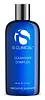
This glycolic acid gel cleanser is formulated around Glycolic Acid to exfoliate and smooth skin.

What's inside
What's inside
 Key Ingredients
Benefits
Concerns
Ingredients Side-by-side
Water
Skin ConditioningDisodium Laureth Sulfosuccinate
CleansingCocamidopropyl Betaine
Cleansing



PEG-30 Glyceryl Cocoate
Emulsifying

Glycerin
Humectant


Propylene Glycol
Humectant
Hydroxyethylcellulose
Emulsion StabilisingSalix Alba Bark Extract
Astringent


Saccharum Officinarum Extract
MoisturisingCamellia Sinensis Leaf Extract
Antimicrobial




Chamomilla Recutita Flower Extract
Masking
Asiaticoside
Antioxidant
Asiatic Acid
Skin Conditioning
Madecassic Acid
Skin Conditioning
Ascorbyl Palmitate
Antioxidant
Phospholipids
Skin Conditioning
Tocopheryl Acetate
Antioxidant
Retinyl Palmitate
Skin Conditioning
Iodopropynyl Butylcarbamate
Preservative
Phenoxyethanol
Preservative
Water, Disodium Laureth Sulfosuccinate, Cocamidopropyl Betaine, PEG-30 Glyceryl Cocoate, Glycerin, Propylene Glycol, Hydroxyethylcellulose, Salix Alba Bark Extract, Saccharum Officinarum Extract, Camellia Sinensis Leaf Extract, Chamomilla Recutita Flower Extract, Asiaticoside, Asiatic Acid, Madecassic Acid, Ascorbyl Palmitate, Phospholipids, Tocopheryl Acetate, Retinyl Palmitate, Iodopropynyl Butylcarbamate, Phenoxyethanol
Water
Skin ConditioningPolysorbate 20
Emulsifying
Glycerin
Humectant
Sodium Methyl Cocoyl Taurate
Cleansing
Coco-Betaine
Cleansing
Sodium PCA
Humectant
Citrus Tangerina Peel Oil
Masking
Glycolic Acid
Buffering


Polysorbate 80
Emulsifying
Phospholipids
Skin Conditioning
Santalum Album Extract
CleansingPhellodendron Amurense Bark Extract
Skin ConditioningSodium Hyaluronate
Humectant
Hordeum Vulgare Extract
EmollientPEG-7 Glyceryl Cocoate
Emulsifying
Alcohol
Antimicrobial
Ethylhexylglycerin
Skin ConditioningMethylpropanediol
SolventCaprylhydroxamic Acid
ChelatingWater, Polysorbate 20, Glycerin, Sodium Methyl Cocoyl Taurate, Coco-Betaine, Sodium PCA, Citrus Tangerina Peel Oil, Glycolic Acid, Polysorbate 80, Phospholipids, Santalum Album Extract, Phellodendron Amurense Bark Extract, Sodium Hyaluronate, Hordeum Vulgare Extract, PEG-7 Glyceryl Cocoate, Alcohol, Ethylhexylglycerin, Methylpropanediol, Caprylhydroxamic Acid
Reviews
Ingredients Explained
These ingredients are found in both products.
Ingredients higher up in an ingredient list are typically present in a larger amount.
Glycerin (or glycerol) is a compound naturally found in your skin. It's a powerhouse humectant that pulls water into the stratum corneum.
Topically, glycerin does several things at once:
Your skin makes glycerin on its own (mostly from sebaceous oil breakdown) and shuttles it to your outermost layer of skin, or your epidermis, via aquaporin-3.
Aquaporin-3 is a transporter that is essential for normal skin hydration, elasticity, and repair. Interestingly, mice lacking in AQP3 have dry and less elastic skin that can be fully corrected with glycerin.
This ingredient is non-irritating, plays well with almost every ingredient, and works across all skin types. Typical use is anywhere between 3-10% but can go up to 79% in some leave-on products.
Just know very high concentrations (>40%) can feel tacky in low humidity.
Glycerin is the name for this ingredient in American English. British English uses Glycerol/Glycerine.
Learn more about GlycerinPhospholipids are a family of skin-identical lipids that makeup the structural backbone of every cell membrane in your body.
In cosmetics, they function as skin conditioning agents with emulsifier and surfactant properties. They're typically sourced from soybean or sunflower lecithin (or sometimes egg yolk or marine sources).
Because they mirror the lipids naturally found in the deeper layers of your skin, topical phospholipids help reinforce the lipid matrix, reduce transepidermal water loss, and leave skin feeling conditioned.
They're also used to form liposomes, or tiny self-assembling vesible used to stabilize actives like vitamin c or retinol. This helps these ingredients integrate into the upper layers of skin more easily.
Phospholipids are compatible with everything and the CIR Expert Panel has concluded them to be safe at current use levels.
Some types of phospholipids include:
Learn more about PhospholipidsWater. It's the most common cosmetic ingredient of all. You'll usually see it at the top of ingredient lists, meaning that it makes up the largest part of the product.
So why is it so popular? Water most often acts as a solvent - this means that it helps dissolve other ingredients into the formulation.
You'll also recognize water as that liquid we all need to stay alive. If you see this, drink a glass of water. Remember to stay hydrated!
Learn more about Water

