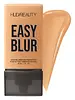
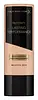
Huda Beauty Easy Blur Natural Airbrush Foundation Versus Max Factor X Facefinity Lasting Performance Foundation

What's inside
What's inside
 Key Ingredients
Benefits
Concerns
Ingredients Side-by-side
Water
Skin ConditioningCyclopentasiloxane
Emollient
Isododecane
EmollientEthylhexyl Palmitate
Emollient




Cetyl PEG/PPG-10/1 Dimethicone
Emulsifying
Polyglyceryl-4 Isostearate
Emulsifying
Propylene Glycol
Humectant

Diphenyl Dimethicone
Emollient
Acetylated Glycol Stearate
Emollient
Niacinamide
Smoothing











Trimethylsiloxysilicate
Emollient
Vinyl Dimethicone/Methicone Silsesquioxane Crosspolymer
Disteardimonium Hectorite
StabilisingMethyl Methacrylate Crosspolymer
Sodium Chloride
MaskingPrunus Cerasus Fruit Water
EmollientDimethicone Crosspolymer
Emulsion Stabilising
Phenoxyethanol
Preservative
Silica
Abrasive
Sodium Dehydroacetate
Preservative
Magnesium Stearate
Cosmetic ColorantZeolite
AbsorbentMica
Cosmetic ColorantSilica Dimethyl Silylate
EmollientTriethoxycaprylylsilane
Aluminum Hydroxide
EmollientSodium Phytate
Butylene Glycol
Humectant
Trimethylsiloxysilylcarbamoyl Pullulan
Citric Acid
Buffering
Phenylpropanol
Masking

Aloe Barbadensis Leaf Extract
Emollient
Laminaria Saccharina Extract
Skin ProtectingZinc Sulfate
Antimicrobial
Pyridoxine Hcl
Skin ConditioningCI 77491
Cosmetic ColorantCI 77492
Cosmetic ColorantCI 77499
Cosmetic ColorantCI 77891
Cosmetic ColorantWater, Cyclopentasiloxane, Isododecane, Ethylhexyl Palmitate, Cetyl PEG/PPG-10/1 Dimethicone, Polyglyceryl-4 Isostearate, Propylene Glycol, Diphenyl Dimethicone, Acetylated Glycol Stearate, Niacinamide, Trimethylsiloxysilicate, Vinyl Dimethicone/Methicone Silsesquioxane Crosspolymer, Disteardimonium Hectorite, Methyl Methacrylate Crosspolymer, Sodium Chloride, Prunus Cerasus Fruit Water, Dimethicone Crosspolymer, Phenoxyethanol, Silica, Sodium Dehydroacetate, Magnesium Stearate, Zeolite, Mica, Silica Dimethyl Silylate, Triethoxycaprylylsilane, Aluminum Hydroxide, Sodium Phytate, Butylene Glycol, Trimethylsiloxysilylcarbamoyl Pullulan, Citric Acid, Phenylpropanol, Aloe Barbadensis Leaf Extract, Laminaria Saccharina Extract, Zinc Sulfate, Pyridoxine Hcl, CI 77491, CI 77492, CI 77499, CI 77891
Water
Skin ConditioningCyclopentasiloxane
Emollient
Talc
Abrasive
Propylene Glycol
Humectant
Dimethicone
Emollient
PEG/PPG-18/18 Dimethicone
Emulsifying
Aluminum Starch Octenylsuccinate
Absorbent
Sodium Chloride
MaskingPvp
Emulsion StabilisingPhenoxyethanol
Preservative
Methicone
Emollient
Synthetic Wax
Abrasive
Trihydroxystearin
Skin Conditioning
1,2-Hexanediol
Skin Conditioning
Caprylyl Glycol
Emollient
Sodium Benzoate
Masking
Silica
Abrasive
Ethylene/Methacrylate Copolymer
Hexamethylindanopyran
Masking
Polyglyceryl-4 Isostearate
Emulsifying
Cetyl PEG/PPG-10/1 Dimethicone
Emulsifying
Hexyl Laurate
Emollient
Ethylene Brassylate
MaskingPolyethylene
Abrasive
Aluminum Hydroxide
EmollientStearic Acid
Cleansing
Isopropyl Titanium Triisostearate
Emollient
CI 77891
Cosmetic ColorantTitanium Dioxide
Cosmetic Colorant

Iron Oxides
Water, Cyclopentasiloxane, Talc, Propylene Glycol, Dimethicone, PEG/PPG-18/18 Dimethicone, Aluminum Starch Octenylsuccinate, Sodium Chloride, Pvp, Phenoxyethanol, Methicone, Synthetic Wax, Trihydroxystearin, 1,2-Hexanediol, Caprylyl Glycol, Sodium Benzoate, Silica, Ethylene/Methacrylate Copolymer, Hexamethylindanopyran, Polyglyceryl-4 Isostearate, Cetyl PEG/PPG-10/1 Dimethicone, Hexyl Laurate, Ethylene Brassylate, Polyethylene, Aluminum Hydroxide, Stearic Acid, Isopropyl Titanium Triisostearate, CI 77891, Titanium Dioxide, Iron Oxides
Reviews
Ingredients Explained
These ingredients are found in both products.
Ingredients higher up in an ingredient list are typically present in a larger amount.
Aluminum Hydroxide is a form of aluminum. It can be naturally found in nature as the mineral gibbsite. In cosmetics, Aluminum Hydroxide is used as a colorant, pH adjuster, and absorbent.
As a colorant, Aluminum Hydroxide may add opacity, or reduce the transparency. Aluminum hydroxide is contains both basic and acidic properties.
According to manufacturers, this ingredient is an emollient and humectant. This means it helps hydrate the skin.
In medicine, this ingredient is used to help relieve heartburn and help heal ulcers.
There is currently no credible scientific evidence linking aluminum hydroxide in cosmetics to increased cancer risk.
Major health organizations allow the use of aluminum hydroxide in personal care products and have not flagged it as a carcinogenic risk at typical usage levels.
Learn more about Aluminum HydroxideThis ingredient is a silicone-based emulsifer that helps the water and oil phases play nicely together.
It's pretty effective because one end of the molecule loves oil and the other one loves water.
Besides holding formulas together, it also leaves a silky and lightweight feel on skin without the greasiness. A manufacturer also claims it can help with the controlled release of active ingredients.
The CIR Expert Panel found this ingredient to not be sensitizing in concentrations up to 15% in human maximazation testing and dimethicone-based compounds were not comedogenic.
It has a high molecular weight well above 1,000 g/mol which means it limits meaningful skin penetration.
A 2019 study specifically tested this ingredient and found no observable Malassezia growth in its presence.
Learn more about Cetyl PEG/PPG-10/1 DimethiconeCi 77891 is a white pigment from Titanium dioxide. It is naturally found in minerals such as rutile and ilmenite.
It's main function is to add a white color to cosmetics. It can also be mixed with other colors to create different shades.
Ci 77891 is commonly found in sunscreens due to its ability to block UV rays.
Learn more about CI 77891Cyclopentasiloxane (D5) is a lightweight silicone that mostly acts as an emollient and solvent in cosmetics. Its the reason your products feel silky, fast-spreading, and non-greasy.
Since D5 is volatile, it does its thing and then evaporates off the skin quickly.
The safety profile of this ingredient is reassuring; the US CIR Expert Panel concluded D5 is safe as used in cosmetics and Health Canada concluded that D5 is not harmful to human health or the environment as currently used in cosmetics
There's a study that people mention about D5 in a rat study showing tumors. This study is related to long-term inhalation of high D5 levels.
Regulatory bodies have judged this study to be not applicable in topical skincare since skin absorption of D5 is very low and we're not really inhaling huge amounts of D5.
The only restriction for this ingredient is environmental. The European Chemicals Agency (ECHA) restricted D5 in wash-off cosmetics at or above 0.1% due to their persistence in water.
Learn more about CyclopentasiloxanePhenoxyethanol is one of the most widely used preservatives in skincare (and for good reason!).
It has a large spectrum of antimicrobial activity and especially effective bacteria, yeast, and mold while only having a weak effect on your skin's natural microbiome.
On a cellular level, it disrupts the cell membranes of microbes by poking holes that make the cell leak. This shuts down the chemical reactions the microbe needs to make energy so it can no longer survive.
Another perk of this ingredient is that it stays functional across a wide pH range (3-10).
You'll often see it paired with boosters like Ethylhexylglycerin; one study showed that a 1:9 ratio of Ethylhexylglycerin to Phenoxyethanol damages bacterial membranes as effectively as doubling the Phenoxyethanol concentration on its own.
Typical use concentrations range from 0.3-1% depending on the formula, and this ingredient is capped at 1% int the EU.
Safety-wise, the fear mongering does not hold up to the evidence. The EU's Scientific Committee on Consumer Safety and FDA consider it safe as a preservative at up to 1%, including for children of all ages.
Adverse systemic effects only showed up in animal studies at exposures roughly 200x higher than what people get from cosmetics. And despite its very widespread use, this ingredient is a rare sensitizer and allergic reactions are uncommon.
Learn more about PhenoxyethanolPolyglyceryl-4 Isostearate is a plant-derived, PEG-free emulsifier.
It's made by hooking isostearic acid onto a chain of glycerin units to give it a water-loving "head" and oil-loving "tail". This allows it to keep the oil and water mixed in a formula.
The highest reported concentration is about 24% in eye makeup but most suppliers recommend a level below 10%.
It has a clean track record for safety and found to be non-irritating.
Because it is an ester of a C18 fatty acid, Malassezia can potentially metabolize it (it sits in the C11-24 range that Malassezia likes). Therefore, this ingredient may not be fungal acne safe.
Learn more about Polyglyceryl-4 IsostearatePropylene Glycol is a synthetic, colorless, odorless liquid that has been a staple in cosmetics for decades. It is a skin conditioning agent, humectant, and solvent.
As a humectant, it draw water to the skin to reduce flaking and restore suppleness. It's also a solvent that helps dissolve other actives and keeps formulas stable across temperature changes.
The CIR Expert Panel has confirmed this ingredient to be nontoxic and clinical studies show no sensitization at cosmetic use concentrations.
True allergic reactions are quite rare: a 15-year retrospective study of 6,751 patients found only 0.31% had a positive reaction (and less than half were considered clinically relevant).
It seemed that when sensitization does occur, it's most commonly linked to topical medication (like corticosteroids) and not cosmetics. Allergic contact dermatitis also appears largely limited to individuals with underlying skin conditions.
Overall, propylene glycol is a well-studied ingredient that most people can tolerate without issue.
Learn more about Propylene GlycolSilica, also known as silicon dioxide, is a naturally occurring mineral. It is used as a fine, spherical, and porous powder in cosmetics.
Though it has exfoliant properties, the function of silica varies depending on the product.
The unique structure of silica enhances the spreadability and adds smoothness, making it a great texture enhancer.
It is also used as an active carrier, emulsifier, and mattifier due to its ability to absorb excess oil.
In some products, tiny microneedles called spicules are made from silica or hydrolyzed sponge. When you rub them in, they lightly polish away dead skin layers and enhance the penetration of active ingredients.
Learn more about SilicaChances are, you eat sodium chloride every day. Sodium Chloride is also known as table salt. This ingredient has many purposes in skincare: thickener, emulsifier, and exfoliator.
You'll most likely find this ingredient in cleansers where it is used to create a gel-like texture. As an emulsifier, it also prevents ingredients from separating.
You might see people debate whether Sodium Chloride is comedogenic, but there actually haven't been any comedogenic tests done on it. Either way, the overall formulation of a product matters a lot more than any single ingredient.
You might see this ingredient used in scrubs as a primary exfoliating ingredient.
Learn more about Sodium ChlorideWater. It's the most common cosmetic ingredient of all. You'll usually see it at the top of ingredient lists, meaning that it makes up the largest part of the product.
So why is it so popular? Water most often acts as a solvent - this means that it helps dissolve other ingredients into the formulation.
You'll also recognize water as that liquid we all need to stay alive. If you see this, drink a glass of water. Remember to stay hydrated!
Learn more about Water

