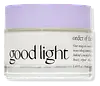
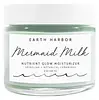
Good Light Order of the Eclipse Hyaluronic Cream Versus Earth Harbor Mermaid Milk Nutrient Glow Moisturizer
This barrier-repair moisturizer is formulated around Squalane and Hyaluronic Acid to strengthen the skin barrier and hydrate skin.
This calming moisturizer is formulated around Aloe Barbadensis Leaf Juice and Camellia Sinensis Extract to calm redness and hydrate skin.

What's inside
What's inside
 Key Ingredients
Benefits
Concerns
Ingredients Side-by-side
Water
Skin ConditioningGlycerin
Humectant


Squalane
Emollient
Caprylic/Capric Triglyceride
Masking
Butylene Glycol
Humectant
Propanediol
Solvent
1,2-Hexanediol
Skin Conditioning
Cetearyl Alcohol
Emollient





Caprylyl Methicone
Skin Conditioning
Cetearyl Olivate
Diisostearyl Malate
EmollientGlyceryl Stearate
Emollient
Hydrogenated Vegetable Oil
Emollient
Hyaluronic Acid
Humectant
Hydrolyzed Hyaluronic Acid
Humectant
Sodium Hyaluronate
Humectant
Phellinus Linteus Extract
Skin ConditioningSedum Sarmentosum Extract
HumectantPolyglyceryl-6 Stearate
Emollient
Sorbitan Olivate
Emulsifying
Palmitic Acid
Emollient
Dipentaerythrityl Hexahydroxystearate/Hexastearate/Hexarosinate
Skin ConditioningVinyldimethicone
Stearic Acid
Cleansing
Carbomer
Emulsion StabilisingTromethamine
BufferingSorbitol
Humectant
Polyglyceryl-6 Behenate
Emulsion Stabilising
Myristic Acid
Cleansing
Ethylhexylglycerin
Skin ConditioningWater, Glycerin, Squalane, Caprylic/Capric Triglyceride, Butylene Glycol, Propanediol, 1,2-Hexanediol, Cetearyl Alcohol, Caprylyl Methicone, Cetearyl Olivate, Diisostearyl Malate, Glyceryl Stearate, Hydrogenated Vegetable Oil, Hyaluronic Acid, Hydrolyzed Hyaluronic Acid, Sodium Hyaluronate, Phellinus Linteus Extract, Sedum Sarmentosum Extract, Polyglyceryl-6 Stearate, Sorbitan Olivate, Palmitic Acid, Dipentaerythrityl Hexahydroxystearate/Hexastearate/Hexarosinate, Vinyldimethicone, Stearic Acid, Carbomer, Tromethamine, Sorbitol, Polyglyceryl-6 Behenate, Myristic Acid, Ethylhexylglycerin
Aloe Barbadensis Leaf Juice
Skin Conditioning
Cocos Nucifera Oil
Masking
Alcohol
Antimicrobial


Camellia Sinensis Extract
Antioxidant

Cetearyl Palmitate
EmollientSpirulina Platensis Extract
Skin ProtectingOlea Europaea Fruit Oil
Masking
Sodium Hyaluronate
Humectant
Melia Azadirachta Extract
Skin ConditioningFragaria Indica Extract
Skin ConditioningSolanum Mauritianum Extract
Skin ConditioningAloe Barbadensis Extract
Skin Conditioning
Ocimum Sanctum Leaf Extract
Skin ConditioningOcimum Basilicum Extract
Antioxidant
Curcuma Longa Root Extract
Antioxidant
Corallina Officinalis Extract
Skin Conditioning
Tanacetum Annuum Flower Oil
Masking
Carica Papaya Fruit
Skin ConditioningPassiflora Edulis Fruit
Skin ConditioningStearic Acid
Cleansing
Citric Acid
Buffering

Nonyl Alcohol
Perfuming
Aloe Barbadensis Leaf Juice, Cocos Nucifera Oil, Alcohol, Camellia Sinensis Extract, Cetearyl Palmitate, Spirulina Platensis Extract, Olea Europaea Fruit Oil, Sodium Hyaluronate, Melia Azadirachta Extract, Fragaria Indica Extract, Solanum Mauritianum Extract, Aloe Barbadensis Extract, Ocimum Sanctum Leaf Extract, Ocimum Basilicum Extract, Curcuma Longa Root Extract, Corallina Officinalis Extract, Tanacetum Annuum Flower Oil, Carica Papaya Fruit, Passiflora Edulis Fruit, Stearic Acid, Citric Acid, Nonyl Alcohol
Reviews
Alternatives
Ingredients Explained
These ingredients are found in both products.
Ingredients higher up in an ingredient list are typically present in a larger amount.
Sodium Hyaluronate is the salt form of hyaluronic acid. It is a long sugar chain that is naturally found in your skin, joints, and connective tissue that maintains hydration and elasticity.
In skincare, it works as a humectant. It pulls water from the environment and deeper layers of skin and binds it to the surface.
Interestingly, the size of the molecule affects its behavior:
Some clinical evidence links low molecular weight versions to improved wrinkle depth, elasticity, anti-inflammatory effects, and barrier repair.
Many serums use a blend of both weights so you can get surface hydration plus longer-lasting and deeper effects.
You'll typically see concentrations between 0.1-2% for this ingredient.
Learn more about Sodium HyaluronateStearic Acid is a fatty acid that is already found in your skin. It's one of the free fatty acids that works alongside ceramides and cholesterols to maintain your barrier.
In cosmetics, it is a multitasker:
Safety-wise, the CIR Expert Panel has concluded it to be safe in cosmetics when formulated to be non-irritating and non-sensitizing.
Free stearic acid is a C18 fatty acid that the Malassezia yeast can substrate, so this ingredient may not be fungal acne safe.
This ingredient does have a comedogenic rating of 2-3, but this doesn't mean a formula with this ingredient will clog pores.
Human testing has proved that any finished product with this ingredient won't automatically make you break out; it really comes down to concentration, formula, and your skin.
Learn more about Stearic Acid

