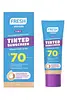
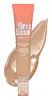
Fresh Skinlab 2 In 1 Collagen Mattifying Tinted Sunscreen SPF 70 Versus Colourette First Base Everyday Skin Tint SPF 30

What's inside
What's inside
 Key Ingredients
Benefits
Concerns
No concerns
Ingredients Side-by-side
Water
Skin ConditioningEthylhexyl Methoxycinnamate
UV Absorber


Benzophenone-3
UV Absorber
Butyl Methoxydibenzoylmethane
UV Absorber
Phospholipids
Skin Conditioning

Butylene Glycol
Humectant
Phenoxyethanol
Preservative
C15-19 Alkane
SolventTitanium Dioxide
Cosmetic Colorant
Aluminum Hydroxide
EmollientHydrogen Dimethicone

Caprylic/Capric Triglyceride
Masking
Isododecane
EmollientStearic Acid
Cleansing

Cetyl Alcohol
Emollient
Cyclopentasiloxane
Emollient
Glyceryl Stearate
Emollient
PEG-100 Stearate
Polyacrylate-13
Polyisobutene
Polysorbate 20
Emulsifying
Allantoin
Skin Conditioning


Soluble Collagen
Humectant
Sodium Benzoate
Masking
Citric Acid
Buffering


Sodium Hyaluronate
Humectant
CI 77499
Cosmetic ColorantCI 77491
Cosmetic ColorantCI 77492
Cosmetic ColorantIsopropyl Titanium Triisostearate
Emollient
Parfum
Masking


Menthol
Masking

Water, Ethylhexyl Methoxycinnamate, Benzophenone-3, Butyl Methoxydibenzoylmethane, Phospholipids, Butylene Glycol, Phenoxyethanol, C15-19 Alkane, Titanium Dioxide, Aluminum Hydroxide, Hydrogen Dimethicone, Caprylic/Capric Triglyceride, Isododecane, Stearic Acid, Cetyl Alcohol, Cyclopentasiloxane, Glyceryl Stearate, PEG-100 Stearate, Polyacrylate-13, Polyisobutene, Polysorbate 20, Allantoin, Soluble Collagen, Sodium Benzoate, Citric Acid, Sodium Hyaluronate, CI 77499, CI 77491, CI 77492, Isopropyl Titanium Triisostearate, Parfum, Menthol
Water
Skin ConditioningCyclopentasiloxane
Emollient
Isotridecyl Isononanoate
EmollientDimethicone
Emollient
Butylene Glycol
Humectant
Silica
Abrasive


Titanium Dioxide
Cosmetic Colorant
Pentaerythrityl Tetraethylhexanoate
Emollient
Glycerin
Humectant
Trimethylsiloxysilicate
Emollient
PEG-10 Dimethicone
Skin Conditioning
Cetyl PEG/PPG-10/1 Dimethicone
Emulsifying
Disteardimonium Hectorite
StabilisingSodium Chloride
MaskingCaprylyl Glycol
Emollient
Phenoxyethanol
Preservative
Hexylene Glycol
EmulsifyingNiacinamide
Smoothing



Potassium Azeloyl Diglycinate
Skin Conditioning
Sodium Hyaluronate
Humectant
CI 77891
Cosmetic ColorantCI 77492
Cosmetic ColorantCI 77491
Cosmetic ColorantCI 77499
Cosmetic ColorantWater, Cyclopentasiloxane, Isotridecyl Isononanoate, Dimethicone, Butylene Glycol, Silica, Titanium Dioxide, Pentaerythrityl Tetraethylhexanoate, Glycerin, Trimethylsiloxysilicate, PEG-10 Dimethicone, Cetyl PEG/PPG-10/1 Dimethicone, Disteardimonium Hectorite, Sodium Chloride, Caprylyl Glycol, Phenoxyethanol, Hexylene Glycol, Niacinamide, Potassium Azeloyl Diglycinate, Sodium Hyaluronate, CI 77891, CI 77492, CI 77491, CI 77499
Reviews
Ingredients Explained
These ingredients are found in both products.
Ingredients higher up in an ingredient list are typically present in a larger amount.
Butylene Glycol (or BG) is used within cosmetic products for a few different reasons:
Overall, Butylene Glycol is a safe and well-rounded ingredient that works well with other ingredients.
Though this ingredient works well with most skin types, some people with sensitive skin may experience a reaction such as allergic rashes, closed comedones, or itchiness.
Learn more about Butylene GlycolCi 77491 is also hydrated iron III oxide. It's sole purpose is to give a red/pink hue to products.
Iron III oxides are classified as inorganic chemicals for coloring.
Synthetically created Ci 77491 is considered safer than those naturally found. This is because the synthetically created version may contain less impurities. Iron oxides are generally non-toxic and non-allergenic.
Learn more about CI 77491CI 77492 is also hydrated iron III oxide. It's sole purpose is to give a yellow hue to products.
Iron III oxides are classified as inorganic chemicals for coloring.
Synthetically created CI 77492 is considered safer than those naturally found. This is because the synthetically created version may contain less impurities. Iron oxides are generally non-toxic and non-allergenic.
Learn more about CI 77492Ci 77499 is also hydrated iron III oxide. It is created from mixing red and black iron oxides. This helps give shades of darkness to a product.
Iron III oxides are classified as inorganic chemicals for coloring.
Cyclopentasiloxane, or D5, is a silicone used to improve texture of products and trap moisture.
D5 is considered lightweight and volatile. Volatile means it evaporates quickly after application. Once evaporated, D5 leaves a thin barrier that helps keep skin hydrated.
It is also an emollient. Emollients help soften the skin and prevent water loss. Silicones create a silky texture in products. D5 helps other ingredients become more spreadable.
Studies show D5 is safe to use in skincare products. We recommend speaking with a skincare professional if you have concerns.
Learn more about CyclopentasiloxanePhenoxyethanol is a preservative that has germicide, antimicrobial, and aromatic properties. Studies show that phenoxyethanol can prevent microbial growth. By itself, it has a scent that is similar to that of a rose.
It's often used in formulations along with Caprylyl Glycol to preserve the shelf life of products.
Sodium Hyaluronate is the salt form of hyaluronic acid. It is a long sugar chain that is naturally found in your skin, joints, and connective tissue that maintains hydration and elasticity.
In skincare, it works as a humectant. It pulls water from the environment and deeper layers of skin and binds it to the surface.
Interestingly, the size of the molecule affects its behavior:
Some clinical evidence links low molecular weight versions to improved wrinkle depth, elasticity, anti-inflammatory effects, and barrier repair.
Many serums use a blend of both weights so you can get surface hydration plus longer-lasting and deeper effects.
You'll typically see concentrations between 0.1-2% for this ingredient.
Learn more about Sodium HyaluronateTitanium dioxide is a mineral UV filter widely used in sunscreens and cosmetics.
It is one of only two UV filters officially classified as “mineral” by regulatory agencies, the other being zinc oxide.
Titanium dioxide provides broad-spectrum protection mostly in the UVB and UVAII range, with some protection in the UVAI range.
While its UVA protection isn’t as strong as zinc oxide’s, the difference is minor.
A common myth is that mineral UV filters reflect UV light. However, modern research shows titanium dioxide absorbs UV radiation like chemical filters (~95% absorption & 5% reflection).
Thanks to its non-irritating nature, titanium dioxide is suitable for sensitive, acne-prone, or redness-prone skin. It is unlikely to cause "eye sting" like other sunscreen ingredients.
A major drawback of this ingredient is its white cast and thick texture. This is why mineral sunscreens often leave a white cast and are less cosmetically elegant than chemical/hybrid sunscreens.
To improve white cast and spreadability, micronized or nano-sized titanium dioxide is often used.
There are ongoing concerns surrounding nano-titanium oxide's impact on marine ecosystems.
There is no conclusive evidence that any form of titanium oxide (or any other sunscreen ingredients) will cause harm to marine ecosystems or coral reefs. The science is still developing but many consumers are keeping a close eye on this issue.
Please note, many destinations have reef-safety sunscreen rules. For instance, the U.S. Virgin Islands advises all visitors to use non-nano mineral sunscreens.
Nano mineral sunscreens once raised safety concerns about absorption into skin.
Extensive research has shown that they do not penetrate healthy or damaged skin; they remain safely on the surface and the top layer of dead skin (stratum corneum).
You'll likely find titanium dioxide bundled with alumina, silica, or dimethicone. These ingredients help make titanium dioxide highly photostable; this prevents it from interacting with other formula components under UV light.
Learn more about Titanium DioxideWater. It's the most common cosmetic ingredient of all. You'll usually see it at the top of ingredient lists, meaning that it makes up the largest part of the product.
So why is it so popular? Water most often acts as a solvent - this means that it helps dissolve other ingredients into the formulation.
You'll also recognize water as that liquid we all need to stay alive. If you see this, drink a glass of water. Remember to stay hydrated!
Learn more about Water
