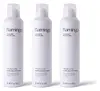
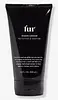
Flamingo Foaming Shave Gel Versus fur Shave Cream

What's inside
What's inside
 Key Ingredients
Benefits
Concerns
Ingredients Side-by-side
Water
Skin ConditioningAloe Barbadensis Leaf Juice
Skin Conditioning


Palmitic Acid
Emollient




Triethanolamine
BufferingIsopentane
SolventLaureth-23
Cleansing
Sorbitol
Humectant
Stearic Acid
Cleansing
Isobutane
Glyceryl Oleate
Emollient

Parfum
Masking
Phenoxyethanol
Preservative
Glycerin
Humectant
Hydroxyethylcellulose
Emulsion StabilisingBisabolol
Antioxidant
Allantoin
Skin Conditioning
CI 77891
Cosmetic ColorantHydroxypropylcellulose
EmulsifyingDisodium Phosphate
BufferingPolysorbate 60
Emulsifying
Sodium Phosphate
BufferingSilica
Abrasive


Hydroxycitronellal
Perfuming
Water, Aloe Barbadensis Leaf Juice, Palmitic Acid, Triethanolamine, Isopentane, Laureth-23, Sorbitol, Stearic Acid, Isobutane, Glyceryl Oleate, Parfum, Phenoxyethanol, Glycerin, Hydroxyethylcellulose, Bisabolol, Allantoin, CI 77891, Hydroxypropylcellulose, Disodium Phosphate, Polysorbate 60, Sodium Phosphate, Silica, Hydroxycitronellal
Water
Skin ConditioningSodium Cocoyl Isethionate
Cleansing
Cocamidopropyl Betaine
Cleansing
Stearic Acid
Cleansing
Decyl Glucoside
Cleansing
Glycerin
Humectant
Gluconolactone
Chelating




Cetyl Alcohol
Emollient
Aloe Barbadensis Leaf Juice
Skin Conditioning
Sorbitol
Humectant
Cetearyl Alcohol
Emollient
Saccharide Isomerate
Humectant
Althaea Officinalis Root Extract
Skin Conditioning
Butyrospermum Parkii Butter
Skin Conditioning
Olea Europaea Fruit Oil
Masking
Cannabis Sativa Seed Oil
Emollient
Allantoin
Skin Conditioning
Bisabolol
Antioxidant
Lavandula Angustifolia Oil
Masking
Salvia Sclarea Oil
Masking
Citrus Limon Peel Oil
Masking
Triheptanoin
Skin ConditioningC13-16 Isoparaffin
Solvent
Hydroxyethylcellulose
Emulsion StabilisingSodium Benzoate
Masking
Sodium Hydroxide
BufferingLimonene
Perfuming
Water, Sodium Cocoyl Isethionate, Cocamidopropyl Betaine, Stearic Acid, Decyl Glucoside, Glycerin, Gluconolactone, Cetyl Alcohol, Aloe Barbadensis Leaf Juice, Sorbitol, Cetearyl Alcohol, Saccharide Isomerate, Althaea Officinalis Root Extract, Butyrospermum Parkii Butter, Olea Europaea Fruit Oil, Cannabis Sativa Seed Oil, Allantoin, Bisabolol, Lavandula Angustifolia Oil, Salvia Sclarea Oil, Citrus Limon Peel Oil, Triheptanoin, C13-16 Isoparaffin, Hydroxyethylcellulose, Sodium Benzoate, Sodium Hydroxide, Limonene
Reviews
Ingredients Explained
These ingredients are found in both products.
Ingredients higher up in an ingredient list are typically present in a larger amount.
Allantoin is a soothing ingredient known for its protective and moisturizing properties; it's basically a quiet workhorse ingredient you can find in a huge range of cosmetics.
Though it can be derived from the comfrey plant, allantoin is produced synthetically for cosmetic products to ensure purity.
Research shows it can encourage your skin cells to turn over and renew by stimulating keratinocyte and fibroblast proliferation.
It also has mild keratolytic properties to help loosen and shed dead skin cells without being harsh.
Studies also suggest allantoin can help calm inflammation by dialing down some of the chemical signals your skin sends out when it is irritated.
This ingredient is typically used in the 0.1-0.5% range, and the FDA recognizes it as a skin protectant in OTC products up to 2%.
Overall, allantoin is a wonderful addition to most routines; it is stable across a wide pH range (~4-8), works well with other ingredients, and is considered non-sensitizing/non-irritating.
Fun fact: Allantoin is naturally occurring in comfrey root, beets, chamomile, and wheat sprouts. Our bodies even produce it as a byproduct of uric acid metabolism.
Learn more about AllantoinAloe Barbadensis Leaf Juice is the filtered, stabilized liquid pressed from the inner gel of the aloe vera leaf.
In cosmetics, it shows up as either soothing active or a water-replacement base. It is roughly 98-99% water and the last 1-2% is an interesting mix of polysaccharides, amino acids, vitamins, minerals, and enzymes.
The polysaccharides do most of the work: they bind water at the skin surface for a light, non-greasy hydration boost. And one of the polysaccharides, glycomannan, is linked to fibroblast stimulation + collagen synthesis. This is also why aloe has such a long track record in wound and burn healing.
This ingredient is also calming with anti-inflammatory and mild antimicrobial activity, making it a great pick for sensitive, irritated, or post-sun skin.
Realistic expectations matter though; the solid evidence is mostly limited to hydration, soothing, and wound support. Deeper claims about anti-aging or sun protection are not well backed, and science reviews note it does not prevent radiation-induced skin injury.
Because it plays well with almost everything, it's commonly used as a base alongside other actives like niacinamide or vitamin C.
Typical usage concentrations range from 0.5% (where hydration benefits already show up) all the way to 90%+ (where it replaces water as the main base).
The safety for this ingredient is well-establish as well. Overall, this is a great supporting ingredient for those who want a boost in hydration.
Learn more about Aloe Barbadensis Leaf JuiceBisabolol is a gentle skin conditioner, antioxidant, and soothing ingredient.
It's primary claim to fame is soothing and research shows topically applied bisabolol can quiet the chemical messengers that cause your skin to become inflamed, helping to sooth any irritation.
A clinical study found that applying 0.5% bisabolol daily for 8 weeks produced an average 9% decrease in skin pigmentation. Researchers found it can also suppress the process that leads to excess melanin production in skin.
In vitro studies found that bisabolol combined with propylene glycol significantly increased skin permeability by increasing lipid fluidity in the stratum corneum.
You'll likely see use concentrations quite low, usually 0.1-0.2%.
Overall, this is a well-tolerated ingredient that works well in formulas designed for sensitive, reactive, or post-procedure skin.
Learn more about BisabololGlycerin (or glycerol) is a compound naturally found in your skin. It's a powerhouse humectant that pulls water into the stratum corneum.
Topically, glycerin does several things at once:
Your skin makes glycerin on its own (mostly from sebaceous oil breakdown) and shuttles it to your outermost layer of skin, or your epidermis, via aquaporin-3.
Aquaporin-3 is a transporter that is essential for normal skin hydration, elasticity, and repair. Interestingly, mice lacking in AQP3 have dry and less elastic skin that can be fully corrected with glycerin.
This ingredient is non-irritating, plays well with almost every ingredient, and works across all skin types. Typical use is anywhere between 3-10% but can go up to 79% in some leave-on products.
Just know very high concentrations (>40%) can feel tacky in low humidity.
Glycerin is the name for this ingredient in American English. British English uses Glycerol/Glycerine.
Learn more about GlycerinHydroxyethylcellulose is used to improve the texture of products. It is created from a chemical reaction involving ethylene oxide and alkali-cellulose. Cellulose is a sugar found in plant cell walls and help give plants structure.
This ingredient helps stabilize products by preventing ingredients from separating. It can also help thicken the texture of a product.
This ingredient can also be found in pill medicines to help our bodies digest other ingredients.
Learn more about HydroxyethylcelluloseSorbitol is a sugar alcohol. It is a hydrating and moisturizing agent created from the reduction process of glucose.
Most sorbitol is usually made from potato starch. It is also found in fruits such as apples and pears.
As a humectant, Sorbitol helps draw water to the skin. This helps keep the skin hydrated. Sorbitol also helps create a thicker texture in products. You might find sorbitol in your toothpaste and other gels.
It is a non-irritating ingredient that is great for those with dry skin.
Sorbitol is a prebiotic. It helps promote the growth of healthy bacteria on your skin. The bacteria on your skin form a microbiome. This microbiome helps protect your skin from infection and harmful bacteria.
Learn more about SorbitolStearic Acid is a fatty acid that is already found in your skin. It's one of the free fatty acids that works alongside ceramides and cholesterols to maintain your barrier.
In cosmetics, it is a multitasker:
Safety-wise, the CIR Expert Panel has concluded it to be safe in cosmetics when formulated to be non-irritating and non-sensitizing.
Free stearic acid is a C18 fatty acid that the Malassezia yeast can substrate, so this ingredient may not be fungal acne safe.
This ingredient does have a comedogenic rating of 2-3, but this doesn't mean a formula with this ingredient will clog pores.
Human testing has proved that any finished product with this ingredient won't automatically make you break out; it really comes down to concentration, formula, and your skin.
Learn more about Stearic AcidWater. It's the most common cosmetic ingredient of all. You'll usually see it at the top of ingredient lists, meaning that it makes up the largest part of the product.
So why is it so popular? Water most often acts as a solvent - this means that it helps dissolve other ingredients into the formulation.
You'll also recognize water as that liquid we all need to stay alive. If you see this, drink a glass of water. Remember to stay hydrated!
Learn more about Water

