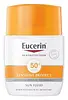
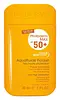
Eucerin Sun Protection Sun Fluid Face SPF 50 Versus Bioderma Bioderma Photoderm Max SPF 50 Aquafluide Pocket
This chemical sunscreen covers the full UV range and blocks ~98% of UVB at SPF 50.
This chemical sunscreen covers the full UV range and blocks ~98% of UVB at SPF 50.


What's inside
What's inside
 Key Ingredients
Benefits
Concerns
Ingredients Side-by-side
Water
Skin ConditioningIsopropyl Palmitate
Emollient




Butylene Glycol Dicaprylate/Dicaprate
EmollientIsodecyl Neopentanoate
EmollientOctocrylene
UV Absorber


Alcohol Denat.
Antimicrobial

Methyl Methacrylate Crosspolymer

Butyl Methoxydibenzoylmethane
UV Absorber
Dibutyl Adipate
EmollientPhenylbenzimidazole Sulfonic Acid
UV Absorber
Bis-Ethylhexyloxyphenol Methoxyphenyl Triazine
UV Absorber
Ethylhexyl Salicylate
UV Absorber
Homosalate
Skin Conditioning
Glycine
Buffering
Polyamide-5
Skin ConditioningPolymethylsilsesquioxane

Arginine Hcl
Skin ConditioningPolyglyceryl-4 Diisostearate/Polyhydroxystearate/Sebacate
Emulsifying
Glycerin
Humectant

Sodium Hyaluronate
Humectant


Glycyrrhetinic Acid
Skin Conditioning
Glycyrrhiza Inflata Root Extract
Skin Conditioning
Trisodium EDTA
ChelatingSilica Dimethyl Silylate
EmollientDimethicone
Emollient
Ethylhexylglycerin
Skin ConditioningWater, Isopropyl Palmitate, Butylene Glycol Dicaprylate/Dicaprate, Isodecyl Neopentanoate, Octocrylene, Alcohol Denat., Methyl Methacrylate Crosspolymer, Butyl Methoxydibenzoylmethane, Dibutyl Adipate, Phenylbenzimidazole Sulfonic Acid, Bis-Ethylhexyloxyphenol Methoxyphenyl Triazine, Ethylhexyl Salicylate, Homosalate, Glycine, Polyamide-5, Polymethylsilsesquioxane, Arginine Hcl, Polyglyceryl-4 Diisostearate/Polyhydroxystearate/Sebacate, Glycerin, Sodium Hyaluronate, Glycyrrhetinic Acid, Glycyrrhiza Inflata Root Extract, Trisodium EDTA, Silica Dimethyl Silylate, Dimethicone, Ethylhexylglycerin
Water
Skin ConditioningDicaprylyl Carbonate
EmollientOctocrylene
UV Absorber
Methylene Bis-Benzotriazolyl Tetramethylbutylphenol
UV Filter
Butyl Methoxydibenzoylmethane
UV Absorber
Glycerin
Humectant
Methyl Methacrylate Crosspolymer
Cyclohexasiloxane
Emollient
Cyclopentasiloxane
Emollient
Bis-Ethylhexyloxyphenol Methoxyphenyl Triazine
UV Absorber
Polymethylsilsesquioxane
Methylpropanediol
SolventHdi/Trimethylol Hexyllactone Crosspolymer
C20-22 Alkyl Phosphate
EmulsifyingC20-22 Alcohols
Emulsion Stabilising
Decyl Glucoside
Cleansing
Glyceryl Stearate Citrate
Emollient
Pentylene Glycol
Skin Conditioning
Microcrystalline Cellulose
AbsorbentC30-45 Alkyl Cetearyl Dimethicone Crosspolymer
Emollient
1,2-Hexanediol
Skin Conditioning
Caprylyl Glycol
Emollient
Disodium EDTA
ChelatingXanthan Gum
EmulsifyingMannitol
Humectant
Xylitol
Humectant
Sodium Hydroxide
BufferingCellulose Gum
Emulsion StabilisingRhamnose
HumectantPropylene Glycol
Humectant
Citric Acid
Buffering

Ectoin
Skin Conditioning

Tocopherol
Antioxidant


Water, Dicaprylyl Carbonate, Octocrylene, Methylene Bis-Benzotriazolyl Tetramethylbutylphenol, Butyl Methoxydibenzoylmethane, Glycerin, Methyl Methacrylate Crosspolymer, Cyclohexasiloxane, Cyclopentasiloxane, Bis-Ethylhexyloxyphenol Methoxyphenyl Triazine, Polymethylsilsesquioxane, Methylpropanediol, Hdi/Trimethylol Hexyllactone Crosspolymer, C20-22 Alkyl Phosphate, C20-22 Alcohols, Decyl Glucoside, Glyceryl Stearate Citrate, Pentylene Glycol, Microcrystalline Cellulose, C30-45 Alkyl Cetearyl Dimethicone Crosspolymer, 1,2-Hexanediol, Caprylyl Glycol, Disodium EDTA, Xanthan Gum, Mannitol, Xylitol, Sodium Hydroxide, Cellulose Gum, Rhamnose, Propylene Glycol, Citric Acid, Ectoin, Tocopherol
Ingredients Explained
These ingredients are found in both products.
Ingredients higher up in an ingredient list are typically present in a larger amount.
This ingredient is better known as bemotrizinol or Tinosorb S and is one of the best broad-spectrum UV filters in modern sunscreen.
It works by absorbing UV light across a whole range (280-400 nm) with peaks around 310 nm (UVB) and 340-345 nm (UVA). This means it covers UVB plus the deeper UVA wavelengths that drive photoaging and pigmentation.
Another pro?
It's exceptionally photostable, barely degrades in sunlight, and acts as a "bodyguard" for less stable filters.
That's why you'll see it paired with avobenzone or octinoxate; this team up ensures they keep working through sun exposure.
Safety reviews have been reassuring across the board. This ingredient shows low absorption through the skin, rarely irritates, and lab studies found it doesn't act like a hormone in the body (a concern that's been raised about some older sunscreen filters).
On maximum concentrations:
In 2026, the US F.D.A finally added it as an OTC sunscreen ingredient at concentrations up to 6% for adults / children 6 months and older
Learn more about Bis-Ethylhexyloxyphenol Methoxyphenyl TriazineAlso known as Avobenzone, this ingredient is an oil-soluble used to absorb the full spectrum of UVA rays (peak 357 nm).
It's one of the most effective UVA filters available but has a major caveat of photostability: avobenzone is susceptible to photodegradation.
This means it can lose efficacy when exposed to sunlight without the help of a stabilizing agent.
Studies show antioxidants (like vitamin E or vitamin C) and some UV filters (like octocrylene and Tinosorb S) can meaningfully improve its stability in a formulation.
The maximum allowable concentration according to regulation is 3% in the US + Canada, and 5% in the EU, Australia, China, Korea, and ASEAN countries.
It has a well-support safety profile: a comprehensive 2025 review found minimal toxicity with no evidence of carcinogenicity.
Overall, avobenzone is a safe and regulated ingredient used in sunscreen for over 40 years.
Learn more about Butyl MethoxydibenzoylmethaneGlycerin (or glycerol) is a compound naturally found in your skin. It's a powerhouse humectant that pulls water into the stratum corneum.
Topically, glycerin does several things at once:
Your skin makes glycerin on its own (mostly from sebaceous oil breakdown) and shuttles it to your outermost layer of skin, or your epidermis, via aquaporin-3.
Aquaporin-3 is a transporter that is essential for normal skin hydration, elasticity, and repair. Interestingly, mice lacking in AQP3 have dry and less elastic skin that can be fully corrected with glycerin.
This ingredient is non-irritating, plays well with almost every ingredient, and works across all skin types. Typical use is anywhere between 3-10% but can go up to 79% in some leave-on products.
Just know very high concentrations (>40%) can feel tacky in low humidity.
Glycerin is the name for this ingredient in American English. British English uses Glycerol/Glycerine.
Learn more about GlycerinThis ingredient comes as a powder made up of small, porous, microbeads. It is used to add a silky feel to products and also helps absorb oil.
Octocrylene is an oil-soluble organic UV filter that mainly absorbs UVB and short wave UVA II light.
Its real superpower is teamwork: octocrylene is remarkably photostable and is most famous for stabilizing avobenzone (the workhorse UVA filter).
This ingredient is commonly used to enhance both UVB and UVA protection due to its unique property in stabilizing avobenzone. It also pulls double duty by boosting water resistance and giving formulas a smooth, spreadable feel.
The EU's Scientific Committee on Consumer Safety (SCCS) has deemed octocrylene to be safe as a UV-filter at concentrations up to 10% (capped at 9% in propellant sprays). The US also permits it up to 10%.
Two things worth knowing:
You'll usually see this ingredient used in concentrations between 2-10% (higher amounts when used as a stabilizer for avobenzone).
Learn more about OctocrylenePolymethylsilsesquioxane is a silicone used as a film forming agent.
When applied to the skin, this ingredient creates an invisible film on the surface. This film still allows oxygen to pass through, but prevents moisture from escaping. This can help condition and hydrate the skin. It also leaves a silky feel when applied.
Polymethylsilsesquioxane has not been shown to clog pores. It has been deemed safe to use up to 55%, but most cosmetics use much less.
If you have concerns about using this ingredient, we recommend speaking with a professional.
Learn more about PolymethylsilsesquioxaneWater. It's the most common cosmetic ingredient of all. You'll usually see it at the top of ingredient lists, meaning that it makes up the largest part of the product.
So why is it so popular? Water most often acts as a solvent - this means that it helps dissolve other ingredients into the formulation.
You'll also recognize water as that liquid we all need to stay alive. If you see this, drink a glass of water. Remember to stay hydrated!
Learn more about Water

