Eucerin Complete Hydration Lotion SPF 50 Face & Body Versus Blue Lizard Sensitive Mineral Sunscreen SPF 50+
This chemical sunscreen covers burning UVB and near UVA but not the deep UVA that drives aging.
This hybrid sunscreen covers the full UV range and blocks ~98% of UVB at SPF 50.


What's inside
What's inside
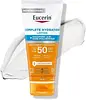 Key Ingredients
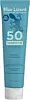
Benefits
Concerns
Ingredients Side-by-side
Homosalate
Skin Conditioning

Octocrylene
UV Absorber

Ethylhexyl Salicylate
UV Absorber
Water
Skin ConditioningC12-15 Alkyl Benzoate
AntimicrobialNeopentyl Glycol Diheptanoate
EmollientStyrene/Acrylates Copolymer
Butylene Glycol
Humectant

Diethylhexyl Syringylidenemalonate
Skin Protecting
Vp/Eicosene Copolymer
Sodium Hyaluronate
Humectant


Glycyrrhiza Inflata Root Extract
Skin Conditioning
Glycyrrhetinic Acid
Skin Conditioning
Tocopherol
Antioxidant



Aloe Barbadensis Leaf Juice
Skin Conditioning
1,2-Hexanediol
Skin Conditioning
Hydroxyacetophenone
Antioxidant
Acrylates/C10-30 Alkyl Acrylate Crosspolymer
Emulsion StabilisingPotassium Hydroxide
BufferingDisodium EDTA
Sodium Ascorbyl Phosphate
Antioxidant



Homosalate, Octocrylene, Ethylhexyl Salicylate, Water, C12-15 Alkyl Benzoate, Neopentyl Glycol Diheptanoate, Styrene/Acrylates Copolymer, Butylene Glycol, Diethylhexyl Syringylidenemalonate, Vp/Eicosene Copolymer, Sodium Hyaluronate, Glycyrrhiza Inflata Root Extract, Glycyrrhetinic Acid, Tocopherol, Aloe Barbadensis Leaf Juice, 1,2-Hexanediol, Hydroxyacetophenone, Acrylates/C10-30 Alkyl Acrylate Crosspolymer, Potassium Hydroxide, Disodium EDTA, Sodium Ascorbyl Phosphate
Titanium Dioxide 8%
Cosmetic Colorant
Zinc Oxide 10%
Cosmetic Colorant
1,2-Hexanediol
Skin Conditioning
Aloe Barbadensis Leaf Juice Powder
Skin Conditioning
Alumina
Abrasive
Aluminum Stearate
Cosmetic ColorantButyloctyl Salicylate
Skin Conditioning
C12-15 Alkyl Benzoate
AntimicrobialCaprylyl Glycol
Emollient
Cetyl Dimethicone
Emollient
Cetyl PEG/PPG-10/1 Dimethicone
Emulsifying
Dimethicone
Emollient
Disodium EDTA
Ethylhexyl Palmitate
Emollient



Ethylhexyl Stearate
Emollient
Euphorbia Cerifera Wax
Hexyl Laurate
Emollient
Hydroxyacetophenone
Antioxidant
Methyl Glucose Dioleate
Emollient
Octyldodecyl Neopentanoate
EmollientPEG-7 Hydrogenated Castor Oil
Emulsifying
Polyglyceryl-4 Isostearate
Emulsifying
Polyhydroxystearic Acid
Emulsifying
Propanediol
Solvent
Tocopherol
Antioxidant
Tocopheryl Acetate
Antioxidant
Triethoxycaprylylsilane
Trimethylsiloxysilicate
Emollient
Vp/Hexadecene Copolymer
Water
Skin ConditioningTitanium Dioxide 8%, Zinc Oxide 10%, 1,2-Hexanediol, Aloe Barbadensis Leaf Juice Powder, Alumina, Aluminum Stearate, Butyloctyl Salicylate, C12-15 Alkyl Benzoate, Caprylyl Glycol, Cetyl Dimethicone, Cetyl PEG/PPG-10/1 Dimethicone, Dimethicone, Disodium EDTA, Ethylhexyl Palmitate, Ethylhexyl Stearate, Euphorbia Cerifera Wax, Hexyl Laurate, Hydroxyacetophenone, Methyl Glucose Dioleate, Octyldodecyl Neopentanoate, PEG-7 Hydrogenated Castor Oil, Polyglyceryl-4 Isostearate, Polyhydroxystearic Acid, Propanediol, Tocopherol, Tocopheryl Acetate, Triethoxycaprylylsilane, Trimethylsiloxysilicate, Vp/Hexadecene Copolymer, Water
Reviews
Ingredients Explained
These ingredients are found in both products.
Ingredients higher up in an ingredient list are typically present in a larger amount.
1,2-Hexanediol is a synthetic liquid and another multi-functional powerhouse.
It is a:
- Humectant, drawing moisture into the skin
- Emollient, helping to soften skin
- Solvent, dispersing and stabilizing formulas
- Preservative booster, enhancing the antimicrobial activity of other preservatives
C12-15 Alkyl Benzoate is a lightweight emollient made by combinig benzoic acid with fatty alcohols that are 12-15 carbons long.
In cosmetics, it plays several roles:
The Cosmetic Review Expert Panel has concluded the alkyl benzoate group to be safe as used in cosmetics; it wasn't found to be a skin irritant and unlikely to be absorbed due to its low water solubility.
This report recorded almost 1000 reported uses with concentrations up to 59% in leave-on products but your cosmetics will typically use 0.5-15% depending on the product.
It's often called a "SPF booster": this is because it keeps UV filters properly dissolved and evenly distributed to support a sunscreen's performance. It doesn't actually raise SPF on its own.
Overall, this ingredient is well tolerated.
This ingredient is fungal acne safe because it is an ester of benzoic acid.
Think of this ingredient as two parts stuck together: an oily part and an acid part. Malassezia only gets a meal when it can snip off a fatty acid to eat. With C12-15 Alkyl Benzoate, the acid part is benzoic acid, which isn't a fatty acid and which the yeast can't use as food.
Benzoic acid is actually used as a preservative to stop yeast from growing.
The oily part is a blend of C12-15 fatty alcohols but fatty alcohols in this size range can support only a little Malassezia growth (mostly for one species of Malassezia as well).
In the ingredient, those alcohols stay locked inside the molecule. The yeast can only reach them by snipping the benzoate bond, and that type of bond is harder for it to cut than a normal fatty bond.
So not much gets released. And whatever does get snipped comes packaged with benzoic acid, which discourages yeast growth.
Learn more about C12-15 Alkyl BenzoateDisodium EDTA is a chelating agent. It grabs onto and deactivates metal ions that sneak into your products from water, packaging, or air.
This ingredient mainly works behind the scenes and helps with:
On top of that, this ingredient can counteract the effects of hard water by binding to the minerals in it.
One thing worth knowing is that Disodium EDTA has been shown to be a mild penetration enhancer. It can help other ingredients absorb into skin more effectively which can be a double-edged sword (great for actives, but can also make the active too strong if you have sensitive skin).
Clinical patch testing showed no significant skin irritation at typical use concentrations and minimal dermal absorption.
You'll most likely see this ingredient near the end of an ingredient list. It's typically found in concentrations less than 1%.
Learn more about Disodium EDTAHydroxyacetophenone is a small phenolic molecule that earns its place in a formulas as an antioxidant and preservative booster.
As a phenol, it is able to neutralize free radicals to protect both the product and the skin from oxidative stress.
Though it can't kill microbes on its own, it works as a good supporting agent when combined with other preservatives like Phenoxyethanol or 1,2-Hexanediol.
This ingredient naturally occurs as piceol in Norwegian spruce needles (~0.4-1.1% dry weight and in cloudberries). Though the cosmetic-grade material is synthesized for purity and consistency.
You'll usually see it used at low levels and suppliers recommend up to 1% added to a water phase.
Safety testing was done at concentrations like 0.05% in SPF products and 0.5% in a Human Repeated Insult Patch Test. The safety evidence is assuring; this ingredient is safe for cosmetics in current use and also holds safety status as a food flavoring as well.
An honest caveat: the "soothing" and "anti-inflammatory" claims come mostly from supplier marketing rather than published clinical trials. The Cosmetic Ingredient Review's own literature search found no useful efficacy studies on this ingredient.
So the antioxidant and preservative-boosting roles are the well supported ones while the calming benefit is plausible but thinly evidenced.
Overall, this is a well-tolerated, low-irritation multitasker that quietly helps a formula stay fresh and stable.
Learn more about HydroxyacetophenoneTocopherol is a fat-soluble antioxidant known as Vitamin E.
You'll find this ingredient in the vast majority of skincare (for good reason). It works to neutralize free radicals, or unstable molecules generated by UV exposure, pollution, and other environmental stressors, before they can cause oxidative damage to your skin cells.
Topically applied tocopherol has been shown to protect against UV damage by ramping up the skin's own natural defense enzymes.
It also acts as a skin conditioning agent; some studies show that regular topical use can improve the skin's water-binding capacity over 2-4 weeks.
This ingredient is especially loved for being a team player. When combined with Vitamin C, the photoprotective effect of both ingredients roughly doubles and the combo also helps reduce UV-induced DNA damage.
This ingredient has some brightening potential but it's more of a prevention ingredient than spot-fader. Cell studies show it can slow down melanin production but it's worth noting that it's not the most powerful brightener out there.
In formulations, it also serves as a stabilizer that helps protect other oxidation-prone ingredients from degrading.
Concentrations usually range from 0.1-1% in most leave-on products.
Learn more about TocopherolWater. It's the most common cosmetic ingredient of all. You'll usually see it at the top of ingredient lists, meaning that it makes up the largest part of the product.
So why is it so popular? Water most often acts as a solvent - this means that it helps dissolve other ingredients into the formulation.
You'll also recognize water as that liquid we all need to stay alive. If you see this, drink a glass of water. Remember to stay hydrated!
Learn more about Water

