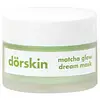
This calming overnight mask is formulated around Aloe Barbadensis Leaf Extract and Centella Asiatica Leaf Extract to calm redness and brighten dull-looking skin.
This barrier-repair moisturizer is formulated around Panthenol and Madecassoside to strengthen the skin barrier and hydrate skin.


What's inside
What's inside
 Key Ingredients
Benefits
Concerns
Ingredients Side-by-side
Water
Skin ConditioningXanthan Gum
EmulsifyingPropylene Glycol
Humectant


Aloe Barbadensis Leaf Extract
Emollient

Butylene Glycol
Humectant
Glycerin
Humectant
Isononyl Isononanoate
EmollientParaffinum Liquidum
Emollient


Centella Asiatica Leaf Extract
Skin Conditioning
Ethyl Macadamiate
Skin Conditioning
Arbutin
Antioxidant



Polyacrylamide
C13-14 Isoparaffin
Emollient
Laureth-7
EmulsifyingCetyl Alcohol
Emollient

Cetearyl Alcohol
Emollient
Glyceryl Stearate
Emollient
PEG-40 Stearate
Emulsifying
Ceteareth-20
CleansingPhenoxyethanol
Preservative
Parfum
Masking

Camellia Sinensis Leaf Extract
Antimicrobial

CI 19140
Cosmetic ColorantCI 42090
Cosmetic ColorantCI 73015
Cosmetic ColorantWater, Xanthan Gum, Propylene Glycol, Aloe Barbadensis Leaf Extract, Butylene Glycol, Glycerin, Isononyl Isononanoate, Paraffinum Liquidum, Centella Asiatica Leaf Extract, Ethyl Macadamiate, Arbutin, Polyacrylamide, C13-14 Isoparaffin, Laureth-7, Cetyl Alcohol, Cetearyl Alcohol, Glyceryl Stearate, PEG-40 Stearate, Ceteareth-20, Phenoxyethanol, Parfum, Camellia Sinensis Leaf Extract, CI 19140, CI 42090, CI 73015
Water
Skin ConditioningPropanediol
Solvent
Pentaerythrityl Tetraethylhexanoate
Emollient
Caprylic/Capric Triglyceride
Masking
Helianthus Annuus Seed Oil
Emollient
Polyglyceryl-3 Methylglucose Distearate
Emulsifying
Hydrogenated Vegetable Oil
Emollient
Cetearyl Alcohol
Emollient
Panthenol
Skin Conditioning
1,2-Hexanediol
Skin Conditioning
Carbomer
Emulsion StabilisingXanthan Gum
EmulsifyingGlyceryl Caprylate
EmollientTromethamine
BufferingEthylhexylglycerin
Skin ConditioningDisodium EDTA
Madecassoside
Antioxidant
Lecithin
Emollient
Butylene Glycol
Humectant
Tocopherol
Antioxidant
Camellia Sinensis Leaf Extract
Antimicrobial
Water, Propanediol, Pentaerythrityl Tetraethylhexanoate, Caprylic/Capric Triglyceride, Helianthus Annuus Seed Oil, Polyglyceryl-3 Methylglucose Distearate, Hydrogenated Vegetable Oil, Cetearyl Alcohol, Panthenol, 1,2-Hexanediol, Carbomer, Xanthan Gum, Glyceryl Caprylate, Tromethamine, Ethylhexylglycerin, Disodium EDTA, Madecassoside, Lecithin, Butylene Glycol, Tocopherol, Camellia Sinensis Leaf Extract
Reviews
Ingredients Explained
These ingredients are found in both products.
Ingredients higher up in an ingredient list are typically present in a larger amount.
Butylene Glycol (or BG) is used within cosmetic products for a few different reasons:
Overall, Butylene Glycol is a safe and well-rounded ingredient that works well with other ingredients.
Though this ingredient works well with most skin types, some people with sensitive skin may experience a reaction such as allergic rashes, closed comedones, or itchiness.
Learn more about Butylene GlycolCamellia Sinensis Leaf Extract (tea extract) is one of the most well-researched plant extracts in skincare with an impressive resume.
Black tea, green tea, and oolong tea are all harvested from the Camellia Sinensis plant.
Studies show green tea extract and its catechins (like epigallocatechin gallate (EGCG)) help your skin cells product energy more efficiently and reducing the number of free-radicals that can damage your skin from the inside.
In lab-grown skin models, this translated to younger, healthier, and stronger skin.
There's also good sun protection data; researchers saw less DNA damage and redness on human skin when green tea was applied before UVB exposure. And the more they applied, the better the protection.
Needless to say, this ingredient shouldn't replace your sunscreen. But it is a great supportive ingredient that you can already find in many sunscreens and antioxidant serums.
A 2009 study found a 2% green tea lotion was effective for mild-to-moderate acne thanks to its anti-inflammatory and mild antimicrobial activity.
The quality of the extract matters a lot here:
Good extracts contain 50-90% catechins while lower quality ones are mostly there for marketing. We recommend reaching out to the brand if you have questions about the quality or source of their ingredients.
Human Repeated Insult Patch Testing showed no irritation or sensitization at use concentrations (0.86% in leave-on products and up to 30% as leaf water).
Learn more about Camellia Sinensis Leaf ExtractCetearyl alcohol is a waxy mixture of two fatty alcohols: cetyl alcohol and stearyl alcohol. It is an emollient and emulsifier.
Despite having "alcohol" in its name, it has nothing to do with drying solvent alcohols; the FDA also allows "alcohol-free" products to contain fatty alcohols like this ingredient.
It plays several roles in a formula:
Typical use levels for this ingredient sit around 1-10% and the Cosmetic Ingredient Review Expert Panel has affirmed safety at concentrations up to 25% in leave-on products.
Multiple assessments have found it to be non-irritating and non-sensitizing to most people.
However, there have been some cases of allergic contact dermatitis in patients with chronically compromised skin barriers.
Cetearyl alcohol has a comedogenic rating of 2 and irritancy rating of 1. Both of these numbers come from the 1989 study that used rabbit ears; a "2" means mildly comedogenic and a "1" means low irritancy.
Here's the catch: rabbit skin is more sensitive than human skin and throws a lot of false positives. A 1996 reappraisal found that ingredients rated 1-2 in the rabbit ear tests are generally safe for humans.
Remember comedogenic ratings are unable to assess the entire formula of a product or how it will react on your skin. Just be sure to patch test if you are unsure about certain ingredients.
This ingredient is not fungal acne safe. Cetearyl alcohol is a fatty alcohol with chain lengths that fall within the range that Malassezia can metabolize.
A 2019 study has also observed Malassezia growth in the presence of this ingredient, confirming it to be not-fungal acne safe.
Learn more about Cetearyl AlcoholWater. It's the most common cosmetic ingredient of all. You'll usually see it at the top of ingredient lists, meaning that it makes up the largest part of the product.
So why is it so popular? Water most often acts as a solvent - this means that it helps dissolve other ingredients into the formulation.
You'll also recognize water as that liquid we all need to stay alive. If you see this, drink a glass of water. Remember to stay hydrated!
Learn more about WaterXanthan gum is used as a stabilizer and thickener within cosmetic products. It helps give products a sticky, thick feeling - preventing them from being too runny.
On the technical side of things, xanthan gum is a polysaccharide - a combination consisting of multiple sugar molecules bonded together.
Xanthan gum is a pretty common and great ingredient. It is a natural, non-toxic, non-irritating ingredient that is also commonly used in food products.
Learn more about Xanthan Gum

