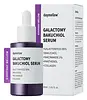
This anti-aging serum is formulated around Galactomyces Ferment Filtrate and Niacinamide to soften the look of wrinkles and refine skin texture.
This barrier-repair serum is formulated around Niacinamide and Adenosine to strengthen the skin barrier and soften the look of wrinkles.

What's inside
What's inside
 Key Ingredients
Benefits
Concerns
Ingredients Side-by-side
Galactomyces Ferment Filtrate 95%
Humectant







Niacinamide
Smoothing






Bakuchiol
Antimicrobial

Panthenol
Skin Conditioning
Collagen
Moisturising
Squalane
Emollient
1,2-Hexanediol
Skin Conditioning
Hydroxyacetophenone
Antioxidant
Simmondsia Chinensis Seed Oil
Emollient
Tocopheryl Acetate
Antioxidant
Propanediol
Solvent
Butylene Glycol
Humectant
Centella Asiatica Extract
Cleansing
Carbomer
Emulsion StabilisingAlgin
MaskingCeramide NP
Skin Conditioning
Corylus Avellana Seed Extract
Skin ConditioningAdenosine
Skin Conditioning
Pelargonium Graveolens Flower Oil
Masking



Galactomyces Ferment Filtrate 95%, Niacinamide, Bakuchiol, Panthenol, Collagen, Squalane, 1,2-Hexanediol, Hydroxyacetophenone, Simmondsia Chinensis Seed Oil, Tocopheryl Acetate, Propanediol, Butylene Glycol, Centella Asiatica Extract, Carbomer, Algin, Ceramide NP, Corylus Avellana Seed Extract, Adenosine, Pelargonium Graveolens Flower Oil
Rosa Centifolia Flower Water
Skin ConditioningAnastatica Hierochuntica Extract
AstringentGlycerin
Humectant
Glyceryl Glucoside
Humectant
Cyclohexasiloxane
Emollient
Dimethicone
Emollient
Hexyl Laurate
Emollient
Niacinamide
Smoothing
1,2-Hexanediol
Skin Conditioning
Pentaerythrityl Tetraethylhexanoate
Emollient
Stearic Acid
Cleansing
Polysorbate 60
Emulsifying
Sorbitan Stearate
Emulsifying
Cetearyl Alcohol
Emollient



Beeswax
Emulsion Stabilising
Hydrogenated Lecithin
Emulsifying
Cetearyl Olivate
Sorbitan Olivate
Emulsifying
Cyclopentasiloxane
Emollient
Dimethicone/Vinyl Dimethicone Crosspolymer
Skin Conditioning
Polysilicone-11
Butylene Glycol
Humectant
Cordyceps Sinensis Extract
Antioxidant
Tocopheryl Acetate
Antioxidant
Sodium Hyaluronate
Humectant
Hydrolyzed Collagen
Emollient
Hydrolyzed Elastin
EmollientHydrolyzed Hyaluronic Acid
Humectant
Adenosine
Skin Conditioning
Water
Skin ConditioningSh-Oligopeptide-1
Skin Conditioning
Rh-Polypeptide-1
Skin Conditioning
Galloyl Tripeptide-35
Antioxidant
Nicotinoyl Octapeptide-9
Antioxidant
Acacia Dealbata Flower Extract
Skin ConditioningViola Tricolor Extract
EmollientRosa Canina Fruit Extract
Astringent
Diamond Powder
Abrasive
Carbomer
Emulsion StabilisingArginine
Masking
Xanthan Gum
EmulsifyingRosa Damascena Flower Oil
Masking
Ethylhexylglycerin
Skin ConditioningRosa Centifolia Flower Water, Anastatica Hierochuntica Extract, Glycerin, Glyceryl Glucoside, Cyclohexasiloxane, Dimethicone, Hexyl Laurate, Niacinamide, 1,2-Hexanediol, Pentaerythrityl Tetraethylhexanoate, Stearic Acid, Polysorbate 60, Sorbitan Stearate, Cetearyl Alcohol, Beeswax, Hydrogenated Lecithin, Cetearyl Olivate, Sorbitan Olivate, Cyclopentasiloxane, Dimethicone/Vinyl Dimethicone Crosspolymer, Polysilicone-11, Butylene Glycol, Cordyceps Sinensis Extract, Tocopheryl Acetate, Sodium Hyaluronate, Hydrolyzed Collagen, Hydrolyzed Elastin, Hydrolyzed Hyaluronic Acid, Adenosine, Water, Sh-Oligopeptide-1, Rh-Polypeptide-1, Galloyl Tripeptide-35, Nicotinoyl Octapeptide-9, Acacia Dealbata Flower Extract, Viola Tricolor Extract, Rosa Canina Fruit Extract, Diamond Powder, Carbomer, Arginine, Xanthan Gum, Rosa Damascena Flower Oil, Ethylhexylglycerin
Ingredients Explained
These ingredients are found in both products.
Ingredients higher up in an ingredient list are typically present in a larger amount.
1,2-Hexanediol is a synthetic liquid and another multi-functional powerhouse.
It is a:
- Humectant, drawing moisture into the skin
- Emollient, helping to soften skin
- Solvent, dispersing and stabilizing formulas
- Preservative booster, enhancing the antimicrobial activity of other preservatives
Adenosine is a purine nucleoside that your body already makes in every cell. In skincare, it acts mainly as a skin conditioning and anti-aging agent.
The way it works is fairly well mapped out:
Your skin has cells called fibroblasts that build collagen (the stuff that keeps skin firm and smooth). Adenosine basically flips a switch on these cells that tells them to get to work making more collagen and other proteins. These cells slow down on their own as skin ages, so Adenosine helps give them a little nudge to keep going.
The clinical backing is pretty solid too.
A blind, randomized, placebo-controlled trial of 126 women aged 45-65 tested a 0.1% cream twice daily and found real improvements in crow's feet and frown lines using a precise 3D skin-mapping technique; these changes showed up by week 3 and held at 2 months.
A later study using Adenosine-loaded dissolving microneedle patches reported gains in wrinkle depth, dermal density, elasticity, and hydration.
On concentrations, South Korea's Ministry of Food and Drug Safety has set 0.04% as the approved functional anti-wrinkle level. You'll typically see this ingredient used somewhere in the 0.04-0.1% range since it works at low doses.
This ingredient has been found safe for cosmetics with the data showing no irritation or sensitization.
Overall, this is a great ingredient for any anti-aging routine and has no photosensitizing effect, so it suits both AM and PM use.
Learn more about AdenosineButylene Glycol (or BG) is used within cosmetic products for a few different reasons:
Overall, Butylene Glycol is a safe and well-rounded ingredient that works well with other ingredients.
Though this ingredient works well with most skin types, some people with sensitive skin may experience a reaction such as allergic rashes, closed comedones, or itchiness.
Learn more about Butylene GlycolCarbomer is a synthetic thickening and gelling agent. It's basically the ingredient that gives a lot of serums, gels, creams, and sunscreens their smooth, non-sticky texture.
Although legally permitted at very high levels, carbomers are normally used at concentrations below 1%.
It also needs to be neutralized to actually thicken, and because it is a large molecule, it doesn't really penetrate the skin barrier.
Allergy-wise, the risk is very low. Clinical studies show carbomers have low potential for skin irritation/sensitization even at concentrations up to 100%.
A 2024 UK study patch-tested 1,302 patients and found true allergy to the parent group of carbomer to be rare with no confirmed relevant reactions.
Learn more about CarbomerNiacinamide is a multitasking form of vitamin B3 that strengthens the skin barrier, reduces pores and dark spots, regulates oil, and improves signs of aging.
And the best part? It's gentle and well-tolerated by most skin types, including sensitive and reactive skin.
You might have heard of "niacin flush", or the reddening of skin that causes itchiness. Niacinamide has not been found to cause this.
In very rare cases, some individuals may not be able to tolerate niacinamide at all or experience an allergic reaction to it.
If you are experiencing flaking, irritation, and dryness with this ingredient, be sure to double check all your products as this ingredient can be found in all categories of skincare.
When incorporating niacinamide into your routine, look out for concentration amounts. Typically, 5% niacinamide provides benefits such as fading dark spots. However, if you have sensitive skin, it is better to begin with a smaller concentration.
When you apply niacinamide to your skin, your body converts it into nicotinamide adenine dinucleotide (NAD). NAD is an essential coenzyme that is already found in your cells as "fuel" and powers countless biological processes.
In your skin, NAD helps repair cell damage, produce new healthy cells, support collagen production, strengthen the skin barrier, and fight environmental stressors (like UV and pollution).
Our natural NAD levels start to decline with age, leading to slower skin repair, visible aging, and a weaker skin barrier. By providing your skin niacinamide, you're recharging your skin's NAD levels. This leads to stronger, healthier, and younger looking skin.
Another name for vitamin B3 is nicotinamide. This vitamin is water-soluble and our bodies don't store it. We obtain Vitamin B3 from either food or skincare. Meat, fish, wheat, yeast, and leafy greens contain vitamin B3.
The type of niacinamide used in skincare is synthetically created.
Learn more about NiacinamideTocopheryl Acetate is a stable, shelf-friendly form of vitamin E.
Formulators love it because plain vitamin E oxidizes quickly once it hits air. This acetate version stays stable and resists going off, helping to extend a product's shelf life.
It's actually inactive on its own and works like a slow-release "storage" form; the enzymes in your skin called esterases gradually convert it into active vitamin E over time.
One in vivo study showed 5% of the acetate in the living layer of the epidermis converted to vitamin E after 5 days of application. This study also found the skin gained protection against UV damage even though the conversion was slow and small.
Once converted, vitamin E acts as a skin's main fat-soluble antioxidant that fights free radicals to protect skin from damage.
Topical vitamin E generally boosts the skin's photoprotection, and it reduced UV-damage in animal models.
This ingredient has some brightening potential but it's more of a prevention ingredient than spot-fader. Cell studies show it can slow down melanin production but it's worth noting that it's not the most powerful brightener out there.
Overall, it has a pretty solid safety profile and has been found to be non-irritating and non-comedogenic. Allergic reactions may happen but stay rare due to how widely the ingredient gets used.
The concentration will vary depending on the formula; industry data shows 0.1% in baby lotions, 3% in lipsticks, and 5% in foot powders. You can also find this ingredient at 100% in a pure vitamin E oil.
Most leave-on skincare keeps it at the lower end, often between 0.5-1%.
Learn more about Tocopheryl Acetate

