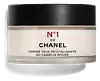
Chanel N°1 de Chanel Revitalizing Eye Cream Versus Garancia [Larmes De Fantôme] Contour Des Yeux Et Paupières
This anti-aging eye moisturizer is formulated around Squalane to soften the look of wrinkles and hydrate skin.

What's inside
What's inside
 Key Ingredients
Benefits
Concerns
Ingredients Side-by-side
Camellia Japonica Flower Water
Skin ConditioningWater
Skin ConditioningGlycerin
Humectant


Butylene Glycol
Humectant
Squalane
Emollient
Sodium Acrylates Copolymer
Propanediol
Solvent
Albizia Julibrissin Bark Extract
MaskingCamellia Japonica Seed Oil
Emollient


Saccharomyces Cerevisiae Extract
Skin Conditioning
Faex
Skin ConditioningCamellia Japonica Flower Extract
EmollientSigesbeckia Orientalis Extract
Skin ConditioningPentylene Glycol
Skin Conditioning
Ethylhexylglycerin
Skin ConditioningCellulose
Absorbent
Lecithin
Emollient
Phospholipids
Skin Conditioning
Sclerotium Gum
Emulsion StabilisingChlorphenesin
Antimicrobial
Escin
TonicCaprylyl Glycol
Emollient
Cyamopsis Tetragonoloba Gum
Emulsion StabilisingMaltodextrin
Absorbent
Beta-Sitosterol
Emulsion Stabilising
Arginine
Masking
Tocopherol
Antioxidant




Adenosine
Skin Conditioning
Sodium Hyaluronate
Humectant
Lactic Acid
Buffering




1,2-Hexanediol
Skin Conditioning
Tin Oxide
Abrasive
Sodium Benzoate
Masking
Palmitoyl Tetrapeptide-7
Skin Conditioning
CI 77891
Cosmetic ColorantMica
Cosmetic ColorantCamellia Japonica Flower Water, Water, Glycerin, Butylene Glycol, Squalane, Sodium Acrylates Copolymer, Propanediol, Albizia Julibrissin Bark Extract, Camellia Japonica Seed Oil, Saccharomyces Cerevisiae Extract, Faex, Camellia Japonica Flower Extract, Sigesbeckia Orientalis Extract, Pentylene Glycol, Ethylhexylglycerin, Cellulose, Lecithin, Phospholipids, Sclerotium Gum, Chlorphenesin, Escin, Caprylyl Glycol, Cyamopsis Tetragonoloba Gum, Maltodextrin, Beta-Sitosterol, Arginine, Tocopherol, Adenosine, Sodium Hyaluronate, Lactic Acid, 1,2-Hexanediol, Tin Oxide, Sodium Benzoate, Palmitoyl Tetrapeptide-7, CI 77891, Mica
Water
Skin ConditioningGlycerin
Humectant
Coco-Caprylate/Caprate
Emollient
Boron Nitride
Absorbent
Maltodextrin
Absorbent
Heptyl Undecylenate
EmollientGlyceryl Oleate Citrate
Emulsifying
Oleic/Linoleic/Linolenic Polyglycerides
Emollient
Pentylene Glycol
Skin Conditioning
Propanediol
Solvent
Methylpropanediol
SolventAlbizia Julibrissin Bark Extract
MaskingArnica Montana Flower Extract
Masking
Sambucus Nigra Flower Extract
RefreshingTephrosia Purpurea Seed Extract
Skin ConditioningSigesbeckia Orientalis Extract
Skin ConditioningJania Rubens Extract
Skin Conditioning
Caprylic/Capric Glycerides
EmollientAcetyl Tetrapeptide-5
Humectant
Methylsilanol Mannuronate
Skin ConditioningTocopherol
Antioxidant
Xanthan Gum
EmulsifyingEthylhexylglycerin
Skin ConditioningSodium Benzoate
Masking
Parfum
Masking
Sodium Carrageenan
Emulsion StabilisingPhenethyl Alcohol
MaskingWater, Glycerin, Coco-Caprylate/Caprate, Boron Nitride, Maltodextrin, Heptyl Undecylenate, Glyceryl Oleate Citrate, Oleic/Linoleic/Linolenic Polyglycerides, Pentylene Glycol, Propanediol, Methylpropanediol, Albizia Julibrissin Bark Extract, Arnica Montana Flower Extract, Sambucus Nigra Flower Extract, Tephrosia Purpurea Seed Extract, Sigesbeckia Orientalis Extract, Jania Rubens Extract, Caprylic/Capric Glycerides, Acetyl Tetrapeptide-5, Methylsilanol Mannuronate, Tocopherol, Xanthan Gum, Ethylhexylglycerin, Sodium Benzoate, Parfum, Sodium Carrageenan, Phenethyl Alcohol
Ingredients Explained
These ingredients are found in both products.
Ingredients higher up in an ingredient list are typically present in a larger amount.
We don't have a description for Albizia Julibrissin Bark Extract yet.
Ethylhexylglycerin is created from glycerin. It is a multitasker ingredient that:
The CIR Expert Panel found minimal skin absorption or sensitization of any kind in a safety assessment. Though this ingredient is considered well-tolerated, a small number of cases of allergic dermatitis have been published since 2002. Just be sure to patch test if you are unsure.
Industry-reported use ranges from 8% in rinse-off products and 2% in leave-on formulations.
Learn more about EthylhexylglycerinGlycerin (or glycerol) is a compound naturally found in your skin. It's a powerhouse humectant that pulls water into the stratum corneum.
Topically, glycerin does several things at once:
Your skin makes glycerin on its own (mostly from sebaceous oil breakdown) and shuttles it to your outermost layer of skin, or your epidermis, via aquaporin-3.
Aquaporin-3 is a transporter that is essential for normal skin hydration, elasticity, and repair. Interestingly, mice lacking in AQP3 have dry and less elastic skin that can be fully corrected with glycerin.
This ingredient is non-irritating, plays well with almost every ingredient, and works across all skin types. Typical use is anywhere between 3-10% but can go up to 79% in some leave-on products.
Just know very high concentrations (>40%) can feel tacky in low humidity.
Glycerin is the name for this ingredient in American English. British English uses Glycerol/Glycerine.
Learn more about GlycerinMaltodextrin is a plant-derived carbohydrate made by breaking down starch (usually from corn, potato, or rice). In cosmetic formulas, it's a multitasking absorbent, emulsion stabilizer, and skin conditioner.
This ingredient is mostly used to stabilize emulsions and improve the powdery, non-greasy feel of products (like dry shampoos).
Safety-wise, this ingredient is pretty solid; it's even recognized as a food additive. Both animal and clinical studies found no adverse effects at the levels used in cosmetics.
Industry data shows this ingredient is used up to 45.7% in spray products and up to 33% in powder products.
Learn more about MaltodextrinPentylene Glycol (1,2-pentanediol) is a multitasking little diol with three main roles in a formula:
Research on alkanediols (the family pentylene glycol belongs to) show they work by disrupting microbial cell membranes. This disruption helps the primary preservative system in a product work more effectively at lower doses.
On the safety side, the Cosmetic Ingredient Review Expert Panel has concluded this ingredient to be safe as used in current cosmetic practices + concentrations.
Typical use levels in a formula run about 1-5%.
Learn more about Pentylene GlycolPropanediol is an all-star ingredient. It softens, hydrates, and smooths the skin.
It’s often used to:
Propanediol is not likely to cause sensitivity and considered safe to use. It is derived from corn or petroleum with a clear color and no scent.
Learn more about PropanediolWe don't have a description for Sigesbeckia Orientalis Extract yet.
Sodium Benzoate is a preservative. It's used in both cosmetic and food products to inhibit the growth of mold and bacteria. It is typically produced synthetically.
Both the US FDA and EU Health Committee have approved the use of sodium benzoate. In the US, levels of 0.1% (of the total product) are allowed.
Sodium benzoate works as a preservative by inhibiting the growth of bacteria inside of cells. It prevents the cell from fermenting a type of sugar using an enzyme called phosphofructokinase.
It is the salt of benzoic acid. Foods containing sodium benzoate include soda, salad dressings, condiments, fruit juices, wines, and snack foods.
Studies for using ascorbic acid and sodium benzoate in cosmetics are lacking, especially in skincare routines with multiple steps.
We always recommend speaking with a professional, such as a dermatologist, if you have any concerns.
Learn more about Sodium BenzoateTocopherol is a fat-soluble antioxidant known as Vitamin E.
You'll find this ingredient in the vast majority of skincare (for good reason). It works to neutralize free radicals, or unstable molecules generated by UV exposure, pollution, and other environmental stressors, before they can cause oxidative damage to your skin cells.
Topically applied tocopherol has been shown to protect against UV damage by ramping up the skin's own natural defense enzymes.
It also acts as a skin conditioning agent; some studies show that regular topical use can improve the skin's water-binding capacity over 2-4 weeks.
This ingredient is especially loved for being a team player. When combined with Vitamin C, the photoprotective effect of both ingredients roughly doubles and the combo also helps reduce UV-induced DNA damage.
This ingredient has some brightening potential but it's more of a prevention ingredient than spot-fader. Cell studies show it can slow down melanin production but it's worth noting that it's not the most powerful brightener out there.
In formulations, it also serves as a stabilizer that helps protect other oxidation-prone ingredients from degrading.
Concentrations usually range from 0.1-1% in most leave-on products.
Learn more about TocopherolWater. It's the most common cosmetic ingredient of all. You'll usually see it at the top of ingredient lists, meaning that it makes up the largest part of the product.
So why is it so popular? Water most often acts as a solvent - this means that it helps dissolve other ingredients into the formulation.
You'll also recognize water as that liquid we all need to stay alive. If you see this, drink a glass of water. Remember to stay hydrated!
Learn more about Water

