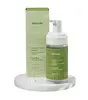
This mild foaming cleanser is mild enough to cleanse without leaving skin feeling tight or stripped.
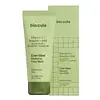
This mild gel cleanser is mild enough to cleanse without leaving skin feeling tight or stripped.

What's inside
What's inside
 Key Ingredients
Benefits
Concerns
Ingredients Side-by-side
Water
Skin ConditioningDisodium Cocoamphodiacetate
CleansingCoco-Glucoside
Cleansing
Decyl Glucoside
Cleansing
Glycerin
Humectant


Sodium Levulinate
Skin ConditioningPotassium Sorbate
Preservative
Terminalia Ferdinandiana Fruit Extract
Antioxidant
Aloe Barbadensis Leaf Juice
Skin Conditioning

Betaine
Humectant
Caprylyl/Capryl Glucoside
CleansingSodium Cocoyl Glutamate
Cleansing
Glyceryl Caprylate
EmollientCitric Acid
Buffering


Polyglyceryl-6 Oleate
Emulsifying
Sodium Surfactin
CleansingVaccinium Myrtillus Fruit Extract
Skin ConditioningSaccharum Officinarum Extract
MoisturisingCitrus Aurantium Dulcis Fruit Extract
MaskingCitrus Limon Fruit Extract
Masking
Acer Saccharum Extract
Skin ConditioningGlycyrrhiza Glabra Root Extract
Bleaching
Alpha-Arbutin
Antioxidant
Butylene Glycol
Humectant
Arctostaphylos Uva Ursi Leaf Extract
Skin Conditioning
Silanetriol
Hyaluronic Acid
Humectant

Saccharide Isomerate
Humectant
Sodium Citrate
BufferingCitrus Aurantium Amara Flower Oil
Masking
Water, Disodium Cocoamphodiacetate, Coco-Glucoside, Decyl Glucoside, Glycerin, Sodium Levulinate, Potassium Sorbate, Terminalia Ferdinandiana Fruit Extract, Aloe Barbadensis Leaf Juice, Betaine, Caprylyl/Capryl Glucoside, Sodium Cocoyl Glutamate, Glyceryl Caprylate, Citric Acid, Polyglyceryl-6 Oleate, Sodium Surfactin, Vaccinium Myrtillus Fruit Extract, Saccharum Officinarum Extract, Citrus Aurantium Dulcis Fruit Extract, Citrus Limon Fruit Extract, Acer Saccharum Extract, Glycyrrhiza Glabra Root Extract, Alpha-Arbutin, Butylene Glycol, Arctostaphylos Uva Ursi Leaf Extract, Silanetriol, Hyaluronic Acid, Saccharide Isomerate, Sodium Citrate, Citrus Aurantium Amara Flower Oil
Water
Skin ConditioningGlycerin
Humectant
Decyl Glucoside
Cleansing
Coco-Glucoside
Cleansing
Disodium Cocoamphodiacetate
CleansingCocamidopropyl Hydroxysultaine
Cleansing
Xanthan Gum
EmulsifyingSodium Levulinate
Skin ConditioningPotassium Sorbate
Preservative
Aloe Barbadensis Leaf Juice
Skin Conditioning
Betaine
Humectant
Vaccinium Myrtillus Fruit Extract
Skin ConditioningSaccharum Officinarum Extract
MoisturisingCitrus Aurantium Dulcis Fruit Extract
MaskingCitrus Limon Fruit Extract
Masking
Acer Saccharum Extract
Skin ConditioningButylene Glycol
Humectant
Citrus Reticulata Peel Extract
Skin ConditioningMicrocrystalline Cellulose
AbsorbentTitanium Dioxide
Cosmetic Colorant

Alpha-Arbutin
Antioxidant
Glycyrrhiza Glabra Root Extract
Bleaching
Sodium Gluconate
ChelatingTerminalia Ferdinandiana Fruit Extract
Antioxidant
Arctostaphylos Uva Ursi Leaf Extract
Skin Conditioning
Citrus Sinensis Peel Oil Expressed
Perfuming

Sodium Hyaluronate
Humectant
Water, Glycerin, Decyl Glucoside, Coco-Glucoside, Disodium Cocoamphodiacetate, Cocamidopropyl Hydroxysultaine, Xanthan Gum, Sodium Levulinate, Potassium Sorbate, Aloe Barbadensis Leaf Juice, Betaine, Vaccinium Myrtillus Fruit Extract, Saccharum Officinarum Extract, Citrus Aurantium Dulcis Fruit Extract, Citrus Limon Fruit Extract, Acer Saccharum Extract, Butylene Glycol, Citrus Reticulata Peel Extract, Microcrystalline Cellulose, Titanium Dioxide, Alpha-Arbutin, Glycyrrhiza Glabra Root Extract, Sodium Gluconate, Terminalia Ferdinandiana Fruit Extract, Arctostaphylos Uva Ursi Leaf Extract, Citrus Sinensis Peel Oil Expressed, Sodium Hyaluronate
Ingredients Explained
These ingredients are found in both products.
Ingredients higher up in an ingredient list are typically present in a larger amount.
We don't have a description for Acer Saccharum Extract yet.
Aloe Barbadensis Leaf Juice is the filtered, stabilized liquid pressed from the inner gel of the aloe vera leaf.
In cosmetics, it shows up as either soothing active or a water-replacement base. It is roughly 98-99% water and the last 1-2% is an interesting mix of polysaccharides, amino acids, vitamins, minerals, and enzymes.
The polysaccharides do most of the work: they bind water at the skin surface for a light, non-greasy hydration boost. And one of the polysaccharides, glycomannan, is linked to fibroblast stimulation + collagen synthesis. This is also why aloe has such a long track record in wound and burn healing.
This ingredient is also calming with anti-inflammatory and mild antimicrobial activity, making it a great pick for sensitive, irritated, or post-sun skin.
Realistic expectations matter though; the solid evidence is mostly limited to hydration, soothing, and wound support. Deeper claims about anti-aging or sun protection are not well backed, and science reviews note it does not prevent radiation-induced skin injury.
Because it plays well with almost everything, it's commonly used as a base alongside other actives like niacinamide or vitamin C.
Typical usage concentrations range from 0.5% (where hydration benefits already show up) all the way to 90%+ (where it replaces water as the main base).
The safety for this ingredient is well-establish as well. Overall, this is a great supporting ingredient for those who want a boost in hydration.
Learn more about Aloe Barbadensis Leaf JuiceAlpha-Arbutin is a brightening active used to fade dark spots, melasma, and post-acne marks. Structurally, it is a hydroquinone with a sugar molecule attached (but is much gentler than raw hydroquinone).
It has a pretty elegant way of working; it slots into tyrosinase, or the key enzyme that your skin uses to make melanin), and competitively blocks it so your skin produces less pigment over time.
There are two forms of arbutin and alpha is the better one to reach for: it works at lower amounts, absorbs into skin more easily, and has a strong safety record.
The science backs this up too: lab and animal studies confirm it lowers melanin by blocking tyosinase and the more you use (up to a point), the more it works.
Human studies look good too.
A 2024 trial found a cream with 5% alpha-arbutin and 2% kojic acid worked about as well as a prescription melasma cream but with fewer side effects. Another study showed 2% alpha-arbutin paired with 10% Trihydroxybenzoic Acid Glucoside and sunscreen faded dark spots and melasma without causing irritation.
Concentration-wise, most serums land in the 1-2% range.
The EU's Scientific Committee on Consumer Safety concluded that alpha-arbutin is safe in face creams up to 2% and body lotions up to 0.5%.
Overall, this is a well-studied and low-irritation brightener that's a great pick for anyone dealing with uneven skin tone. It also pairs well with vitamin C, niacinamide, and sunscreen.
Learn more about Alpha-ArbutinArctostaphylos Uva Ursi Leaf Extract is from the bearberry plant. Bearberry contains arbutin, a famous skin brightening ingredient.
The bearberry plant is an evergreen shrub. The berries have been used as medicine.
Betaine is a humectant. Like hyaluronic acid, it helps attract and retain moisture in the skin. It’s known for being gentle and for helping the skin maintain balanced hydration.
Betaine is mainly used to improve hydration and support calmer skin. It helps skin cells regulate water balance because it functions as an osmolyte.
Some studies suggest betaine may support making skin tone more even.
Fun fact: Betaine naturally exists in the skin and the body. In cosmetic products, it can be either plant-derived (most commonly from sugar beets) or synthetically produced for consistency and stability.
Betaine is also known as trimethylglycine.
Learn more about BetaineButylene Glycol (or BG) is used within cosmetic products for a few different reasons:
Overall, Butylene Glycol is a safe and well-rounded ingredient that works well with other ingredients.
Though this ingredient works well with most skin types, some people with sensitive skin may experience a reaction such as allergic rashes, closed comedones, or itchiness.
Learn more about Butylene GlycolCitrus Aurantium Dulcis Fruit Extract is more commonly known as the bitter orange. Native to Southeast Asia, this extract is commonly found in both cosmetics and foods.
The bitter orange possesses antibacterial and antioxidant properties.
It can also be mildly exfoliating due to the citric acid, an AHA.
Citrus fruits are rich in flavonoids, alkaloids, and vitamin C.
Learn more about Citrus Aurantium Dulcis Fruit ExtractCitrus Limon Fruit Extract comes from lemons. While lemon extract is exfoliating and antimicrobial, it can also cause skin sensitivity.
Lemons contains antioxidants, which may help with anti-aging. They are also rich in citric acid, an AHA.
And of course, lemons are rich in Vitamin C. Vitamin C helps with skin-brightening and increasing collagen production.
The acidity of lemons may work as an astringent for acne.
However, lemons can also cause skin sensitivity due to its limonene content. It can also increase photosensitivity, or sensitivity to the sun.
This ingredient is also used to add a lemon scent to products.
Learn more about Citrus Limon Fruit ExtractCoco-Glucoside is a surfactant, or a cleansing ingredient. It is made from glucose and coconut oil.
Surfactants help gather dirt, oil, and other pollutants from your skin to be rinsed away.
This ingredient is considered gentle and non-comedogenic. However, it may still be irritating for some.
Learn more about Coco-GlucosideDecyl Glucoside is a plant-derived surfactant and emulsion stabilizer. It is created by reacting glucose with the fatty acids from plants.
Like all surfactants, it works by lowering the surface tension between water and oil. This makes it so that dirt, sebum, and makeup can be lifted off your skin and rinsed away. It also produces a dense and creamy foam.
Because it has a neutral charge, it is compatible with a wide range of ingredients and stays stable across a broad pH range/water hardiness conditions.
Patch testing has shown it to have the lowest irritation potential among common cleansing surfactants (like SLS).
Typical use levels range from 5-20% in rinse-off cleansers.
One thing worth knowing: The American Contact Dermatitis Society named the parent family, alkyl glucosides, "Allergen of the Year" in 2017. The prevalence of allergy is pretty low but be sure to patch test if you've reacted to "gentle" or sulfate-free cleansers before.
This ingredient is fungal acne safe because the fatty alcohol portion of this ingredient is not within the C11-24 chain length that Malassezia can metabolize.
Learn more about Decyl GlucosideDisodium Cocoamphodiacetate is a surfactant and helps cleanse skin. It is created from the fatty acids of coconut oil.
Surfactants help rinse oil, dirt, and other pollutants easily from skin. It has a faint fruit-like scent.
Glycerin (or glycerol) is a compound naturally found in your skin. It's a powerhouse humectant that pulls water into the stratum corneum.
Topically, glycerin does several things at once:
Your skin makes glycerin on its own (mostly from sebaceous oil breakdown) and shuttles it to your outermost layer of skin, or your epidermis, via aquaporin-3.
Aquaporin-3 is a transporter that is essential for normal skin hydration, elasticity, and repair. Interestingly, mice lacking in AQP3 have dry and less elastic skin that can be fully corrected with glycerin.
This ingredient is non-irritating, plays well with almost every ingredient, and works across all skin types. Typical use is anywhere between 3-10% but can go up to 79% in some leave-on products.
Just know very high concentrations (>40%) can feel tacky in low humidity.
Glycerin is the name for this ingredient in American English. British English uses Glycerol/Glycerine.
Learn more about GlycerinGlycyrrhiza Glabra Root Extract is an extract of the roots of Licorice. It has been found to have several benefits such as skin hydrating, conditioning, and soothing.
One component, glabridin, has extra potent antioxidant and soothing properties. It has also been found to block pigmentation from UVB rays in guinea pigs.
Licorice Root also contains a flavonoid. Flavonoids are a natural substance from in plants. Flavonoids also have antioxidant properties.
Another component, glycyrrhizin, has been found to have anti-inflammatory and antimicrobial benefits. This may make licorice root extract effective at treating acne. However, more research is needed to support this.
Liquiritin is one of the flavone compounds found in licorice. It has been found to help lighten skin by preventing tyrosinase from reacting with tyrosine. When the two react, protein is converted to melanin. Melanin is the substance in your body that gives your features pigmentation.
Learn more about Glycyrrhiza Glabra Root ExtractPotassium Sorbate is a preservative used to prevent yeast and mold in products. It is commonly found in both cosmetic and food products.
This ingredient comes from potassium salt derived from sorbic acid. Sorbic acid is a natural antibiotic and effective against fungus.
Both potassium sorbate and sorbic acid can be found in baked goods, cheeses, dried meats, dried fruit, ice cream, pickles, wine, yogurt, and more.
You'll often find this ingredient used with other preservatives.
Learn more about Potassium SorbateThis ingredient is also called sugarcane extract. It is a moisturizing humectant and has skin soothing properties.
Similar to hyaluronic acid, sugarcane can attract moisture to your skin.
Glycolic acid is a derivative of sugarcane. While glycolic acid is an AHA with exfoliating properties, sugarcane is not an AHA.
A study from 2021 found the compounds in sugarcane extract to have antioxidant, antimicrobial, and anti-inflammatory activity. The study also suggests these compounds can inhibit skin ageing enzymes and promote collagen synthesis.
Learn more about Saccharum Officinarum ExtractSodium levulinate is the a sodium salt of Levulinic Acid. Oncedissolved in an aqueous solution, the two ingredients become identical. It is usually derived from renewable plant sources like corn starch or sugarcane.
In skincare, it mostly acts as a skin conditioning agent that keeps skin soft and hydrated. It also acts as a preservative booster by inhibiting the growth of mold, yeast, and bacteria.
It's often paired with Sodium Anisate as the two create a broad-spectrum preservative system that is popular in "natural" formulations.
This ingredient is water-soluble.
The CIR Expert Panel for Cosmetic Ingredient Safety has concluded this ingredient to be non-irritated and there are no restrictions for use in EU cosmetics. The FDA also allows this ingredient to be used as a food-grade flavoring agent.
Learn more about Sodium LevulinateTerminalia Ferdinandiana Fruit Extract is from the Kakadu plum. The Kakadu plum is native to northern Australia. The Kakadu plum holds the record for having the highest amount of natural vitamin C.
This ingredient is an antioxidant. Antioxidants help fight free-radical molecules. Free-radical molecules are capable of damaging our cells and other genetic material. Antioxidants help stabilize free-radicals and thus may reduce the signs of aging.
The high vitamin C content of Kakadu plum also helps lighten skin. Vitamin C has been shown to block the process of skin darkening that leads to hyperpigmentation.
Kakadu plums have been used by indigenous cultures as medicine to help treat colds and as an antiseptic.
Learn more about Terminalia Ferdinandiana Fruit ExtractVaccinium Myrtillus Fruit Extract comes from the bilberry plant. This plant is native to Eurasia.
Bilberry contains antioxidant compounds called anthocyanins. Anthocyanins help fight free-radicals. Free-radicals are molecules that may damage your skin cells. Fighting off these molecules can help reduce signs of aging.
Vaccinium Myrtillus Fruit Extract also helps reduce irritation.
Learn more about Vaccinium Myrtillus Fruit ExtractWater. It's the most common cosmetic ingredient of all. You'll usually see it at the top of ingredient lists, meaning that it makes up the largest part of the product.
So why is it so popular? Water most often acts as a solvent - this means that it helps dissolve other ingredients into the formulation.
You'll also recognize water as that liquid we all need to stay alive. If you see this, drink a glass of water. Remember to stay hydrated!
Learn more about Water

