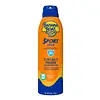
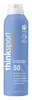
Banana Boat Sport Ultra Clear Sunscreen Spray SPF 30 Versus Think Sun All Sheer Mineral Sunscreen Spray SPF 50
This chemical sunscreen covers most of the UV range, lighter on the deep UVA that drives aging.
This hybrid sunscreen covers the full UV range and blocks ~98% of UVB at SPF 50.

What's inside
What's inside
 Key Ingredients
Benefits
Concerns
Ingredients Side-by-side





Titanium Dioxide 3.4%
Cosmetic Colorant

Zinc Oxide 15.7%
Cosmetic Colorant
Water
Skin ConditioningButyloctyl Salicylate
Skin Conditioning
Dicaprylyl Carbonate
EmollientIsononyl Isononanoate
EmollientPropanediol
Solvent

Isocetyl Stearoyl Stearate
Emollient

Methyl Dihydroabietate
Cetearyl Alcohol
Emollient




Aloe Barbadensis Leaf Juice
Skin Conditioning

Musa Sapientum Fruit Extract
Skin ConditioningBentonite
Absorbent
Glycerin
Humectant
Tocopherol
Antioxidant




Citric Acid
Buffering
Alumina
Abrasive
Sodium Gluconate
Skin ConditioningBisabolol
Antioxidant
Caprylhydroxamic Acid
Cellulose Gum
Emulsion StabilisingCaprylyl Glycol
Emollient
Coco-Glucoside
Cleansing
Microcrystalline Cellulose
AbsorbentPolyhydroxystearic Acid
Emulsifying
Polyester-8
Skin Conditioning
Silica
Abrasive
Sodium Stearoyl Glutamate
CleansingC18-21 Alkane
SolventTitanium Dioxide 3.4%, Zinc Oxide 15.7%, Water, Butyloctyl Salicylate, Dicaprylyl Carbonate, Isononyl Isononanoate, Propanediol, Isocetyl Stearoyl Stearate, Methyl Dihydroabietate, Cetearyl Alcohol, Aloe Barbadensis Leaf Juice, Musa Sapientum Fruit Extract, Bentonite, Glycerin, Tocopherol, Citric Acid, Alumina, Sodium Gluconate, Bisabolol, Caprylhydroxamic Acid, Cellulose Gum, Caprylyl Glycol, Coco-Glucoside, Microcrystalline Cellulose, Polyhydroxystearic Acid, Polyester-8, Silica, Sodium Stearoyl Glutamate, C18-21 Alkane
Ingredients Explained
These ingredients are found in both products.
Ingredients higher up in an ingredient list are typically present in a larger amount.
Butyloctyl Salicylate is a chemical UV filter structurally similar to octisalate. It is a photostabilizer, SPF booster, emollient and solvent. This ingredient helps evenly spread out ingredients.
According to a manufacturer, it is suitable for pairing with micro Titanium Dioxide, Zinc Oxide, and pigments.
Photostabilizers help stabilize UV-filters and prevents them from degrading quickly.
Learn more about Butyloctyl SalicylateCaprylyl Glycol is a humectant, skin conditioner, emollient, and preservative booster derived from either caprylic acid or synthetically created.
Typical use levels vary from 0.3-1% as a preservative booster and go up to 2% to condition skin.
Because it is not a free-fatty acid, this ingredient is fungal acne safe (there's nothing for Malassezia to feed on).
Learn more about Caprylyl Glycol

