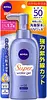
This barrier-repair day moisturizer is formulated around Butyrospermum Parkii Butter and Prunus Amygdalus Dulcis Oil to strengthen the skin barrier and hydrate skin.
This chemical sunscreen covers most of the UV range, lighter on the deep UVA that drives aging.

What's inside
What's inside
 Key Ingredients
Benefits
Concerns
Ingredients Side-by-side
Water
Skin ConditioningGlycerin
Humectant


Ethylhexyl Salicylate
UV Absorber

Cetearyl Alcohol
Emollient






Helianthus Annuus Hybrid Oil
Emollient
Butyl Methoxydibenzoylmethane
UV Absorber
C12-15 Alkyl Benzoate
AntimicrobialButyrospermum Parkii Butter
Skin Conditioning
Hydrogenated Castor Oil
Emollient
Behenyl Alcohol
Emollient
Sodium Phenylbenzimidazole Sulfonate
UV Absorber
Prunus Amygdalus Dulcis Oil
Skin Conditioning
Glyceryl Stearate
Emollient
Panthenol
Skin Conditioning

Tocopheryl Acetate
Antioxidant


Bis-Ethylhexyloxyphenol Methoxyphenyl Triazine
UV Absorber
Ethylhexyl Triazone
UV Absorber
Sodium Stearoyl Glutamate
CleansingChondrus Crispus Powder
Abrasive
Xanthan Gum
EmulsifyingDisodium EDTA
Parfum
Masking


Hydroxyacetophenone
Antioxidant
Phenoxyethanol
Preservative
Linalool
Perfuming
Alpha-Isomethyl Ionone
Perfuming
Limonene
Perfuming
Water, Glycerin, Ethylhexyl Salicylate, Cetearyl Alcohol, Helianthus Annuus Hybrid Oil, Butyl Methoxydibenzoylmethane, C12-15 Alkyl Benzoate, Butyrospermum Parkii Butter, Hydrogenated Castor Oil, Behenyl Alcohol, Sodium Phenylbenzimidazole Sulfonate, Prunus Amygdalus Dulcis Oil, Glyceryl Stearate, Panthenol, Tocopheryl Acetate, Bis-Ethylhexyloxyphenol Methoxyphenyl Triazine, Ethylhexyl Triazone, Sodium Stearoyl Glutamate, Chondrus Crispus Powder, Xanthan Gum, Disodium EDTA, Parfum, Hydroxyacetophenone, Phenoxyethanol, Linalool, Alpha-Isomethyl Ionone, Limonene
Water
Skin ConditioningEthylhexyl Methoxycinnamate
UV Absorber
Alcohol
Antimicrobial

Propylene Glycol
Humectant
Dimethicone
Emollient
Ethylhexyl Triazone
UV Absorber
Diethylamino Hydroxybenzoyl Hexyl Benzoate
UV Filter
Butylene Glycol
Humectant
Sodium Dilauramidoglutamide Lysine
HumectantPyrus Cydonia Seed Extract
MaskingGeranium Robertianum Extract
AstringentPhellodendron Amurense Bark Extract
Skin ConditioningSodium Hyaluronate
Humectant

Acrylates/C10-30 Alkyl Acrylate Crosspolymer
Emulsion StabilisingCarbomer
Emulsion StabilisingTocopheryl Acetate
Antioxidant
Sodium Hydroxide
BufferingBHT
Antioxidant
Methylparaben
Preservative
Water, Ethylhexyl Methoxycinnamate, Alcohol, Propylene Glycol, Dimethicone, Ethylhexyl Triazone, Diethylamino Hydroxybenzoyl Hexyl Benzoate, Butylene Glycol, Sodium Dilauramidoglutamide Lysine, Pyrus Cydonia Seed Extract, Geranium Robertianum Extract, Phellodendron Amurense Bark Extract, Sodium Hyaluronate, Acrylates/C10-30 Alkyl Acrylate Crosspolymer, Carbomer, Tocopheryl Acetate, Sodium Hydroxide, BHT, Methylparaben
Reviews
Ingredients Explained
These ingredients are found in both products.
Ingredients higher up in an ingredient list are typically present in a larger amount.
Ethylhexyl Triazone (aka Octyl Triazone) is an oil-soluble organic UVB filter. It has peak absorption around 314 nm, right in the middle of the UVB range.
This ingredient is described as one of the most effective UVB filters available and small concentrations are enough to deliver a high SPF thanks to its strong UV absorbing power.
Formulators love it for its stability; its ability to filter UV stays practically unchanged even under intense radiation and it can also help boost the photostability of less stable filters like avobenzone.
It's also a great pick for water resistant products because it's insoluble in water and has a good affinity for keratin.
Because it's a big, heavy molecule, the European Scientific Committee has found to to have very low dermal penetration and negative results for allergenicity.
In vitro testing also showed a low absorption rate and clean results on irritation.
Typical use levels are 1-5% with 5% being the maximum in the EU, Japan, and other markets that allow it. However, this ingredient is not approved yet in the US or Canada.
Learn more about Ethylhexyl TriazoneTocopheryl Acetate is a stable, shelf-friendly form of vitamin E.
Formulators love it because plain vitamin E oxidizes quickly once it hits air. This acetate version stays stable and resists going off, helping to extend a product's shelf life.
It's actually inactive on its own and works like a slow-release "storage" form; the enzymes in your skin called esterases gradually convert it into active vitamin E over time.
One in vivo study showed 5% of the acetate in the living layer of the epidermis converted to vitamin E after 5 days of application. This study also found the skin gained protection against UV damage even though the conversion was slow and small.
Once converted, vitamin E acts as a skin's main fat-soluble antioxidant that fights free radicals to protect skin from damage.
Topical vitamin E generally boosts the skin's photoprotection, and it reduced UV-damage in animal models.
This ingredient has some brightening potential but it's more of a prevention ingredient than spot-fader. Cell studies show it can slow down melanin production but it's worth noting that it's not the most powerful brightener out there.
Overall, it has a pretty solid safety profile and has been found to be non-irritating and non-comedogenic. Allergic reactions may happen but stay rare due to how widely the ingredient gets used.
The concentration will vary depending on the formula; industry data shows 0.1% in baby lotions, 3% in lipsticks, and 5% in foot powders. You can also find this ingredient at 100% in a pure vitamin E oil.
Most leave-on skincare keeps it at the lower end, often between 0.5-1%.
Learn more about Tocopheryl AcetateWater. It's the most common cosmetic ingredient of all. You'll usually see it at the top of ingredient lists, meaning that it makes up the largest part of the product.
So why is it so popular? Water most often acts as a solvent - this means that it helps dissolve other ingredients into the formulation.
You'll also recognize water as that liquid we all need to stay alive. If you see this, drink a glass of water. Remember to stay hydrated!
Learn more about Water

