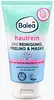
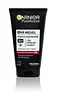
Balea Hautrein 3In1 Reinigung, Peeling & Maske Versus Garnier PureActive BHA Charcoal Anti-Blackhead 3In1 Wash Scrub Mask
This wash off mask is formulated around Salicylic Acid to clear breakouts and unclog pores.
This salicylic acid clay cleanser is formulated around Salicylic Acid to clear breakouts and unclog pores.


What's inside
What's inside
 Key Ingredients
Benefits
Concerns
Ingredients Side-by-side
Water
Skin ConditioningKaolin
Abrasive



Glycerin
Humectant


Cetyl Alcohol
Emollient



Glyceryl Stearate Se
Emulsifying


Ethylhexyl Stearate
Emollient
Helianthus Annuus Hybrid Oil
Emollient
Hydrogenated Castor Oil
Emollient
Pumice
Abrasive
Bentonite
Absorbent
Sodium Cetearyl Sulfate
Cleansing
Alcohol Denat.
Antimicrobial

Phenoxyethanol
Preservative
Parfum
Masking

Salicylic Acid
Masking


Xanthan Gum
EmulsifyingEthylhexylglycerin
Skin ConditioningZinc PCA
Humectant

Tocopherol
Antioxidant



Linalool
Perfuming
Water, Kaolin, Glycerin, Cetyl Alcohol, Glyceryl Stearate Se, Ethylhexyl Stearate, Helianthus Annuus Hybrid Oil, Hydrogenated Castor Oil, Pumice, Bentonite, Sodium Cetearyl Sulfate, Alcohol Denat., Phenoxyethanol, Parfum, Salicylic Acid, Xanthan Gum, Ethylhexylglycerin, Zinc PCA, Tocopherol, Linalool
Water
Skin ConditioningKaolin
Abrasive
Glycerin
Humectant
Zea Mays Starch
Absorbent
Sodium Laureth Sulfate
Cleansing
CI 77499
Cosmetic ColorantPerlite
Absorbent
Carbomer
Emulsion StabilisingSodium Citrate
BufferingSodium Hydroxide
BufferingPumice
Abrasive
Cellulose
Absorbent
Charcoal Powder
Abrasive
Microcrystalline Cellulose
AbsorbentCaprylyl Glycol
Emollient
Citric Acid
Buffering
Xanthan Gum
EmulsifyingPolyglycerin-10
HumectantPolyglyceryl-10 Myristate
Skin Conditioning
Polyglyceryl-10 Stearate
Skin Conditioning
Sodium Dehydroacetate
Preservative
Salicylic Acid
Masking
Chlorphenesin
Antimicrobial
Parfum
Masking
Water, Kaolin, Glycerin, Zea Mays Starch, Sodium Laureth Sulfate, CI 77499, Perlite, Carbomer, Sodium Citrate, Sodium Hydroxide, Pumice, Cellulose, Charcoal Powder, Microcrystalline Cellulose, Caprylyl Glycol, Citric Acid, Xanthan Gum, Polyglycerin-10, Polyglyceryl-10 Myristate, Polyglyceryl-10 Stearate, Sodium Dehydroacetate, Salicylic Acid, Chlorphenesin, Parfum
Ingredients Explained
These ingredients are found in both products.
Ingredients higher up in an ingredient list are typically present in a larger amount.
Glycerin (or glycerol) is a compound naturally found in your skin. It's a powerhouse humectant that pulls water into the stratum corneum.
Topically, glycerin does several things at once:
Your skin makes glycerin on its own (mostly from sebaceous oil breakdown) and shuttles it to your outermost layer of skin, or your epidermis, via aquaporin-3.
Aquaporin-3 is a transporter that is essential for normal skin hydration, elasticity, and repair. Interestingly, mice lacking in AQP3 have dry and less elastic skin that can be fully corrected with glycerin.
This ingredient is non-irritating, plays well with almost every ingredient, and works across all skin types. Typical use is anywhere between 3-10% but can go up to 79% in some leave-on products.
Just know very high concentrations (>40%) can feel tacky in low humidity.
Glycerin is the name for this ingredient in American English. British English uses Glycerol/Glycerine.
Learn more about GlycerinKaolin is a clay. It is used for oil control and to help minimize pores. Like other clays, kaolin has the ability to absorb excess sebum or oil. This can help clean out pores and mattify the skin.
Some types of kaolin may have exfoliating properties. When water is added to kaolin, it becomes a paste with small abrasive particles.
Most kaolin is a white color, but may be pink/orange/red depending on where it comes from.
The name 'kaolin' comes from a Chinese village named 'Gaoling'. Kaolin clay comes from rocks rich in kaolinite. Kaolinite, the mineral, has a silicate layered structure. Kaolinite is formed from chemical weathering of aluminum siilicate minerals.
Besides skincare, kaolin is commonly used to make glossy paper, in ceramics, toothpaste, and as medicine to soothe stomach issues.
Learn more about KaolinParfum is a catch-all term for an ingredient or more that is used to give a scent to products.
Also called "fragrance", this ingredient can be a blend of hundreds of chemicals or plant oils. This means every product with "fragrance" or "parfum" in the ingredients list is a different mixture.
For instance, Habanolide is a proprietary trade name for a specific aroma chemical. When used as a fragrance ingredient in cosmetics, most aroma chemicals fall under the broad labeling category of “FRAGRANCE” or “PARFUM” according to EU and US regulations.
The term 'parfum' or 'fragrance' is not regulated in many countries. In many cases, it is up to the brand to define this term.
For instance, many brands choose to label themselves as "fragrance-free" because they are not using synthetic fragrances. However, their products may still contain ingredients such as essential oils that are considered a fragrance by INCI standards.
One example is Calendula flower extract. Calendula is an essential oil that still imparts a scent or 'fragrance'.
Depending on the blend, the ingredients in the mixture can cause allergies and sensitivities on the skin. Some ingredients that are known EU allergens include linalool and citronellol.
Parfum can also be used to mask or cover an unpleasant scent.
The bottom line is: not all fragrances/parfum/ingredients are created equally. If you are worried about fragrances, we recommend taking a closer look at an ingredient. And of course, we always recommend speaking with a professional.
Learn more about ParfumPumice is an exfoliant.
Salicylic Acid (also known as beta hydroxy acid or BHA) is a well-known ingredient for treating skin that struggles with acne and clogged pores. It exfoliates both the skin's surface and deep within the pores to help clear out buildup, control oil, and reduce inflammation.
Unlike AHAs (alpha hydroxy acids), salicylic acid is oil-soluble. This allows it to penetrate into pores which makes it especially effective for treating blackheads and preventing future breakouts.
Salicylic acid is also known for its soothing properties. It has a similar structure to aspirin and can calm inflamed or irritated skin, making it a good option for acne-prone skin that is also sensitive.
Concentrations of 0.5-2% are recognized by the U.S. FDA as an over-the-counter topical acne product.
It can cause irritation and/or dryness if one's skin already has a compromised moisture barrier, so it's best to focus on repairing that before introducing this ingredient into your routine.
While salicylic acid does not increase sun sensitivity, it’s still important to wear sunscreen daily to protect your skin.
If you are looking for the ingredient called BHA or Butylated Hydroxyanisole, click here.
Learn more about Salicylic AcidWater. It's the most common cosmetic ingredient of all. You'll usually see it at the top of ingredient lists, meaning that it makes up the largest part of the product.
So why is it so popular? Water most often acts as a solvent - this means that it helps dissolve other ingredients into the formulation.
You'll also recognize water as that liquid we all need to stay alive. If you see this, drink a glass of water. Remember to stay hydrated!
Learn more about WaterXanthan gum is used as a stabilizer and thickener within cosmetic products. It helps give products a sticky, thick feeling - preventing them from being too runny.
On the technical side of things, xanthan gum is a polysaccharide - a combination consisting of multiple sugar molecules bonded together.
Xanthan gum is a pretty common and great ingredient. It is a natural, non-toxic, non-irritating ingredient that is also commonly used in food products.
Learn more about Xanthan Gum

