The Statement Skincare The Balm Dot Calm Organic Cleansing Balm
A makeup remover with 19 ingredients, including vitamin E and ceramides.
This mild cream makeup remover is made to dissolve makeup, sunscreen, and daily buildup.
We independently verify ingredients, backed by peer-reviewed research. Suggest an update.
What's inside
Ingredients List
Water
Skin Conditioning1,2-Hexanediol
Skin Conditioning
Ethylhexyl Palmitate
Emollient




Cetyl Ethylhexanoate
EmollientBeeswax
Emulsion Stabilising
Olea Europaea Fruit Oil
Masking

Caprylic/Capric Triglyceride
Masking

Butylene Glycol
Humectant
Lithospermum Erythrorhizon Root Extract
Skin ConditioningCeramide NP
Skin Conditioning



Ceramide AP
Skin Conditioning
Ceramide EOP
Skin Conditioning
Glycerin
Humectant
Tocopheryl Acetate
Antioxidant


Ethylhexylglycerin
Skin ConditioningBambusa Vulgaris Leaf/Stem Extract
HumectantAloe Barbadensis Leaf Extract
Emollient
Melaleuca Alternifolia Leaf Extract
Perfuming
Malpighia Glabra Fruit Extract
Skin ConditioningWater, 1,2-Hexanediol, Ethylhexyl Palmitate, Cetyl Ethylhexanoate, Beeswax, Olea Europaea Fruit Oil, Caprylic/Capric Triglyceride, Butylene Glycol, Lithospermum Erythrorhizon Root Extract, Ceramide NP, Ceramide AP, Ceramide EOP, Glycerin, Tocopheryl Acetate, Ethylhexylglycerin, Bambusa Vulgaris Leaf/Stem Extract, Aloe Barbadensis Leaf Extract, Melaleuca Alternifolia Leaf Extract, Malpighia Glabra Fruit Extract
Key Ingredients
Benefits
Concerns
Ingredients Explained
Water. It's the most common cosmetic ingredient of all. You'll usually see it at the top of ingredient lists, meaning that it makes up the largest part of the product.
So why is it so popular? Water most often acts as a solvent - this means that it helps dissolve other ingredients into the formulation.
You'll also recognize water as that liquid we all need to stay alive. If you see this, drink a glass of water. Remember to stay hydrated!
Learn more about Water1,2-Hexanediol is a synthetic liquid and another multi-functional powerhouse.
It is a:
- Humectant, drawing moisture into the skin
- Emollient, helping to soften skin
- Solvent, dispersing and stabilizing formulas
- Preservative booster, enhancing the antimicrobial activity of other preservatives
Ethylhexyl Palmitate, also known as octyl palmitate, is created from 2-ethylhexyl alcohol and palmitic acid.
In cosmetics, it plays many roles:
One thing worth noting: a controlled study found this ingredient applied under occlusion to acne-prone subjects increased microcomedones. Just keep in mind this was under occlusive conditions and don't reflect how most products are used day-to-day.
For most people, this is a well-tolerated and lightweight ingredient.
This ingredient may not be fungal acne safe because it is an ester of palmitic acid, a C16 fatty acid that falls within the C11-24 range that Malassezia can metabolize.
You'll see this one rated 4 comedogenic all over the internet. That number isn't from a single study, and the actual research is more interesting.
The original rating comes from 1980s rabbit ear tests (which are a shaky basis for anything). But Ethylhexyl Palmitate is one of the few ingredients with real human data behind it. A 2021 controlled trial found this ingredient increased microcomedones by an average of 365% over four weeks.
Just know that test used the pure ingredient under an occlusive pad on back skin; most products use it at much lower levels alongside other ingredients and plenty of people use those with no issue.
Learn more about Ethylhexyl PalmitateCetyl Ethylhexanoate is an emollient ester. It comes from cetearyl alcohol and 2-ethylhexanoic acid.
Cetyl Ethylhexanoate is an emollient that adds a velvety feel to skin without being greasy or oily. Emollients help trap moisture into your skin, keeping your skin soft and hydrated.
Beeswax is natural wax produced by honey bees to build their honeycomb.
Because it forms a protective layer on your skin, it can help lock in moisture and reduce water loss. It is also widely used as a thickener and emulsifier in lip balms and lotions. Research suggests beeswax containing moisturizers can support skin barrier integrity.
In comedogenic testing, Beeswax scored a 0-2, which is on the low end. Whether or not a product clogs your pores really comes down to the formula as a whole (not any single ingredient on its own) and your skin.
Cera Alba is the white, bleached form of this ingredient.
Just so you know, beeswax is not vegan since it is animal-derived. It cannot be removed with water, but can be taken off with an oil cleanser.
People with a known Propolis allergy also report to have reactions from beeswax.
Beeswax's wax esters are derived primarily from palmitic and oleic acid (C16 and C18:1). Both of these fall within the C11-C24 feeding window.
The Malassezia yeast can potentially cleave these esters and release usable fatty acids, so this ingredient may not be fungal acne safe. However, not everyone will react to this ingredient.
Learn more about BeeswaxThis ingredient is also known as olive oil. It has been used in skincare for centuries and science largely backs up its reputation as a nourishing emollient.
The main components of olive oil are oleic acid (55-83%), linoleic acid (3.5-20%), and palmitic acid (7-20%). Oleic acid promotes skin regeneration and helps regulate inflammatory responses.
Squalene is also naturally present in olive oil and exhibits moisturizing and antioxidant properties.
The polyphenols in olive oil also show anti-aging promise; one clinical study found a measurable improvement in skin appearance after 30 days of topical serum use.
Just be aware that applying olive oil directly to skin can weaken the barrier and cause redness. One study with volunteers found even people without sensitive skin experienced a significant reduction in stratum corneum integrity and induced mild erythema.
It's best to use this ingredient as part of a carefully crafted formula (instead of putting it on skin directly from the bottle).
Because it has a 0-2 on the comedogenic scale, it is low risk for acne-prone skin. Just remember the overall formulation of a product matters more than a few ingredients with comedogenic ratings.
This ingredient may not be fungal acne safe because of the oleic and palmitic acid content. These fall within the C11-24 fatty acid range that the Malassezia yeast can metabolize to grow.
Overall, olive oil is a well-studied and nourishing skincare ingredient.
Learn more about Olea Europaea Fruit OilCaprylic/Capric Triglyceride (aka MCT Oil) is a lightweight emollient, solvent, and texture enhancer. It is considered a skin-softener by helping to prevent moisture loss.
Though it behaves like an oil, it is not technically one due to its chemical composition. One perk of this ingredient is that it is very stable, resistant to oxidation, and unlikely to go rancid.
In practice, that translates to a long shelf life and a consistently elegant skin feel.
While there is an assumption Caprylic Triglyceride can clog pores due to it being derived from coconut oil, there is no research supporting this. Just patch test if you have concerns.
Fractionated coconut oil and MCT Oil are both listed as Caprylic/Capric Triglyceride according to INCI. This is because INCI names are based on the ingredient’s final chemical composition and not its marketing name or source.
This ingredient is treated as the gold standard fungal acne safe oil. Even though it is coconut derived, the problematic lauric acid is stripped out.
This leaves just caprylic (C8) and capric (C10) acid. These chain lengths actually trend antifungal; a 2020 study found caprylic acid was enough to disrupt Malassezia furfur cell membrane, with a caprylic acid derivative damaging membrane structures at concentrations as low as 0.2%.
Learn more about Caprylic/Capric TriglycerideButylene Glycol (or BG) is used within cosmetic products for a few different reasons:
Overall, Butylene Glycol is a safe and well-rounded ingredient that works well with other ingredients.
Though this ingredient works well with most skin types, some people with sensitive skin may experience a reaction such as allergic rashes, closed comedones, or itchiness.
Learn more about Butylene GlycolLithospermum Erythrorhizon Root Extract comes from the roots of the Lithospermumerythrorhizon plant, or the purple gromwell plant.
Studies show this root extract has anti-inflammatory properties and protects against oxidative stress. It also displayed UV absorption capability and protection against UV-B damage. However, it should not replace your sunscreen.
The dried roots of this plant are used in traditional Chinese and Japanese medicine due to its antiviral properties.
Learn more about Lithospermum Erythrorhizon Root ExtractCeramide NP (formerly known as Ceramide 3) is one of the skin's naturally occurring lipids.
Since ceramides are the major lipid components of the skin, they are crucial for maintaining skin barrier and hydration. Ceramide NP most closely mirrors the dominant kind in human skin amongst ceramide subtypes.
This ceramide works by slotting into gaps within the stratum corneum's lipid matrix to limit trans-epidermal water loss (TEWL) and shield the skin against external irritants.
A study with 312 patients found that using a ceramide-containing routine for 4 weeks reduced the severity of atopic dermatitis by over 61%.
Another clinical study in subjects aged 60 and older found that a ceramide body wash and moisturizer improved skin dryness and itchy skin in 15 days.
Overall, ceramides are considered non-irritating and safety tests have found little to no observable adverse effects from using this ingredient.
Ceramide NP is usually sourced from plants (like soybean or rice bran), or produced synthetically.
Learn more about Ceramide NPCeramide AP is is a skin-identical lipid that mimics what your skin already makes naturally. Ceramides help maintain epidermal integrity and barrier function.
You'll often see this ingredient paired with other ceramides (like ceramide NP), cholesterol, or fatty acids because this combination best mimics the natural lipid mix your skin already has.
The skin's ability to produce ceramides gets disrupted in skin conditions like eczema. This in turn weakens the skin barrier and applying ceramides topically has been shown to replenish what's been lost to restore barrier function.
Most of the studies with Ceramide AP test it as part of a multi-ceramide complex; studies reinforce ceramide AP's role in rebalancing ceramides in skin and improving skin hydration.
Learn more about Ceramide APCeramide EOP is formally known as Ceramide 1.
It is naturally found in skin and part of the intercellular "mortar" holding everything together in your outermost layer.
EOP stands for a linked Ester fatty acid, a linked Omega hydroxy fatty acid, and the Phytosphingosine base.
What makes Ceramide EOP special is its ultra-long fatty acid chain; this unique structure allows it to bridge the lipid layers in your skin barrier to prevent water loss (something no other ceramide can do).
Low levels of Ceramide EOP have been found in people with eczema and psoriasis.
Using it together with other ceramides, cholesterol, and linoleic acid have been shown to meaningfully improve hydration and reduce water loss.
In one clinical study, a regimen using Ceramide EOP, NP, and AP led to significant symptom improvements in patients with eczema, psoriasis, and dry skin in just 4 weeks.
You'll usually see concentrations between 0.1-0.5% in formulations. Overall, this is a well-tolerated and safe ingredient for cosmetic use.
Learn more about Ceramide EOPGlycerin (or glycerol) is a compound naturally found in your skin. It's a powerhouse humectant that pulls water into the stratum corneum.
Topically, glycerin does several things at once:
Your skin makes glycerin on its own (mostly from sebaceous oil breakdown) and shuttles it to your outermost layer of skin, or your epidermis, via aquaporin-3.
Aquaporin-3 is a transporter that is essential for normal skin hydration, elasticity, and repair. Interestingly, mice lacking in AQP3 have dry and less elastic skin that can be fully corrected with glycerin.
This ingredient is non-irritating, plays well with almost every ingredient, and works across all skin types. Typical use is anywhere between 3-10% but can go up to 79% in some leave-on products.
Just know very high concentrations (>40%) can feel tacky in low humidity.
Glycerin is the name for this ingredient in American English. British English uses Glycerol/Glycerine.
Learn more about GlycerinTocopheryl Acetate is a stable, shelf-friendly form of vitamin E.
Formulators love it because plain vitamin E oxidizes quickly once it hits air. This acetate version stays stable and resists going off, helping to extend a product's shelf life.
It's actually inactive on its own and works like a slow-release "storage" form; the enzymes in your skin called esterases gradually convert it into active vitamin E over time.
One in vivo study showed 5% of the acetate in the living layer of the epidermis converted to vitamin E after 5 days of application. This study also found the skin gained protection against UV damage even though the conversion was slow and small.
Once converted, vitamin E acts as a skin's main fat-soluble antioxidant that fights free radicals to protect skin from damage.
Topical vitamin E generally boosts the skin's photoprotection, and it reduced UV-damage in animal models.
This ingredient has some brightening potential but it's more of a prevention ingredient than spot-fader. Cell studies show it can slow down melanin production but it's worth noting that it's not the most powerful brightener out there.
Overall, it has a pretty solid safety profile and has been found to be non-irritating and non-comedogenic. Allergic reactions may happen but stay rare due to how widely the ingredient gets used.
The concentration will vary depending on the formula; industry data shows 0.1% in baby lotions, 3% in lipsticks, and 5% in foot powders. You can also find this ingredient at 100% in a pure vitamin E oil.
Most leave-on skincare keeps it at the lower end, often between 0.5-1%.
Learn more about Tocopheryl AcetateEthylhexylglycerin is created from glycerin. It is a multitasker ingredient that:
The CIR Expert Panel found minimal skin absorption or sensitization of any kind in a safety assessment. Though this ingredient is considered well-tolerated, a small number of cases of allergic dermatitis have been published since 2002. Just be sure to patch test if you are unsure.
Industry-reported use ranges from 8% in rinse-off products and 2% in leave-on formulations.
Learn more about EthylhexylglycerinBambusa Vulgaris Leaf/Stem Extract comes from bamboo plant.
Bamboo extract has antioxidant properties. Antioxidants help fight free-radicals. Free-radicals are molecules that may damage your skin cells, such as pollution.
A recent study found bamboo extract might interrupt the process of hyperpigmentation.
Learn more about Bambusa Vulgaris Leaf/Stem ExtractAloe Barbadensis Leaf Extract is a botanical extract pulled from the leaves of aloe vera and one of the most studied plant ingredients in cosmetics.
The inner leaf gel it comes from is mostly water (~99-99.5%) and the remaining fraction is made up of pretty good stuff: polysaccharides, vitamins, phenolics, and enzymes.
Its headline job is hydration.
The star polysaccharide in aloe, acemannan, is a humectant that retains moisture and helps reduce trans-epidermal water loss.
Aloe also has real soothing credentials; it contains anti-inflammatory compounds like bradykinase and C-glucosyl chromone that help calm irritation and redness.
On the repair side, lab work shows that acemannan wakes up your skin's repair cells (fibroblasts), prompting them to multiply and speed up healing.
There's some human data for cosmetic benefit too: a cream containing 10% Aloe Barbadensis leaf extract improved skin hydration and elasticity in a real-use study.
Safety-wise, this ingredient is well-regarded with just one rare downside; there have been some case reports of acute eczema, contact urticaria, and dermatitis in people who applied aloe-derived ingredients topically. Those with a known aloe or Liliaceae sensitivity should patch test.
Typical use levels range widely, from under 1% up to 90%+ depending on the format and the effect you are after.
Learn more about Aloe Barbadensis Leaf ExtractMelaleuca Alternifolia Leaf Extract comes from the Tea Tree, Melaleuca alternifolia, Myrtaceae. This tea tree is native to Australia.
Tea Leaf extract contains antimicrobial and anti-acne properties.
This ingredient has perfuming properties and contains linalool and limonene. These fragrance and terpinen components can cause skin sensitivity.
Learn more about the benefits of Tea Tree Oil here.
Learn more about Melaleuca Alternifolia Leaf ExtractWe don't have a description for Malpighia Glabra Fruit Extract yet.
Reviews
No written reviews yet. Be the first to review this product.
Recent searches
Search reviews by skin type, ingredient, or keyword.
Where it's from
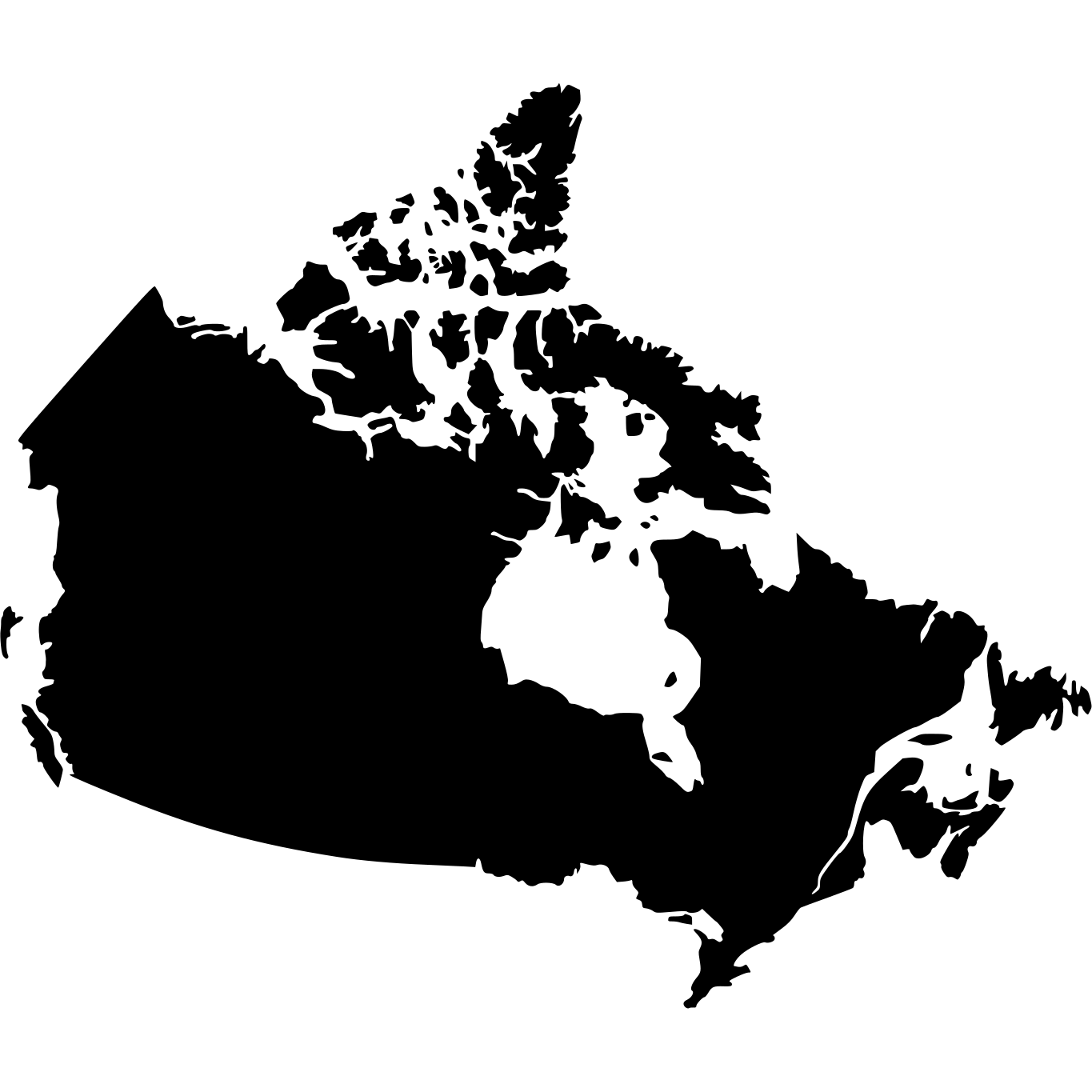
The Statement Skincare is a Canadian brand

We're dedicated to providing you with the most up-to-date and science-backed ingredient info out there.
The data we've presented on this page has been verified by a member of the SkinSort Team.
Read more about us· Updated August 6, 2025 • Added by RemiShen


