Mirae Vitamin C Cica Extra Brightening Essence
A essence with 32 ingredients, including vitamin C, BHA, and hyaluronic acid.
This smoothing essence is formulated around Salicylic Acid and Alpha-Arbutin to refine skin texture and brighten dull-looking skin.
Worth noting
Contains Salicylic Acid, an exfoliating acid best introduced gradually.
We independently verify ingredients, backed by peer-reviewed research. Suggest an update.
What's inside
Ingredients List
Salicylic Acid 2%
Masking










Water
Skin ConditioningPropylene Glycol
Humectant
Butylene Glycol
Humectant
Alpha-Arbutin
Antioxidant



Ethoxydiglycol
HumectantDiphenylsiloxy Phenyl Trimethicone
Skin Conditioning
Dimethicone
Emollient
Potassium Hydroxide
BufferingSodium Polyacryloyldimethyl Taurate
Emulsion Stabilising1,2-Hexanediol
Skin Conditioning
Hydroxyacetophenone
Antioxidant
Sphingomonas Ferment Extract
Skin Conditioning

Citric Acid
Buffering
Hydrogenated Polydecene
EmollientDimethicone/Vinyl Dimethicone Crosspolymer
Skin Conditioning
3-O-Ethyl Ascorbic Acid
Skin Conditioning
Sodium Citrate
BufferingDisodium EDTA
ChelatingMadecassoside
Antioxidant

O-Cymen-5-Ol
Antimicrobial
Centella Asiatica Leaf Extract
Skin Conditioning
Trideceth-10
CleansingAsiaticoside
Antioxidant
Sodium Hyaluronate
Humectant
Althaea Rosea Flower Extract
Skin ConditioningCentella Asiatica Extract
Cleansing
Chamomilla Recutita Extract
Skin Conditioning
Glycyrrhiza Glabra Root Extract
Bleaching
Panax Notoginseng Extract
Skin ConditioningPerilla Ocymoides Leaf Extract
TonicTaraxacum Officinale Leaf Extract
Skin Conditioning
Active Ingredients:
Salicylic Acid 2%
Inactive Ingredients:
Water, Propylene Glycol, Butylene Glycol, Alpha-Arbutin, Ethoxydiglycol, Diphenylsiloxy Phenyl Trimethicone, Dimethicone, Potassium Hydroxide, Sodium Polyacryloyldimethyl Taurate, 1,2-Hexanediol, Hydroxyacetophenone, Sphingomonas Ferment Extract, Citric Acid, Hydrogenated Polydecene, Dimethicone/Vinyl Dimethicone Crosspolymer, 3-O-Ethyl Ascorbic Acid, Sodium Citrate, Disodium EDTA, Madecassoside, O-Cymen-5-Ol, Centella Asiatica Leaf Extract, Trideceth-10, Asiaticoside, Sodium Hyaluronate, Althaea Rosea Flower Extract, Centella Asiatica Extract, Chamomilla Recutita Extract, Glycyrrhiza Glabra Root Extract, Panax Notoginseng Extract, Perilla Ocymoides Leaf Extract, Taraxacum Officinale Leaf Extract
Key Ingredients
Benefits
Concerns
Ingredients Explained
Salicylic Acid (also known as beta hydroxy acid or BHA) is a well-known ingredient for treating skin that struggles with acne and clogged pores. It exfoliates both the skin's surface and deep within the pores to help clear out buildup, control oil, and reduce inflammation.
Unlike AHAs (alpha hydroxy acids), salicylic acid is oil-soluble. This allows it to penetrate into pores which makes it especially effective for treating blackheads and preventing future breakouts.
Salicylic acid is also known for its soothing properties. It has a similar structure to aspirin and can calm inflamed or irritated skin, making it a good option for acne-prone skin that is also sensitive.
Concentrations of 0.5-2% are recognized by the U.S. FDA as an over-the-counter topical acne product.
It can cause irritation and/or dryness if one's skin already has a compromised moisture barrier, so it's best to focus on repairing that before introducing this ingredient into your routine.
While salicylic acid does not increase sun sensitivity, it’s still important to wear sunscreen daily to protect your skin.
If you are looking for the ingredient called BHA or Butylated Hydroxyanisole, click here.
Learn more about Salicylic AcidWater. It's the most common cosmetic ingredient of all. You'll usually see it at the top of ingredient lists, meaning that it makes up the largest part of the product.
So why is it so popular? Water most often acts as a solvent - this means that it helps dissolve other ingredients into the formulation.
You'll also recognize water as that liquid we all need to stay alive. If you see this, drink a glass of water. Remember to stay hydrated!
Learn more about WaterPropylene Glycol is a synthetic, colorless, odorless liquid that has been a staple in cosmetics for decades. It is a skin conditioning agent, humectant, and solvent.
As a humectant, it draw water to the skin to reduce flaking and restore suppleness. It's also a solvent that helps dissolve other actives and keeps formulas stable across temperature changes.
The CIR Expert Panel has confirmed this ingredient to be nontoxic and clinical studies show no sensitization at cosmetic use concentrations.
True allergic reactions are quite rare: a 15-year retrospective study of 6,751 patients found only 0.31% had a positive reaction (and less than half were considered clinically relevant).
It seemed that when sensitization does occur, it's most commonly linked to topical medication (like corticosteroids) and not cosmetics. Allergic contact dermatitis also appears largely limited to individuals with underlying skin conditions.
Overall, propylene glycol is a well-studied ingredient that most people can tolerate without issue.
Learn more about Propylene GlycolButylene Glycol (or BG) is used within cosmetic products for a few different reasons:
Overall, Butylene Glycol is a safe and well-rounded ingredient that works well with other ingredients.
Though this ingredient works well with most skin types, some people with sensitive skin may experience a reaction such as allergic rashes, closed comedones, or itchiness.
Learn more about Butylene GlycolAlpha-Arbutin is a brightening active used to fade dark spots, melasma, and post-acne marks. Structurally, it is a hydroquinone with a sugar molecule attached (but is much gentler than raw hydroquinone).
It has a pretty elegant way of working; it slots into tyrosinase, or the key enzyme that your skin uses to make melanin), and competitively blocks it so your skin produces less pigment over time.
There are two forms of arbutin and alpha is the better one to reach for: it works at lower amounts, absorbs into skin more easily, and has a strong safety record.
The science backs this up too: lab and animal studies confirm it lowers melanin by blocking tyosinase and the more you use (up to a point), the more it works.
Human studies look good too.
A 2024 trial found a cream with 5% alpha-arbutin and 2% kojic acid worked about as well as a prescription melasma cream but with fewer side effects. Another study showed 2% alpha-arbutin paired with 10% Trihydroxybenzoic Acid Glucoside and sunscreen faded dark spots and melasma without causing irritation.
Concentration-wise, most serums land in the 1-2% range.
The EU's Scientific Committee on Consumer Safety concluded that alpha-arbutin is safe in face creams up to 2% and body lotions up to 0.5%.
Overall, this is a well-studied and low-irritation brightener that's a great pick for anyone dealing with uneven skin tone. It also pairs well with vitamin C, niacinamide, and sunscreen.
Learn more about Alpha-ArbutinEthoxydiglycol (aka Diethylene Glycol Monoethyl Ether) is one of the cosmetic world's quiet problem solvers.
In a formula, it is a solvent that dissolves tricky ingredients that don't want to mix in and helps spread ingredients evenly across your skin without leaving a greasy or sticky feeling
This makes it great for hard-to-dissolve actives like vitamin C, benzoyl peroxide, and self-tanner DHA.
It also has mild humectant and penetration enhancer abilities so it can help some actives absorb a little deeper.
The penetration boost is backed by lab research: studies using human skin samples found it improved how well an active dissolves into the upper layer of skin rather than tearing down your skin barrier. Reviews of its mechanism also describe it interacting gently with the lipids and water in your outermost layer of skin.
Just know this penetration-enhancing effect is not universal. It helps a lot in some formulas and did very little in others (so the benefit really depends on the specific product).
Safety-wise, the evidence is reassuring. The Cosmetic Ingredient Review Expert Panel reviewed it and concluded it's safe for use in cosmetics and recognized it as non-irritating, non-sensitizing, and non-comedogenic in skincare.
Typical leave-on skincare usage lands around 1-10%. The EU has sets caps of 2.6% in non-spray products, 10% in rinse-offs, 7% in oxidative hair dye, and 5% in non-oxidative hair dye.
Learn more about EthoxydiglycolDiphenylsiloxy Phenyl Trimethicone is a silicone. It has a high refractive index and adds shine to formulations.
According to the safety review by the Cosmetic Ingredient Review (CIR) Expert Panel, it is safe for use in cosmetics under the current practices and concentrations.
Dimethicone is a type of synthetic silicone created from natural materials such as quartz. It is also known as polydimethylsiloxane.
What it does:
Dimethicone comes in different viscosities:
Depending on the viscosity, dimethicone has different properties.
Ingredients lists don't always show which type is used, so we recommend reaching out to the brand if you have questions about the viscosity.
This ingredient is unlikely to cause irritation because it does not get absorbed into skin. However, people with silicone allergies should be careful about using this ingredient.
Note: Dimethicone may contribute to pilling. This is because it is not oil or water soluble, so pilling may occur when layered with products. When mixed with heavy oils in a formula, the outcome is also quite greasy.
Learn more about DimethiconePotassium Hydroxide (also known as potash) is a strong alkaline ingredient that does one job: it nudges a product's pH up so the whole formula lands in a skin-friendly range.
It's also the base that turns oils into liquid soap during the soap making process.
An expert safety panel reviewed it and found it safe when formulations are made to be non-irritating.
As a pH adjuster, it's typically used well under 1% though regulatory caps go much higher: 5% in nail cuticle removers and 2-4.5% in hair straighteners.
Though there is some concern for irritation from raw or high pH material, a well-balanced formula will be a non-issue for the vast majority of people.
Learn more about Potassium HydroxideThis is a lab-made ingredient that plays a huge role in improving the texture of a formula.
It's used to thicken watery gel-creams, prevent water + oil from separating, and give products a silky, non-greasy glide.
Safety-wise, a panel of independent toxicologists reviewed this ingredient and concluded it to be safe in cosmetics in the present practices of use and concentration.
A separate sensitization patch test on humans also showed no evidence of allergic reactivity, and a true allergy to this ingredient is considered rare.
Typical usage levels range from 0.015%-3% in leave-on products and 0.078%-3.2% in rinse-off products.
Learn more about Sodium Polyacryloyldimethyl Taurate1,2-Hexanediol is a synthetic liquid and another multi-functional powerhouse.
It is a:
- Humectant, drawing moisture into the skin
- Emollient, helping to soften skin
- Solvent, dispersing and stabilizing formulas
- Preservative booster, enhancing the antimicrobial activity of other preservatives
Hydroxyacetophenone is a small phenolic molecule that earns its place in a formulas as an antioxidant and preservative booster.
As a phenol, it is able to neutralize free radicals to protect both the product and the skin from oxidative stress.
Though it can't kill microbes on its own, it works as a good supporting agent when combined with other preservatives like Phenoxyethanol or 1,2-Hexanediol.
This ingredient naturally occurs as piceol in Norwegian spruce needles (~0.4-1.1% dry weight and in cloudberries). Though the cosmetic-grade material is synthesized for purity and consistency.
You'll usually see it used at low levels and suppliers recommend up to 1% added to a water phase.
Safety testing was done at concentrations like 0.05% in SPF products and 0.5% in a Human Repeated Insult Patch Test. The safety evidence is assuring; this ingredient is safe for cosmetics in current use and also holds safety status as a food flavoring as well.
An honest caveat: the "soothing" and "anti-inflammatory" claims come mostly from supplier marketing rather than published clinical trials. The Cosmetic Ingredient Review's own literature search found no useful efficacy studies on this ingredient.
So the antioxidant and preservative-boosting roles are the well supported ones while the calming benefit is plausible but thinly evidenced.
Overall, this is a well-tolerated, low-irritation multitasker that quietly helps a formula stay fresh and stable.
Learn more about HydroxyacetophenoneThis ingredient is created by the fermentation of Sphingomonas, an interesting bacteria. Sphingomonas bacteria use ubiquinone-10 to help them breathe and their cell walls contain ceramides.
Early research suggests that certain skin bacteria, especially Sphingomonas, could play a helpful role in skin health.
In small studies, these bacteria seemed to become more common after regular sun exposure, with one strain showing the ability to resist UV light and reduce stress in skin cells. Another study also linked Sphingomonas to smoother and more supple skin.
While these results sound promising, the research is still in its early stages, and more studies are needed to know how reliable or meaningful these effects really are.
Fun fact: Unlike most microbes, Sphingomonas can survive the wine fermentation process, making it a tiny microbial marker of a wine's unique "terroir", or the environment’s “fingerprint” on the wine.
Like other ferments, this ingredient may not be Malassezia folliculitis safe.
Learn more about Sphingomonas Ferment ExtractCitric Acid is an alpha hydroxy acid (AHA) naturally found in citrus fruits like oranges, lemons, and limes.
Like other AHAs, citric acid can exfoliate skin by breaking down the bonds that hold dead skin cells together. This helps reveal smoother and brighter skin underneath.
However, this exfoliating effect only happens at high concentrations (20%) which can be hard to find in cosmetic products.
Due to this, citric acid is usually included in small amounts as a pH adjuster. This helps keep products slightly more acidic and compatible with skin's natural pH.
In skincare formulas, citric acid can:
While it can provide some skin benefits, research shows lactic acid and glycolic acid are generally more effective and less irritating exfoliants.
Most citric acid used in skincare today is made by fermenting sugars (usually from molasses). This synthetic version is identical to the natural citrus form but easier to stabilize and use in formulations.
Rosacea skin has a lower threshold for acids generally, with 62.5% of rosacea subjects in one study reacting to lactic acid in a sting test. This is why we mark citric acid as a potential rosacea trigger.
However, this ingredient shows up as a pH adjuster or chelator at roughly 0.1-1% in many products. These low levels are unlikely to be an issue for rosacea skin and becomes a potential trigger at exfoliating concentrations (20%). Because everybody's skin is unique, we recommend a patch test if you are unsure.
Learn more about Citric AcidHydrogenated Polydecene is a synthetic emollient. It forms a non-occlusive film on the skin's surface to provide a silky feel without being greasy.
In vivo studies in volunteers with atopic and dry skin showed no irritation or intolerance. The volunteers also saw a positive effect in dryness, scaling, and roughness after 28 days of use.
Concentrations up to 100% in guinea pig tests found it to be non-sensitizing and completely safe for use in cosmetics.
Learn more about Hydrogenated PolydeceneThis ingredient is a silicone elastomer that works as a texture enhancer, adds a silky slip, and also helps absorb excess oil.
Because it's a large macromolecule that's insoluble in water and chemically inert, it's not expected to penetrate or be absorbed into skin.
Human patch tests with a facial lotion containing 1% of this ingredient found no sensitization.
Learn more about Dimethicone/Vinyl Dimethicone Crosspolymer3-O-Ethyl Ascorbic Acid is one of the most popular "stable" vitamin C derivatives in skincare.
Plain ascorbic acid is fantastic but notoriously fragile; it browns, oxidizes, and loses potency fast. So attaching an ethyl group to the third carbon of the molecule gives it some cool perks:
In a formula, it does the 3 classic vitamin C jobs: it acts as an antioxidant, helps brighten skin tone by inhibiting tyrosinase, and supports collagen.
The evidence is reasonably solid for a cosmetic ingredient; Liao and colleagues (2018) showed it's significantly more stable than ascorbic acid while still being effective.
A 2021 study by Zerbinati and colleagues tested a serum with 30% 3-O-ethyl-l-ascorbic acid and 1% lactic acid significantly increased collagen production, reduced UVB-induced DNA damage, and decreased melanin on a reconstructed pigmented skin model.
Typical real world usage sits around 0.5-5% (and 1-2% is common for daily serums).
Amounts up to 30% have been shown to be non-irritating on human skin samples, but two isolated cases reported allergic contact dermatitis so a patch test is sensible if you have reactive skin.
Learn more about 3-O-Ethyl Ascorbic AcidSodium Citrate is the sodium salts of citric acid. In skincare, it is used to alter pH levels and acts as a preservative.
Its main functions are to maintain the pH of a product and neutralize metal ions.
The acidity of our skin is maintained by our glands and skin biome; normal pH level of skin is slightly acidic (~4.75-5.5).
Being slightly acidic allows our skin to create an "acid mantle". This acid mantle is a thin barrier that protects our skin from bacteria and contaminants.
Learn more about Sodium CitrateDisodium EDTA is a chelating agent. It grabs onto and deactivates metal ions that sneak into your products from water, packaging, or air.
This ingredient mainly works behind the scenes and helps with:
On top of that, this ingredient can counteract the effects of hard water by binding to the minerals in it.
One thing worth knowing is that Disodium EDTA has been shown to be a mild penetration enhancer. It can help other ingredients absorb into skin more effectively which can be a double-edged sword (great for actives, but can also make the active too strong if you have sensitive skin).
Clinical patch testing showed no significant skin irritation at typical use concentrations and minimal dermal absorption.
You'll most likely see this ingredient near the end of an ingredient list. It's typically found in concentrations less than 1%.
Learn more about Disodium EDTAMadecassoside is one of four active compounds found in Centella asiatica and is one of the main reasons Centella is so effective at calming irritated skin and supporting the moisture barrier.
There's a solid body of peer-reviewed research backing Madecassoside for several skin benefits. Studies have found:
Madecassoside pairs well with other hydrating or antioxidant ingredients like Ascorbic Acid or Hyaluronic Acid.
Learn more about MadecassosideThis ingredient is more commonly known as IPMP or Isopropyl Methylphenol. It is a preservative and has antimicrobial properties.
According to the EPA, this ingredient is allowed for use in cleansers, creams, powders, bath products, toothpaste, perfume, and more.
Centella Asiatica Leaf Extract comes from the leaves of an herb plant native to Southeast Asia. Centella Asiatica is rich in antioxidants and amino acids. It can help reduce irritation and soothe the skin.
Many active components found in centella asiatica, such as Madecassic Acid and Asiaticoside, encourage the skin to naturally produce hyaluronic acid. This helps keep our skin hydrated. Many of these components also show antioxidant activity and may help reduce the signs of aging.
Research shows centella asiatica can help increase Type I collagen production by increasing fibroblast production. Fibroblast helps form connective tissue.
The combination of all these properties makes centella asiatica leaf extract effective at soothing the skin.
Other components of centella asiatica leaf extract include Vitamin A, vitamin C, several B vitamins, and Asiatic Acid.
Recent studies found madecassoside may help prevent damage from UV rays by preventing UV-induced inflammation. Further research is needed.
This plant has been used as a medicine and in food for many centuries. As a medicine, it is used to treat burns, scratches, and wounds.
Learn more about Centella Asiatica Leaf ExtractWe don't have a description for Trideceth-10 yet.
Asiaticoside comes from the super popular skin-soothing ingredient, Centella asiatica. It's the reason centella-based products have a strong reputation for repairing and calming skin, along with its sibling compound Madecassoside.
Research from 2016-2025 supports its role in:
You'll usually find this in concentrations between 0.2-5%.
Learn more about AsiaticosideSodium Hyaluronate is the salt form of hyaluronic acid. It is a long sugar chain that is naturally found in your skin, joints, and connective tissue that maintains hydration and elasticity.
In skincare, it works as a humectant. It pulls water from the environment and deeper layers of skin and binds it to the surface.
Interestingly, the size of the molecule affects its behavior:
Some clinical evidence links low molecular weight versions to improved wrinkle depth, elasticity, anti-inflammatory effects, and barrier repair.
Many serums use a blend of both weights so you can get surface hydration plus longer-lasting and deeper effects.
You'll typically see concentrations between 0.1-2% for this ingredient.
Learn more about Sodium HyaluronateThis ingredient comes from the hollyhock flower. It has skin conditioning properties.
Centella Asiatica Extract (Centella) is one of the most researched botanical extracts in skincare with decades of studies backing its effects on inflammation, collagen, and the skin barrier.
That research keeps pointing back to the same four triterpenoid saponins: Asiaticoside, Madecassoside, Asiatic Acid, and Madecassic Acid.
These compounds allow centella to dial back inflammation, encourage the skin to build and hold onto collagen, support the barrier and hydration, and bring solid antioxidant activity to protect against signs of aging.
Centella also carries a nice supporting cast of Vitamin A, vitamin C, several B vitamins, and amino acids. Put it all together and you get an ingredient that soothes, hydrates, and protects, all at once.
Most of centella's magic comes from the four big compounds (Asiaticoside, Madecassoside, Asiatic Acid, and Madecassic Acid). These are the actives doing the heavy lifting in almost every centella study.
Here is the short version of what they do in the skin:
So it is not just soothing for the sake of soothing. Centella calms the skin AND helps it rebuild.
Just FYI, not all centella on an ingredient list is the same. What you are getting actually depends on the extract:
Fun fact on the ratios: the leaves tend to be richest in Madecassoside and Asiaticoside, and lower in the two acids. The exact amounts shift with where the plant is grown and how it is processed. This means purity really does vary brand to brand.
Centella is one of the most easygoing actives out there.
It layers well with basically everything: niacinamide, hyaluronic acid, peptides, and vitamin C, and also pairs nicely with stronger actives like retinoids and exfoliating acids where it can help take the edge off irritation.
On the safety side, centella and its triterpenes are classified as weak sensitizers, meaning allergic reactions are possible but uncommon.
Patch tests at 1% and 5% came back negative in test panels, and creams at typical use levels did not cause allergic reactions across large groups of people.
But as with any new active, a patch test is still a smart move for very reactive skin.
Centella is widely used because it is effective at low percentages. For context, human safety testing found no meaningful irritation from creams containing centella extract at everyday use levels (the tested amounts were well under 1%).
The irritancy threshold in animal testing was also above 30% (so real-world formulas sit far below anything concerning).
In collagen lab studies, higher concentrations drove more collagen synthesis, so serums built around centella tend to feature it more prominently.
Bottom line: you will find centella working nicely anywhere from a fraction of a percent up to hero-ingredient levels depending on whether it is a supporting soother or the main event.
Fun fact: Centella has been used as a medicine and in food for many centuries. As a medicine, it is used to treat burns, scratches, and wounds.
Learn more about Centella Asiatica ExtractThis ingredient comes from the Chamomile flower.
Chamomile is rich in antioxidants and has anti-inflammatory properties. Several compounds found in chamomile help with soothing, such as bisbolol.
Antioxidant components in chamomile help fight free-radical molecules. These unstable molecules may damage your skin cells. By stabilizing them, antioxidants may help reduce the signs of aging.
Ancient Greeks, Romans, and Egyptians used Chamomile to treat skin redness and dryness. Chamomile has also been used to help with stomach issues.
Learn more about Chamomilla Recutita ExtractGlycyrrhiza Glabra Root Extract is an extract of the roots of Licorice. It has been found to have several benefits such as skin hydrating, conditioning, and soothing.
One component, glabridin, has extra potent antioxidant and soothing properties. It has also been found to block pigmentation from UVB rays in guinea pigs.
Licorice Root also contains a flavonoid. Flavonoids are a natural substance from in plants. Flavonoids also have antioxidant properties.
Another component, glycyrrhizin, has been found to have anti-inflammatory and antimicrobial benefits. This may make licorice root extract effective at treating acne. However, more research is needed to support this.
Liquiritin is one of the flavone compounds found in licorice. It has been found to help lighten skin by preventing tyrosinase from reacting with tyrosine. When the two react, protein is converted to melanin. Melanin is the substance in your body that gives your features pigmentation.
Learn more about Glycyrrhiza Glabra Root ExtractWe don't have a description for Panax Notoginseng Extract yet.
We don't have a description for Perilla Ocymoides Leaf Extract yet.
This ingredient is also known as Dandelion leaf extract.
Studies show the leaf, stem, and roots of this plant are rich in antioxidants such as caffeic acid and polysaccharides, which act as humectants to help hydrate the skin.
Reviews
No written reviews yet. Be the first to review this product.
Recent searches
Search reviews by skin type, ingredient, or keyword.
Where it's from
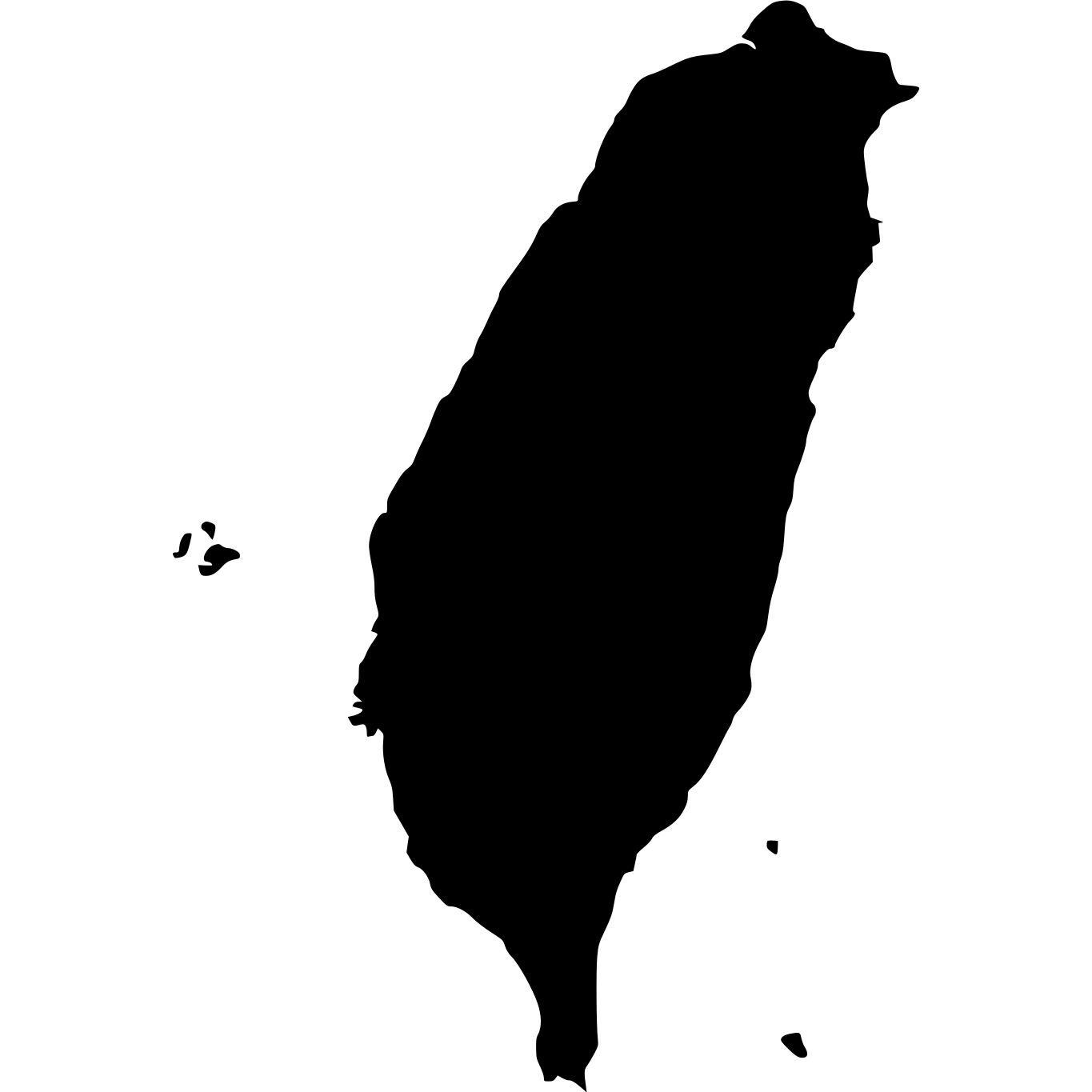
Mirae is a Taiwanese brand
Often compared with


We're dedicated to providing you with the most up-to-date and science-backed ingredient info out there.
The data we've presented on this page has been verified by a member of the SkinSort Team.
Read more about us· Updated December 8, 2025 • Added by brendafield


