Joik Moisture Magnet Hydrating Facial Toner
A toner with 24 ingredients, including hyaluronic acid.
This hydrating toner is formulated around Saccharide Isomerate and Sodium Hyaluronate to hydrate skin and strengthen the skin barrier.
Worth noting
Contains drying alcohol, which absorbs quickly but can be dehydrating.
We independently verify ingredients, backed by peer-reviewed research. Suggest an update.
What's inside
Ingredients List
Betula Alba Juice
AstringentWater
Skin ConditioningPentylene Glycol
Skin Conditioning
Glycerin
Humectant

Saccharide Isomerate
Humectant
Betaine
Humectant
Sodium PCA
Humectant
Trehalose
Humectant
Canola Oil
Emollient





Hydrogenated Lecithin
Emulsifying
Opuntia Ficus-Indica Seed Oil
Emollient
Betula Alba Bark Extract
Masking
Galactoarabinan
Calcium Ketogluconate
Skin ConditioningSodium Hyaluronate
Humectant
Hydrolyzed Hyaluronic Acid
Humectant
Furcellaria Lumbricalis Extract
Skin ConditioningSodium Benzoate
Masking
Sodium Levulinate
Skin ConditioningParfum
Masking

Sodium Citrate
BufferingSodium Phytate
ChelatingAlcohol
Antimicrobial

Citric Acid
Buffering

Betula Alba Juice, Water, Pentylene Glycol, Glycerin, Saccharide Isomerate, Betaine, Sodium PCA, Trehalose, Canola Oil, Hydrogenated Lecithin, Opuntia Ficus-Indica Seed Oil, Betula Alba Bark Extract, Galactoarabinan, Calcium Ketogluconate, Sodium Hyaluronate, Hydrolyzed Hyaluronic Acid, Furcellaria Lumbricalis Extract, Sodium Benzoate, Sodium Levulinate, Parfum, Sodium Citrate, Sodium Phytate, Alcohol, Citric Acid
Key Ingredients
Benefits
Concerns
Ingredients Explained
Betula Alba Juice is the sap from a birch tree named Betula Alba.
Sap from the Betula Alba tree can help sooth and protect the skin. Betula Alba Juice contains tannins and triterpenes. Tannins are an antioxidant that help fight against free-radical molecules. It is also an astringent and may help reduce pore size. Triterpenes have been shown to help heal wounds.
Betula Alba Juice contains manganese and several amino acids.
Learn more about Betula Alba JuiceWater. It's the most common cosmetic ingredient of all. You'll usually see it at the top of ingredient lists, meaning that it makes up the largest part of the product.
So why is it so popular? Water most often acts as a solvent - this means that it helps dissolve other ingredients into the formulation.
You'll also recognize water as that liquid we all need to stay alive. If you see this, drink a glass of water. Remember to stay hydrated!
Learn more about WaterPentylene Glycol (1,2-pentanediol) is a multitasking little diol with three main roles in a formula:
Research on alkanediols (the family pentylene glycol belongs to) show they work by disrupting microbial cell membranes. This disruption helps the primary preservative system in a product work more effectively at lower doses.
On the safety side, the Cosmetic Ingredient Review Expert Panel has concluded this ingredient to be safe as used in current cosmetic practices + concentrations.
Typical use levels in a formula run about 1-5%.
Learn more about Pentylene GlycolGlycerin (or glycerol) is a compound naturally found in your skin. It's a powerhouse humectant that pulls water into the stratum corneum.
Topically, glycerin does several things at once:
Your skin makes glycerin on its own (mostly from sebaceous oil breakdown) and shuttles it to your outermost layer of skin, or your epidermis, via aquaporin-3.
Aquaporin-3 is a transporter that is essential for normal skin hydration, elasticity, and repair. Interestingly, mice lacking in AQP3 have dry and less elastic skin that can be fully corrected with glycerin.
This ingredient is non-irritating, plays well with almost every ingredient, and works across all skin types. Typical use is anywhere between 3-10% but can go up to 79% in some leave-on products.
Just know very high concentrations (>40%) can feel tacky in low humidity.
Glycerin is the name for this ingredient in American English. British English uses Glycerol/Glycerine.
Learn more about GlycerinSaccharide Isomerate comes from sugars found in corn. It is a skin hydrator.
The structure of this ingredient can be altered to be more similar to the carbohydrates found in our skin. This ability to mimic our skin gives it hydrating properties.
Specifically, saccharide Isomerate is a humectant. Humectants draw moisture from the air to our skin.
Research shows Saccharide Isomerate to be an effective moisturizer.
Learn more about Saccharide IsomerateBetaine is a humectant. Like hyaluronic acid, it helps attract and retain moisture in the skin. It’s known for being gentle and for helping the skin maintain balanced hydration.
Betaine is mainly used to improve hydration and support calmer skin. It helps skin cells regulate water balance because it functions as an osmolyte.
Some studies suggest betaine may support making skin tone more even.
Fun fact: Betaine naturally exists in the skin and the body. In cosmetic products, it can be either plant-derived (most commonly from sugar beets) or synthetically produced for consistency and stability.
Betaine is also known as trimethylglycine.
Learn more about BetaineSodium PCA (the salt of PCA) is one of the most well-established humectants in skincare.
Why is it so special? Your skin already makes it naturally; it's a natural component of your skin's Natural Moisturizing Factor (NMF), or the mix of water-binding compounds inside your skin cells that keeps things soft and hydrated.
As a cosmetic ingredient, it grabs water and holds it in the upper layers of skin to smooth roughness and ease dehydration.
There's some clinical support for the NMF approach with a study showing that a cream built to mimic the skin's NMF significantly boosted hydration.
Safety-wise, this ingredient non-irritating, non-comedogenic, and non-phototoxic in testing, with minimal skin absorption.
It also works really well with other hydrators like glycerin or hyaluronic acid, and typical usage is somewhere between 0.2-4%.
Learn more about Sodium PCATrehalose is a disaccharide made of two glucose molecules (glucose is sugar!). Trehalose is used to help moisturize skin. It also has antioxidant properties.
As a humectant, trehalose helps draw moisture from the air to your skin. This helps keep your skin hydrated.
Due to its antioxidant properties, trehalose may help with signs of aging. Antioxidants help fight free-radical molecules, unstable molecules that may damage your skin.
In medicine, trehalose and hyaluronic acid are used to help treat dry eyes.
Some animals, plants, and bacteria create trehalose as a source of energy to survive freeze or lack of water.
Learn more about TrehaloseCanola Oil is a plant-oil and low-erucic-acid variety of rapeseed. Like other seed oils, it functions as an emollient that softens skin and slows water loss.
Its fatty acid profile is mostly linoleic acid (55-65%) with some oleic, palmitic, and stearic acids. There are also some small amounts of vitamin E and plant sterols.
The sterol content is pretty interesting:
In a controlled human study, a single application of canola oil and especially its sterol-enriched fraction reduced visible irritation, redness, and water loss caused by SLS. Plain canola oil and most other tested oils did little on healthy, un-irritated skin.
It's pretty much just a calm, moisturizing oil that helps with soothing if your skin is already irritated.
Since canola oil is made up of C18 fatty acids, it may not be fungal acne safe. The Malassezia yeast feeds on chain lengths C11-24.
Fun fact: Canadian growers bred the low-erucic variety in the 1970's, and the name stands for "Canadian oil, Low Acid").
Learn more about Canola OilHydrogenated Lecithin is a more stable version of lecithin.
It's made by taking lecithin (a phospholipid commonly found in soybeans and egg yolks) and hydrogenating it. This just means the unsaturated fatty acids are turned into saturated ones so they don't go bad as easily.
This ingredient is an emollient, emulsifier, and penetration enhancer. As an emollient, it helps soften and hydrate skin by trapping moisture within. As an emulsifier, it prevents oil and water ingredients from separating.
Hydrogenated Lecithin can form tiny spherical structures made of phospholipid bilayers called liposomes. These liposomes are able to capture compounds inside their structure and deliver them through the skin barrier.
Because phospholipids are a natural component of our cell membranes, this ingredient is inherently compatible with skin.
A 2021 study found lecithin-based surfactants were less harsh and more tolerable comared to Sodium Lauryl Sulfate (SLS).
Learn more about Hydrogenated LecithinThis ingredient is also known as prickly pear seed oil (PPSO); it's one of the more nutritionally dense plant oils you can find in cosmetics.
Its fatty acid profile is dominated by linoleic acid (57-65%), followed by oleic (16-22%), and palmitic (12-16%).
That high linoleic acid content is a big deal for skin. Linoleic acid is a key component of the skin's own lipid barrier and this combination is associated with improved skin hydration + barrier repair.
PPSO also contains some phytosterols and is exceptionally rich in tocopherols (vitamin E). The phytosterols contribute to anti-inflammatory activity and the tocopherols provide meaningful antioxidant protection.
Animal studies have shown that topical application of PPSO reduced edema formation and inflammatory cell infiltration; this supports its traditional use for wound healing and skin inflammation.
In vitro studies, preclinical, and clinical evidence all point to a very low toxicity profile for this ingredient.
Typical use levels range from 1-100% :
Fungal acne: The Malassezia species can metabolize fatty acids with carbon chain lengths between C11-24. Linoleic, oleic, and palmitic acid fall into this range, making PPSO not fungal acne safe.
Learn more about Opuntia Ficus-Indica Seed OilBetula Alba Bark Extract is from the birch tree named Betula Alba.
Extract from Betula Alba tree can help sooth and protect the skin. Betula Alba contains tannins and triterpenes. Tannins have antioxidant and astringent properties. Triterpenes have been shown to help heal wounds.
Betula Alba Bark Extract may also be used to add scent to a product or to cover an unpleasant scent.
Learn more about Betula Alba Bark ExtractThis ingredient is also known as arabinogalactan. It is a polysaccharide extracted from North American larch trees. It is a film-forming agent that helps enhance skin hydration and improves the texture of products.
Once applied, galactoarabinan forms a lightweight and breathable film on the skin. This helps reduce transepidermal water loss (TEWL) without adding a greasy finish.
It is also used to boost the efficacy of exfoliating actives like AHAs by improving skin feel and reducing irritation potential.
Studies show this ingredient supports hydration through two actions:
1) Limiting water evaporation
2) Enhancing the spreadability of emulsion products to disperse humectants and emollients across the skin's surface
Additionally, galactoarabinan can improve makeup wear and reduce "tightness" after cleansing.
Learn more about GalactoarabinanWe don't have a description for Calcium Ketogluconate yet.
Sodium Hyaluronate is the salt form of hyaluronic acid. It is a long sugar chain that is naturally found in your skin, joints, and connective tissue that maintains hydration and elasticity.
In skincare, it works as a humectant. It pulls water from the environment and deeper layers of skin and binds it to the surface.
Interestingly, the size of the molecule affects its behavior:
Some clinical evidence links low molecular weight versions to improved wrinkle depth, elasticity, anti-inflammatory effects, and barrier repair.
Many serums use a blend of both weights so you can get surface hydration plus longer-lasting and deeper effects.
You'll typically see concentrations between 0.1-2% for this ingredient.
Learn more about Sodium HyaluronateHydrolyzed Hyaluronic Acid is hyaluronic acid (HA) that is broken down into lower molecular weight fragments.
It's a humectant that pulls and holds water in the skin to help with hydration, plumpness, and reduce transepidermal water loss.
Because hydrolyzed hyaluronic acid is smaller in size, it can slip past your outermost layer of skin more easily than full-sized HA.
Most formulations will combine all sizes to get the best of both worlds.
Typical usage levels range from 0.01-1%. Any percentage higher than 2% might become goopy and tacky.
Learn more about Hydrolyzed Hyaluronic AcidWe don't have a description for Furcellaria Lumbricalis Extract yet.
Sodium Benzoate is a preservative. It's used in both cosmetic and food products to inhibit the growth of mold and bacteria. It is typically produced synthetically.
Both the US FDA and EU Health Committee have approved the use of sodium benzoate. In the US, levels of 0.1% (of the total product) are allowed.
Sodium benzoate works as a preservative by inhibiting the growth of bacteria inside of cells. It prevents the cell from fermenting a type of sugar using an enzyme called phosphofructokinase.
It is the salt of benzoic acid. Foods containing sodium benzoate include soda, salad dressings, condiments, fruit juices, wines, and snack foods.
Studies for using ascorbic acid and sodium benzoate in cosmetics are lacking, especially in skincare routines with multiple steps.
We always recommend speaking with a professional, such as a dermatologist, if you have any concerns.
Learn more about Sodium BenzoateSodium levulinate is the a sodium salt of Levulinic Acid. Oncedissolved in an aqueous solution, the two ingredients become identical. It is usually derived from renewable plant sources like corn starch or sugarcane.
In skincare, it mostly acts as a skin conditioning agent that keeps skin soft and hydrated. It also acts as a preservative booster by inhibiting the growth of mold, yeast, and bacteria.
It's often paired with Sodium Anisate as the two create a broad-spectrum preservative system that is popular in "natural" formulations.
This ingredient is water-soluble.
The CIR Expert Panel for Cosmetic Ingredient Safety has concluded this ingredient to be non-irritated and there are no restrictions for use in EU cosmetics. The FDA also allows this ingredient to be used as a food-grade flavoring agent.
Learn more about Sodium LevulinateParfum is a catch-all term for an ingredient or more that is used to give a scent to products.
Also called "fragrance", this ingredient can be a blend of hundreds of chemicals or plant oils. This means every product with "fragrance" or "parfum" in the ingredients list is a different mixture.
For instance, Habanolide is a proprietary trade name for a specific aroma chemical. When used as a fragrance ingredient in cosmetics, most aroma chemicals fall under the broad labeling category of “FRAGRANCE” or “PARFUM” according to EU and US regulations.
The term 'parfum' or 'fragrance' is not regulated in many countries. In many cases, it is up to the brand to define this term.
For instance, many brands choose to label themselves as "fragrance-free" because they are not using synthetic fragrances. However, their products may still contain ingredients such as essential oils that are considered a fragrance by INCI standards.
One example is Calendula flower extract. Calendula is an essential oil that still imparts a scent or 'fragrance'.
Depending on the blend, the ingredients in the mixture can cause allergies and sensitivities on the skin. Some ingredients that are known EU allergens include linalool and citronellol.
Parfum can also be used to mask or cover an unpleasant scent.
The bottom line is: not all fragrances/parfum/ingredients are created equally. If you are worried about fragrances, we recommend taking a closer look at an ingredient. And of course, we always recommend speaking with a professional.
Learn more about ParfumSodium Citrate is the sodium salts of citric acid. In skincare, it is used to alter pH levels and acts as a preservative.
Its main functions are to maintain the pH of a product and neutralize metal ions.
The acidity of our skin is maintained by our glands and skin biome; normal pH level of skin is slightly acidic (~4.75-5.5).
Being slightly acidic allows our skin to create an "acid mantle". This acid mantle is a thin barrier that protects our skin from bacteria and contaminants.
Learn more about Sodium CitrateSodium Phytate is the sodium salt of Phytic acid, a compound that plants store phosphorus in. It's the plant-derived alternative to ingredients like Disodium EDTA.
In skincare, this ingredient is a chelator that grabs onto trace metal ions like iron and copper that sneak into formulas through water/raw materials.
Those metals speed up oxidation so binding them keeps oils, fragrance, and actives from going off, stops color changes, and helps the preservative system work harder.
Survey data shows usage levels range from 0.0099%-0.5% in leave-on products, 0.025%-0.3% in rinse-off, and up to 0.05% in eye-area products. Suppliers typically recommend a range between 0.05-0.5%.
Learn more about Sodium PhytateThis ingredient is also called ethanol or ethyl alcohol. It is denatured, meaning made undrinkable for cosmetic use.
In formulas, it:
Is it bad for your skin?
The answer comes down to concentration. Patch and wash studies have found highly concentrated alcohol-based hand rubs (60-100%) cause less barrier disruption than washing with a basic detergent like SLS. The only measurable effect in these studies was a temporary dip in skin hydration.
Concentrations below 12-15% in leave-on cosmetics is generally well-tolerated. Concentrations above start to see increased transepidermal water loss (TEWL) and reduced hydration.
In concentrations about 58%, it creates temporary channels in your skin's lipid layers to become more permeable and allow other ingredients to slip through easily.
This ingredient can be up to 80% of the formula in alcohol-based perfumes.
Overall, this ingredient is probably harmless if found lower down an ingredients list but worth side-eyeing if it's high up (especially if your barrier is already struggling).
Alcohol can worsen dry skin, eczema, and oily skin, especially at higher concentrations. This is because it can increase transepidermal water loss and decrease hydration to disrupt the skin barrier.
According to the National Rosacea Society based in the US, you should be mindful of products with these alcohols in the top half of ingredients.
True allergic contact dermatitis to ethanol is uncommon, but be sure to patch test if you have dry or sensitive skin.
Learn more about AlcoholCitric Acid is an alpha hydroxy acid (AHA) naturally found in citrus fruits like oranges, lemons, and limes.
Like other AHAs, citric acid can exfoliate skin by breaking down the bonds that hold dead skin cells together. This helps reveal smoother and brighter skin underneath.
However, this exfoliating effect only happens at high concentrations (20%) which can be hard to find in cosmetic products.
Due to this, citric acid is usually included in small amounts as a pH adjuster. This helps keep products slightly more acidic and compatible with skin's natural pH.
In skincare formulas, citric acid can:
While it can provide some skin benefits, research shows lactic acid and glycolic acid are generally more effective and less irritating exfoliants.
Most citric acid used in skincare today is made by fermenting sugars (usually from molasses). This synthetic version is identical to the natural citrus form but easier to stabilize and use in formulations.
Rosacea skin has a lower threshold for acids generally, with 62.5% of rosacea subjects in one study reacting to lactic acid in a sting test. This is why we mark citric acid as a potential rosacea trigger.
However, this ingredient shows up as a pH adjuster or chelator at roughly 0.1-1% in many products. These low levels are unlikely to be an issue for rosacea skin and becomes a potential trigger at exfoliating concentrations (20%). Because everybody's skin is unique, we recommend a patch test if you are unsure.
Learn more about Citric AcidReviews
No written reviews yet. Be the first to review this product.
Recent searches
Search reviews by skin type, ingredient, or keyword.
Where it's from
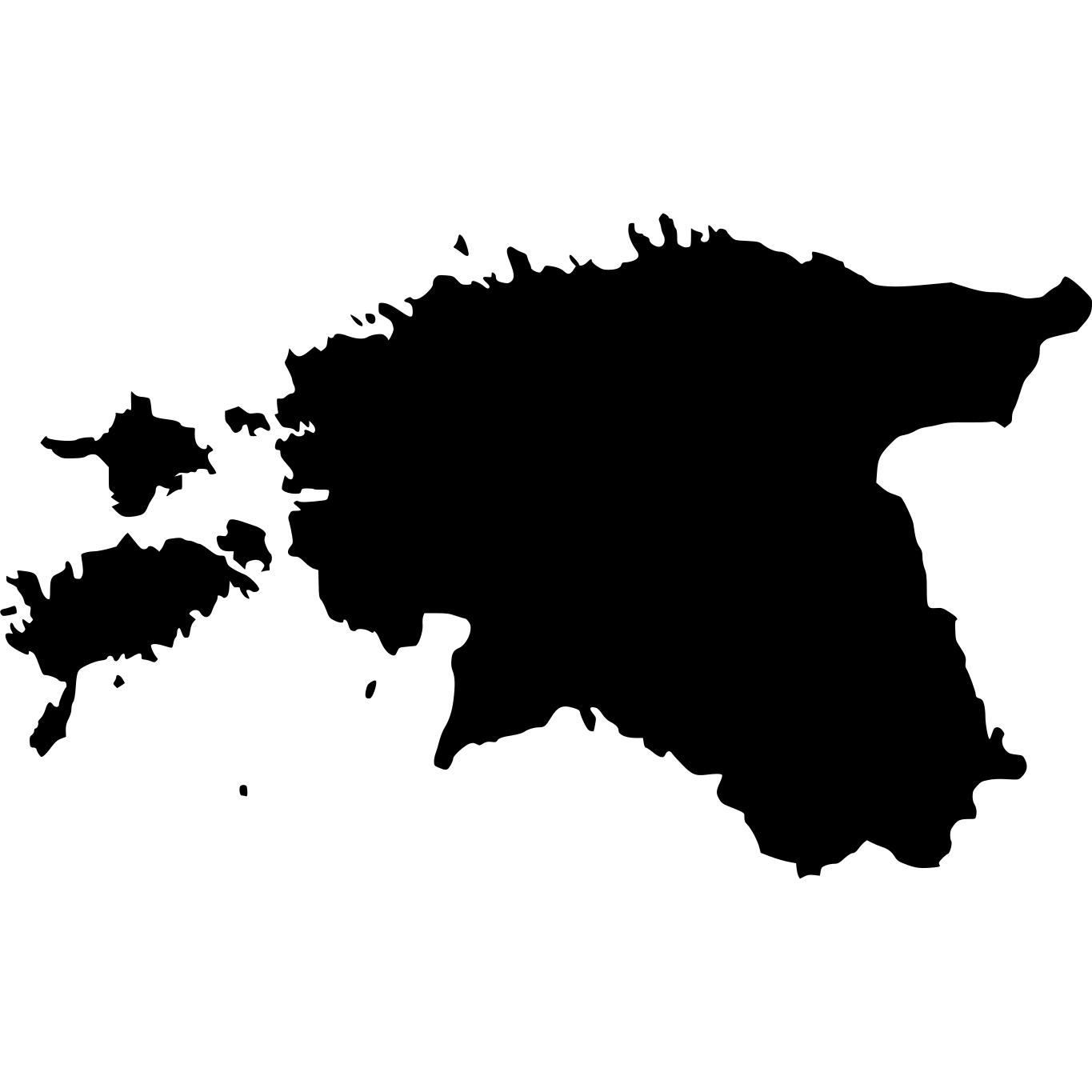
Joik is a Estonian brand

We're dedicated to providing you with the most up-to-date and science-backed ingredient info out there.
The data we've presented on this page has been verified by a member of the SkinSort Team.
Read more about us· Updated February 2, 2026 • Added by bruhsubtitles


