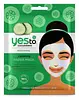
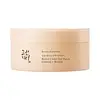
Yes To Cucumbers Calming Paper Face Mask Versus Beauty of Joseon Revive Under Eye Patch: Ginseng + Retinal
This calming sheet mask is formulated around Aloe Barbadensis Leaf Juice and Cucumis Sativus Fruit Extract to calm redness and hydrate skin.
This anti-aging eye mask is formulated around Panax Ginseng Root Water and Retinal to soften the look of wrinkles and calm redness.


What's inside
What's inside
 Key Ingredients
No key ingredients
Benefits
Concerns
Ingredients Side-by-side
Water
Skin ConditioningAloe Barbadensis Leaf Juice
Skin Conditioning


Glycerin
Humectant

Alcohol Denat.
Antimicrobial




Propanediol
Solvent
Sorbitol
Humectant
Cucumis Sativus Fruit Extract
Emollient
Cucumis Sativus Fruit Water
Skin ConditioningCamellia Oleifera Leaf Extract
AstringentChamomilla Recutita Flower Water
MaskingMenthol
Masking
Allantoin
Skin Conditioning
Galactoarabinan
Beta-Glucan
Skin Conditioning
Algin
MaskingHeptyl Glucoside
SurfactantXanthan Gum
EmulsifyingDipotassium Glycyrrhizate
Humectant
Tetrasodium Glutamate Diacetate
ChelatingCaprylhydroxamic Acid
ChelatingBenzoic Acid
Masking
Sorbic Acid
Preservative
Sodium Hydroxide
BufferingCitric Acid
Buffering

Potassium Sorbate
Preservative
Sodium Benzoate
Masking
Phenoxyethanol
Preservative
Parfum
Masking

Water, Aloe Barbadensis Leaf Juice, Glycerin, Alcohol Denat., Propanediol, Sorbitol, Cucumis Sativus Fruit Extract, Cucumis Sativus Fruit Water, Camellia Oleifera Leaf Extract, Chamomilla Recutita Flower Water, Menthol, Allantoin, Galactoarabinan, Beta-Glucan, Algin, Heptyl Glucoside, Xanthan Gum, Dipotassium Glycyrrhizate, Tetrasodium Glutamate Diacetate, Caprylhydroxamic Acid, Benzoic Acid, Sorbic Acid, Sodium Hydroxide, Citric Acid, Potassium Sorbate, Sodium Benzoate, Phenoxyethanol, Parfum
Panax Ginseng Root Water
Masking
Water
Skin ConditioningGlycerin
Humectant
Collagen Water
Humectant
1,2-Hexanediol
Skin Conditioning
Chondrus Crispus
Masking
Hydroxyacetophenone
Antioxidant
Algin
MaskingCeratonia Siliqua Gum
EmollientButylene Glycol
Humectant
Potassium Chloride
Xanthan Gum
EmulsifyingHydrolyzed Collagen
Emollient
Glucomannan
Skin ConditioningSucrose
Humectant
Titanium Dioxide
Cosmetic Colorant

Mica
Cosmetic ColorantSynthetic Fluorphlogopite
Adenosine
Skin Conditioning
Maltodextrin
Absorbent
Disodium EDTA
ChelatingDipotassium Glycyrrhizate
Humectant
Allantoin
Skin Conditioning
Tin Oxide
Abrasive
Hydrogenated Lecithin
Emulsifying
Centella Asiatica Extract
Cleansing
Ficus Carica Fruit Extract
Humectant
Beta-Glucan
Skin Conditioning
Ceramide NP
Skin Conditioning
Caprylyl Glycol
Emollient
Bakuchiol
Antimicrobial


Retinal
Skin Conditioning


Acetyl Hexapeptide-8
Humectant
Panax Ginseng Root Water, Water, Glycerin, Collagen Water, 1,2-Hexanediol, Chondrus Crispus, Hydroxyacetophenone, Algin, Ceratonia Siliqua Gum, Butylene Glycol, Potassium Chloride, Xanthan Gum, Hydrolyzed Collagen, Glucomannan, Sucrose, Titanium Dioxide, Mica, Synthetic Fluorphlogopite, Adenosine, Maltodextrin, Disodium EDTA, Dipotassium Glycyrrhizate, Allantoin, Tin Oxide, Hydrogenated Lecithin, Centella Asiatica Extract, Ficus Carica Fruit Extract, Beta-Glucan, Ceramide NP, Caprylyl Glycol, Bakuchiol, Retinal, Acetyl Hexapeptide-8
Reviews
Ingredients Explained
These ingredients are found in both products.
Ingredients higher up in an ingredient list are typically present in a larger amount.
Algin is the sodium salt of alginic acid, a sugar-based polymer pulled out of brown seaweed.
In cosmetics, it's a workhorse thickener, binder, and film former rather than an active; it's mostly there for texture and slip.
Industry survey data collected by the Cosmetic Ingredient Review put its maximum reported use at 50% in paste masks and mud packs with reported use going all the way down to 0.001% in aerosol products. Most formulas sit at the low end since a little goes a long way as a thickener.
Allergy-wise, this ingredient is about as low-risk as it gets topically:
The "algae causes acne" idea comes from three places that got tangled together:
None of that transfers to a purified polysaccharide like algin. Clogged pores are a lipid problem where an ingredient has to get into the follicle and mix with sebum to form a comedone. Algin is a big, water-loving sugar chain that does neither; it gels and then sits on the surface as a film until it's rinsed off.
Learn more about AlginAllantoin is a soothing ingredient known for its protective and moisturizing properties; it's basically a quiet workhorse ingredient you can find in a huge range of cosmetics.
Though it can be derived from the comfrey plant, allantoin is produced synthetically for cosmetic products to ensure purity.
Research shows it can encourage your skin cells to turn over and renew by stimulating keratinocyte and fibroblast proliferation.
It also has mild keratolytic properties to help loosen and shed dead skin cells without being harsh.
Studies also suggest allantoin can help calm inflammation by dialing down some of the chemical signals your skin sends out when it is irritated.
This ingredient is typically used in the 0.1-0.5% range, and the FDA recognizes it as a skin protectant in OTC products up to 2%.
Overall, allantoin is a wonderful addition to most routines; it is stable across a wide pH range (~4-8), works well with other ingredients, and is considered non-sensitizing/non-irritating.
Fun fact: Allantoin is naturally occurring in comfrey root, beets, chamomile, and wheat sprouts. Our bodies even produce it as a byproduct of uric acid metabolism.
Learn more about AllantoinBeta-Glucan is a soluble polysaccharide (a chain of glucose sugars) sourced from the cells walls of oats, baker's yeast, mushrooms, and seaweed.
It's a rare ingredient that pulls double-duty as a heavy-duty hydrator and skin-soothing repair agent.
On the surface, it acts as a humectant that holds water in place and reduces moisture loss for a plumper, smoother feel, while its anti-inflammatory and antioxidant properties make it a great pick for calming redness or sensitive skin
The more interesting story is underneath:
Despite its large molecular size, oat beta-glucan has been shown to penetrate the epidermis and reach the dermis by slipping between skin cells. Here, it interacts with fibroblasts and macrophages to nudge collagen synthesis and support wound repair.
A small 2005 split-face clinical study of 27 subjects found topical beta-glucan produced measurable reductions in wrinkle depth, height, and roughness after 8 weeks of use.
It is worth noting the trial was small and the penetration testing used frozen, irradiated skin so the anti-aging data is encouraging rather than definitive.
This ingredient gets along with pretty much everything and is typically used around 0.1-1%.
Fungal acne: This ingredient is not a food source for the Malassezia yeast because it is a glucose polysaccharide with no fatty acid or ester component.
Learn more about Beta-GlucanDipotassium Glycyrrhizate comes from licorice root.
Extracts of licorice have demonstrated to have antibacterial, anti‐inflammatory, antiviral, antioxidant properties.
One component, glabridin, has extra potent antioxidant and soothing properties. It has also been found to block pigmentation from UVB rays in guinea pigs.
Licorice Root also contains a flavonoid. Flavonoids are a natural substance from in plants. Flavonoids also have antioxidant properties.
Another component, glycyrrhizin, has been found to have anti-inflammatory and antimicrobial benefits. This may make licorice root extract effective at treating acne. However, more research is needed to support this.
Liquiritin is one of the flavone compounds found in licorice. It has been found to help lighten skin by preventing tyrosinase from reacting with tyrosine. When the two react, protein is converted to melanin. Melanin is the substance in your body that gives your features pigmentation.
Licorice root is native to Southern Europe and Asia. It has been used in traditional Chinese medicine to help with respiratory issues.
Learn more about Dipotassium GlycyrrhizateGlycerin (or glycerol) is a compound naturally found in your skin. It's a powerhouse humectant that pulls water into the stratum corneum.
Topically, glycerin does several things at once:
Your skin makes glycerin on its own (mostly from sebaceous oil breakdown) and shuttles it to your outermost layer of skin, or your epidermis, via aquaporin-3.
Aquaporin-3 is a transporter that is essential for normal skin hydration, elasticity, and repair. Interestingly, mice lacking in AQP3 have dry and less elastic skin that can be fully corrected with glycerin.
This ingredient is non-irritating, plays well with almost every ingredient, and works across all skin types. Typical use is anywhere between 3-10% but can go up to 79% in some leave-on products.
Just know very high concentrations (>40%) can feel tacky in low humidity.
Glycerin is the name for this ingredient in American English. British English uses Glycerol/Glycerine.
Learn more about GlycerinWater. It's the most common cosmetic ingredient of all. You'll usually see it at the top of ingredient lists, meaning that it makes up the largest part of the product.
So why is it so popular? Water most often acts as a solvent - this means that it helps dissolve other ingredients into the formulation.
You'll also recognize water as that liquid we all need to stay alive. If you see this, drink a glass of water. Remember to stay hydrated!
Learn more about WaterXanthan gum is used as a stabilizer and thickener within cosmetic products. It helps give products a sticky, thick feeling - preventing them from being too runny.
On the technical side of things, xanthan gum is a polysaccharide - a combination consisting of multiple sugar molecules bonded together.
Xanthan gum is a pretty common and great ingredient. It is a natural, non-toxic, non-irritating ingredient that is also commonly used in food products.
Learn more about Xanthan Gum

