
What's inside
What's inside
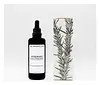 Key Ingredients
No key ingredients
Benefits
Concerns
Ingredients Side-by-side
Ricinus Communis Seed Oil
Masking




Prunus Amygdalus Dulcis Oil
Skin Conditioning

Olea Europaea Fruit Oil
Masking
Cucurbita Pepo Seed Oil
Emollient
Cannabis Sativa Seed Oil
Emollient
Macadamia Ternifolia Seed Oil
Emollient
Persea Gratissima Oil
Skin Conditioning
Nigella Sativa Seed Oil
Emollient
Argania Spinosa Kernel Oil
Emollient



Simmondsia Chinensis Seed Oil
Emollient
Eclipta Prostrata Extract
Skin Conditioning
Bacopa Monnieri Leaf Extract
Skin ConditioningPhyllanthus Emblica Fruit Extract
HumectantOcimum Sanctum Leaf Extract
Skin ConditioningAzadirachta Indica Leaf Extract
Skin ConditioningSalix Alba Bark Extract
Astringent
Foeniculum Vulgare Fruit Extract
EmollientWithania Somnifera Root Extract
Skin Conditioning
Ficus Carica Fruit Extract
Humectant
Serenoa Serrulata Fruit Extract
Skin Conditioning
Trifolium Pratense Extract
Skin ConditioningUrtica Dioica Extract
AstringentCamellia Sinensis Leaf Extract
Antimicrobial




Rosmarinus Officinalis Leaf Extract
AntimicrobialVitis Vinifera Seed Extract
Antimicrobial
Arctium Lappa Root Extract
Skin Conditioning
Taraxacum Officinale Root Extract
Skin ConditioningEquisetum Arvense Extract
AstringentMentha Piperita Oil
Masking



Rosmarinus Officinalis Leaf Oil
Masking
Citrus Aurantium Dulcis Peel Oil
Masking
Essential Oils
Tocopherol
Antioxidant
Ricinus Communis Seed Oil, Prunus Amygdalus Dulcis Oil, Olea Europaea Fruit Oil, Cucurbita Pepo Seed Oil, Cannabis Sativa Seed Oil, Macadamia Ternifolia Seed Oil, Persea Gratissima Oil, Nigella Sativa Seed Oil, Argania Spinosa Kernel Oil, Simmondsia Chinensis Seed Oil, Eclipta Prostrata Extract, Bacopa Monnieri Leaf Extract, Phyllanthus Emblica Fruit Extract, Ocimum Sanctum Leaf Extract, Azadirachta Indica Leaf Extract, Salix Alba Bark Extract, Foeniculum Vulgare Fruit Extract, Withania Somnifera Root Extract, Ficus Carica Fruit Extract, Serenoa Serrulata Fruit Extract, Trifolium Pratense Extract, Urtica Dioica Extract, Camellia Sinensis Leaf Extract, Rosmarinus Officinalis Leaf Extract, Vitis Vinifera Seed Extract, Arctium Lappa Root Extract, Taraxacum Officinale Root Extract, Equisetum Arvense Extract, Mentha Piperita Oil, Rosmarinus Officinalis Leaf Oil, Citrus Aurantium Dulcis Peel Oil, Essential Oils, Tocopherol

Ingredients Explained
These ingredients are found in both products.
Ingredients higher up in an ingredient list are typically present in a larger amount.
This essential oil is steam-distilled from peppermint leaves, also known as peppermint oil. It's mainly used for scent in skincare but also provides that signature "cooling" sensation.
Peppermint oil is a "feels amazing" ingredient until it doesn't.
At higher doses or for those with sensitive skin, methol-type cooling can quickly turn into burning/irritation. It can also trigger irritant dermatitis or even allergic contact dermatitis. In a large patch-test dataset, peppermint oil had a low but positive rate for this.
In cosmetics, Cosmetic Safety Reviews (CIR) concludes that peppermint oil is safe to use when formulated to be non-sensitizing with some restrictions; for instance, pulegone, a naturally occurring component of peppermint oil, should not exceed 1%.
Since peppermint oil contains fragrance allergens such as limonene, linalool, and menthol, it can be sensitizing for those with rosacea, eczema, a broken skin barrier, or just sensitive skin in general.
In Japan, this ingredient is known as Hakka Yu.
Learn more about Mentha Piperita OilThis ingredient is also known as black seed oil or black cumin. It has emollient, skin conditioning, and perfuming properties.
It is rich in linoleic and oleic acids, making it a great skin hydrator or emollient. Other compounds found in black seed oil include thymoquinone, sterols, and various terpenes; these compounds give it antioxidant, anti-inflammatory, and antimicrobial properties.
Studies show thymoquinone helps reduce oxidative stress and dampens the inflammatory pathways. Combining this with the oils makes this ingredient great for barrier repair and moisturization.
Other studies have found this ingredient to have antimicrobial activity against several acne-causing bacteria.
Learn more about Nigella Sativa Seed OilThis ingredient is also known as castor oil. It is a skin conditioning ingredient.
The star component of castor oil is ricinoleic acid, an unusual fatty acid that makes up ~80-92% of its composition.
In skincare, it is an emollient that dries down to a solid film with water-binding properties. This helps keep skin hydrated and helps reduce transepidermal water loss (TEWL).
A 2026 dermatology review pulls together its broader uses:
Human clinical testing found this ingredient to be non-irritating and non-sensitizing.
Because castor oil contains fatty acids in the C11-24 range, this ingredient may not be fungal acne safe.
At this time, the literature does not support castor oil in regrowing hair. A 2022 systematic review found no strong evidence that it supports hair growth and only weak evidence that it improves hair shine.
Castor oil itself carries "perfuming" and "masking" function tags according to the official CosIng database. This is because of its mild odor and odor-dampening properties.
Learn more about Ricinus Communis Seed OilRosmarinus Officinalis Leaf Oil is an essential oil also known as rosemary essential oil. In skincare, it is a skin conditioning agent and also acts as a natural fragrance that gives products a fresh/herby smell.
The oil is a mix of over 100 volatile compounds with 1,8-cineole, α-pinene, camphor, and verbenone usually leading the pack.
Lab studies credit this oil with antioxidant, anti-inflammatory, and antimicrobial activity. Some research even show rosemary compounds calming acne-related inflammation.
The Cosmetic Ingredient Review (CIR) has concluded rosemary-derived ingredients to be safe when formulated to be nonsensitizing.
Since this is a fragrant essential oil, the main concern is for fragrance-sensitive folks.
Learn more about Rosmarinus Officinalis Leaf Oil

