Arremi Hair Oil
A hair oil with 9 ingredients, including vitamin E.
Hair oil with 9 ingredients that contains Vitamin E
We independently verify ingredients, backed by peer-reviewed research. Suggest an update.
What's inside



















Key Ingredients
Benefits
Concerns
Ingredients Explained
This ingredient is also known as castor oil. It is a skin conditioning ingredient.
The star component of castor oil is ricinoleic acid, an unusual fatty acid that makes up ~80-92% of its composition.
In skincare, it is an emollient that dries down to a solid film with water-binding properties. This helps keep skin hydrated and helps reduce transepidermal water loss (TEWL).
A 2026 dermatology review pulls together its broader uses:
Human clinical testing found this ingredient to be non-irritating and non-sensitizing.
Because castor oil contains fatty acids in the C11-24 range, this ingredient may not be fungal acne safe.
At this time, the literature does not support castor oil in regrowing hair. A 2022 systematic review found no strong evidence that it supports hair growth and only weak evidence that it improves hair shine.
Castor oil itself carries "perfuming" and "masking" function tags according to the official CosIng database. This is because of its mild odor and odor-dampening properties.
Learn more about Ricinus Communis Seed OilThis ingredient is also known as flaxseed oil or linseed oil. It is created by cold-pressing the seeds of the flax plant and is rich in fatty acids.
This oil is packed with omega-3 (ALA), omega-6, and omega-9 fatty acids that closely mimic the skin's own natural lipid barrier. The high omega-3 content gives it solid anti-inflammatory properties.
Clinical studies have found it can reduce water loss and improve smoothness/hydration, particularly in sensitive skin types. Studies also suggest it helps maintain the lipid layer that is compromised in atopic (eczema-prone) skin.
Wound healing studies showed that low-concentration linseed oil formulations (1-5%) produced significant barrier repair, but it should be noted that high concentrations showed diminishing returns.
This ingredient shows up on a lot of "pore-clogging" lists but there's no real evidence behind that. It doesn't even have a comedogenic rating from an actual study; the numbers you'll find online come from blogs citing other blogs.
Ratings for other ingredients mostly come from a 1980s rabbit ear test. This test doesn't translate well to human skin or to real products because the ingredient sits at a much lower percentage.
Some people still find it breaks them out. So if that's you, definitely trust your skin.
The Malassezia yeast feeds on fatty acids in the C11-24 range, and this ingredient is basically all C16-18 fatty acids. Therefore, this ingredient may not be fungal acne safe.
Learn more about Linum Usitatissimum Seed OilRosmarinus Officinalis Leaf Oil is an essential oil also known as rosemary essential oil. In skincare, it is a skin conditioning agent and also acts as a natural fragrance that gives products a fresh/herby smell.
The oil is a mix of over 100 volatile compounds with 1,8-cineole, α-pinene, camphor, and verbenone usually leading the pack.
Lab studies credit this oil with antioxidant, anti-inflammatory, and antimicrobial activity. Some research even show rosemary compounds calming acne-related inflammation.
The Cosmetic Ingredient Review (CIR) has concluded rosemary-derived ingredients to be safe when formulated to be nonsensitizing.
Since this is a fragrant essential oil, the main concern is for fragrance-sensitive folks.
Learn more about Rosmarinus Officinalis Leaf OilThis essential oil is steam-distilled from peppermint leaves, also known as peppermint oil. It's mainly used for scent in skincare but also provides that signature "cooling" sensation.
Peppermint oil is a "feels amazing" ingredient until it doesn't.
At higher doses or for those with sensitive skin, methol-type cooling can quickly turn into burning/irritation. It can also trigger irritant dermatitis or even allergic contact dermatitis. In a large patch-test dataset, peppermint oil had a low but positive rate for this.
In cosmetics, Cosmetic Safety Reviews (CIR) concludes that peppermint oil is safe to use when formulated to be non-sensitizing with some restrictions; for instance, pulegone, a naturally occurring component of peppermint oil, should not exceed 1%.
Since peppermint oil contains fragrance allergens such as limonene, linalool, and menthol, it can be sensitizing for those with rosacea, eczema, a broken skin barrier, or just sensitive skin in general.
In Japan, this ingredient is known as Hakka Yu.
Learn more about Mentha Piperita OilCucurbita Pepo Seed oil comes from the field pumpkin, including winter squash and the traditional orange pumpkin we see in Autumn.
Pumpkin seed oil is rich in vitamin E and plenty of fatty acids such as linoleic acids. Pumpkin seeds also have zinc and cartenoids.
Linoleic acid helps moisturize your skin as an emollient. Emollients act as a thin film to prevent moisture from escaping.
Cartenoids are an antioxidant. Antioxidants protect your skin against external damage. They also give pumpkins their classic orange color.
Fun fact: Pumpkins were first domesticated in Southern Mexico about 10,000 years ago.
Learn more about Cucurbita Pepo Seed OilThis is not an INCI ingredient. According to a manufacturer, this ingredient has the following INCI names:
Brassica Campestris Oil + Sesamum Indicum Oil + Emblica Officinalis Fruit Extract
This ingredient is also known as black seed oil or black cumin. It has emollient, skin conditioning, and perfuming properties.
It is rich in linoleic and oleic acids, making it a great skin hydrator or emollient. Other compounds found in black seed oil include thymoquinone, sterols, and various terpenes; these compounds give it antioxidant, anti-inflammatory, and antimicrobial properties.
Studies show thymoquinone helps reduce oxidative stress and dampens the inflammatory pathways. Combining this with the oils makes this ingredient great for barrier repair and moisturization.
Other studies have found this ingredient to have antimicrobial activity against several acne-causing bacteria.
Learn more about Nigella Sativa Seed OilTocopherol is a fat-soluble antioxidant known as Vitamin E.
You'll find this ingredient in the vast majority of skincare (for good reason). It works to neutralize free radicals, or unstable molecules generated by UV exposure, pollution, and other environmental stressors, before they can cause oxidative damage to your skin cells.
Topically applied tocopherol has been shown to protect against UV damage by ramping up the skin's own natural defense enzymes.
It also acts as a skin conditioning agent; some studies show that regular topical use can improve the skin's water-binding capacity over 2-4 weeks.
This ingredient is especially loved for being a team player. When combined with Vitamin C, the photoprotective effect of both ingredients roughly doubles and the combo also helps reduce UV-induced DNA damage.
This ingredient has some brightening potential but it's more of a prevention ingredient than spot-fader. Cell studies show it can slow down melanin production but it's worth noting that it's not the most powerful brightener out there.
In formulations, it also serves as a stabilizer that helps protect other oxidation-prone ingredients from degrading.
Concentrations usually range from 0.1-1% in most leave-on products.
Learn more about TocopherolBiotin is a B vitamin that is naturally produced by our bodies. It is also called Vitamin H.
Our bodies use biotin in the metabolism process. It also helps our bodies use enzymes and move nutrients around. A biotin deficiency can lead to brittle hair and nails.
More research is needed on applying biotin topically. However, taking biotin orally has been shown to help nourish the skin, hair, and nails. They play a role in forming skin-hydrating fatty acids.
Biotin is water-soluble. It can be found in foods such as fish, eggs, dairy, nuts, and meat. Vitamin H stands for "haar" and "haut". These are the German words for hair and skin.
Learn more about BiotinReviews
No written reviews yet. Be the first to review this product.
Recent searches
Search reviews by skin type, ingredient, or keyword.
Where it's from
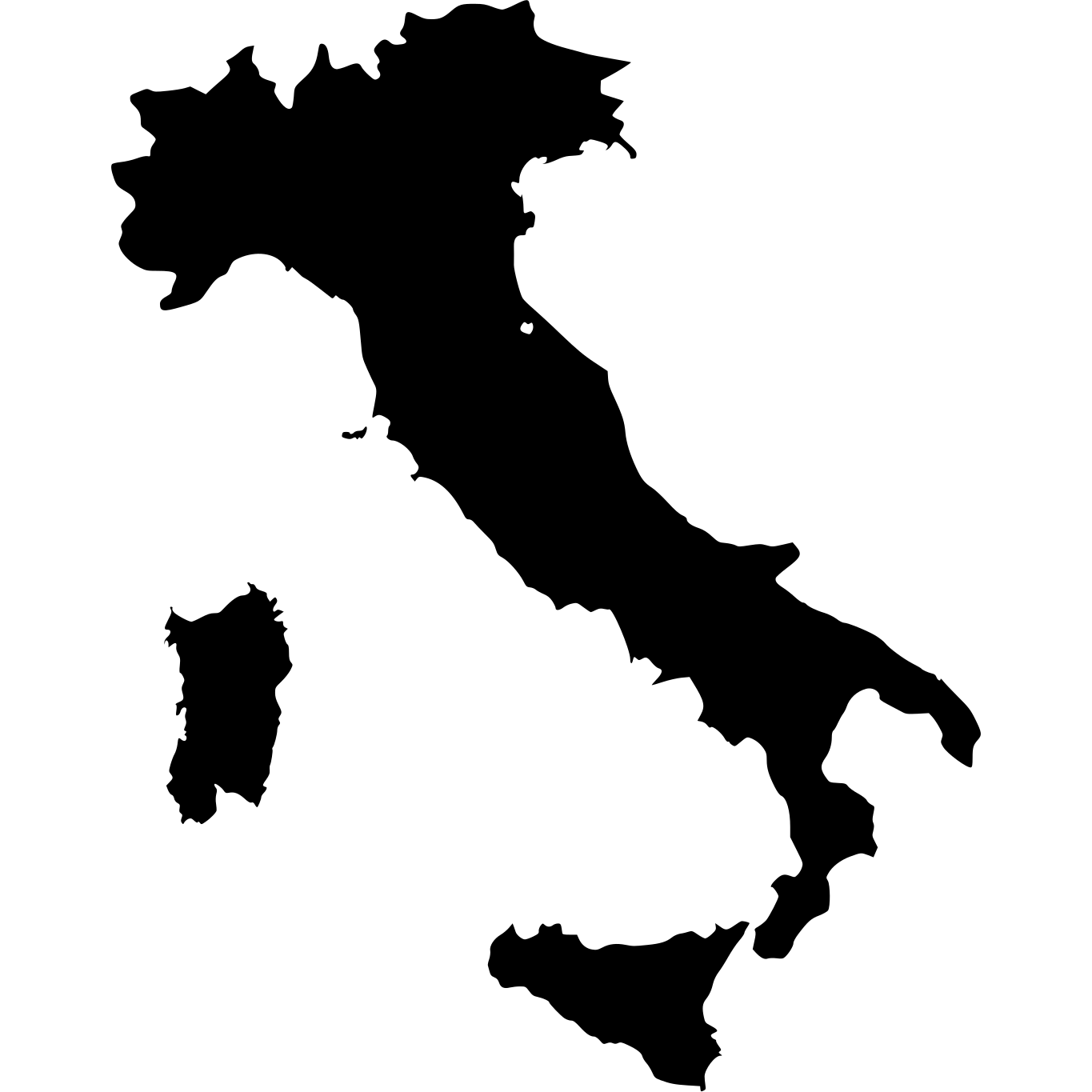
Arremi is a Italian brand
Often compared with

We're dedicated to providing you with the most up-to-date and science-backed ingredient info out there.
The data we've presented on this page has been verified by a member of the SkinSort Team.
Read more about us· Updated October 11, 2024 • Added by anemone


