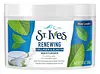
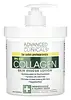
St. Ives Renewing Collagen Elastin Moisturizer Versus Advanced Clinicals Collagen Skin Rescue Lotion
This moisturizer is formulated around Carthamus Tinctorius Seed Oil to hydrate skin.
This hydrating body lotion is formulated around Aloe Barbadensis Leaf Juice and Camellia Sinensis Leaf Extract to hydrate skin and calm redness.


What's inside
What's inside
 Key Ingredients
No key ingredients
Benefits
Concerns
Ingredients Side-by-side
Water
Skin ConditioningParaffinum Liquidum
Emollient


Propylene Glycol
Humectant


PEG-100 Stearate
Surfactant
Glyceryl Stearate
Emollient
Stearic Acid
Cleansing
Phenoxyethanol
Preservative
Carthamus Tinctorius Seed Oil
Masking
Triethanolamine
BufferingCarbomer
Emulsion StabilisingDimethicone
Emollient

Cetyl Alcohol
Emollient

Disodium EDTA
ChelatingParfum
Masking

Ethylhexylglycerin
Skin ConditioningLinalool
Perfuming
Hexyl Cinnamal
Perfuming
Hydrolyzed Elastin
EmollientHydrolyzed Collagen
Emollient
Coumarin
Perfuming
Geraniol
Perfuming
Water, Paraffinum Liquidum, Propylene Glycol, PEG-100 Stearate, Glyceryl Stearate, Stearic Acid, Phenoxyethanol, Carthamus Tinctorius Seed Oil, Triethanolamine, Carbomer, Dimethicone, Cetyl Alcohol, Disodium EDTA, Parfum, Ethylhexylglycerin, Linalool, Hexyl Cinnamal, Hydrolyzed Elastin, Hydrolyzed Collagen, Coumarin, Geraniol
Water
Skin ConditioningParaffinum Liquidum
Emollient
Cetearyl Alcohol
Emollient
Glyceryl Stearate Se
Emulsifying
Isopropyl Myristate
Emollient
Glycerin
Humectant
Butylene Glycol
Humectant
Ceteareth-20
Cleansing
Caprylic/Capric Triglyceride
Masking
Hydrolyzed Collagen
Emollient
Aloe Barbadensis Leaf Juice
Skin Conditioning

Camellia Sinensis Leaf Extract
Antimicrobial



Anthemis Nobilis Flower Extract
Masking
Acrylates/C10-30 Alkyl Acrylate Crosspolymer
Emulsion StabilisingTetrasodium Glutamate Diacetate
ChelatingMaltodextrin
Absorbent
Phenoxyethanol
Preservative
Iodopropynyl Butylcarbamate
Preservative
Caprylyl Glycol
Emollient
Sodium Hydroxide
BufferingSodium Carbonate
BufferingSodium Chloride
MaskingWater, Paraffinum Liquidum, Cetearyl Alcohol, Glyceryl Stearate Se, Isopropyl Myristate, Glycerin, Butylene Glycol, Ceteareth-20, Caprylic/Capric Triglyceride, Hydrolyzed Collagen, Aloe Barbadensis Leaf Juice, Camellia Sinensis Leaf Extract, Anthemis Nobilis Flower Extract, Acrylates/C10-30 Alkyl Acrylate Crosspolymer, Tetrasodium Glutamate Diacetate, Maltodextrin, Phenoxyethanol, Iodopropynyl Butylcarbamate, Caprylyl Glycol, Sodium Hydroxide, Sodium Carbonate, Sodium Chloride
Reviews
Ingredients Explained
These ingredients are found in both products.
Ingredients higher up in an ingredient list are typically present in a larger amount.
Hydrolyzed Collagen is Collagen (usually sourced from fish, bovine, or porcine byproducts) that's been broken down into smaller peptides. This makes it water-soluble and easy to blend into formulations.
In a formula, it works mainly as a skin-conditioning and moisturizing agent.
The small peptides and amino acids (including Natural Moisturizing Factor components like Hydroxyproline, Serine, and Aspartic Acid) help the surface of the skin hold onto water, feel softer, and look temporarily plumper.
This ingredient also has mild film-forming and antioxidant properties with research showing the antioxidant effect is stronger the lower the molecular weight of the peptides.
It's worth being realistic here:
Topically applied Hydrolyzed Collagen conditions the upper layers of skin rather than rebuilding the structural collagen deep in your dermis (the wrinkle-and-firmness benefits people associate with Collagen mostly come from oral supplements in studies, not topicals).
However, recent lab and skin-model work on Hydrolyzed Fish Collagen has shown promising effects on cell viability and wound healing when used as an active.
Typical concentrations range from 0.2-2%, but the percentage can go much higher in rinse-off or hair products (sometimes even above 50%).
Clinical studies on this ingredient showed no irritation, sensitization, or phototoxicity.
If you are looking for vegan collagen, it usually goes by a different INCI name like hydrolyzed soy protein. Vegan collagen is derived from yeast, bacteria, or plant sources.
The results are varied.
A study from 2021 found hydrolyzed collagen increased elasticity and improved wrinkles in 1,125 participants between age 20 and 70. Another study found increased skin thickness in participants between the ages of 45 to 59.
However, It is difficult to prove that oral collagen will end up working on your skin. Many of the studies using hydrolyzed collagen also add several vitamins and nutrients into the test mixture as well.
Further studies are needed at this time.
Learn more about Hydrolyzed CollagenParaffinum Liquidum is a highly-refined cosmetic-grade mineral oil. It is also known as liquid paraffin.
Despite its controversial reputation, the science is pretty clear: it's one of the most well-studied and effective moisturizing ingredients out there.
As an occlusive, it forms a protective layer on the skin that locks in moisture and prevents transepidermal water loss (TEWL). This makes it especially great for compromised skin barriers.
The "it clogs your pores" myth has been around for decades; a study found that industrial-grade mineral oil may be comedogenic but cosmetic-grade mineral oil is not (these two are very, very different).
A 2017 review concluded that cosmetic use of mineral oils and waxes does not present a risk to consumers due to absorption.
Mineral oil got a bad rap from the old rabbit ear studies. When tested on actual human skin, cosmetic-grade mineral oil showed no comedogenic activity. The rating of 0 is a correction of outdated science.
Mineral oil is an inert substance with no fatty acids so there's nothing to feed Malassezia. This ingredient is fungal acne safe.
Learn more about Paraffinum LiquidumPhenoxyethanol is one of the most widely used preservatives in skincare (and for good reason!).
It has a large spectrum of antimicrobial activity and especially effective bacteria, yeast, and mold while only having a weak effect on your skin's natural microbiome.
On a cellular level, it disrupts the cell membranes of microbes by poking holes that make the cell leak. This shuts down the chemical reactions the microbe needs to make energy so it can no longer survive.
Another perk of this ingredient is that it stays functional across a wide pH range (3-10).
You'll often see it paired with boosters like Ethylhexylglycerin; one study showed that a 1:9 ratio of Ethylhexylglycerin to Phenoxyethanol damages bacterial membranes as effectively as doubling the Phenoxyethanol concentration on its own.
Typical use concentrations range from 0.3-1% depending on the formula, and this ingredient is capped at 1% int the EU.
Safety-wise, the fear mongering does not hold up to the evidence. The EU's Scientific Committee on Consumer Safety and FDA consider it safe as a preservative at up to 1%, including for children of all ages.
Adverse systemic effects only showed up in animal studies at exposures roughly 200x higher than what people get from cosmetics. And despite its very widespread use, this ingredient is a rare sensitizer and allergic reactions are uncommon.
Learn more about PhenoxyethanolWater. It's the most common cosmetic ingredient of all. You'll usually see it at the top of ingredient lists, meaning that it makes up the largest part of the product.
So why is it so popular? Water most often acts as a solvent - this means that it helps dissolve other ingredients into the formulation.
You'll also recognize water as that liquid we all need to stay alive. If you see this, drink a glass of water. Remember to stay hydrated!
Learn more about Water

