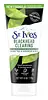
This acne exfoliator is formulated around Salicylic Acid to clear breakouts and refine the look of pores.
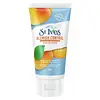
This acne exfoliator is formulated around Salicylic Acid to clear breakouts and refine skin texture.

What's inside
What's inside
 Key Ingredients
Benefits
Concerns
Ingredients Side-by-side
Salicylic Acid 2%
Masking










Water
Skin ConditioningJuglans Regia Shell Powder
Abrasive
Glycol Stearate Se
Emulsifying
Glycerin
Humectant


Sodium Lauryl Sulfoacetate
CleansingZea Mays Kernel Meal
Abrasive
Cocamidopropyl Betaine
Cleansing
Cetearyl Alcohol
Emollient


Triethanolamine
BufferingCetyl Alcohol
Emollient
Glyceryl Stearate
Emollient
PEG-100 Stearate
Surfactant
Prunus Armeniaca Fruit Extract
Skin ConditioningCetyl Acetate
Emollient
Ceteareth-20
Cleansing
Carbomer
Emulsion StabilisingPolysorbate 60
Emulsifying
Acetylated Lanolin Alcohol
Emollient
Parfum
Masking

PPG-2 Methyl Ether
Perfuming
Phenethyl Alcohol
MaskingMethylisothiazolinone
Preservative
CI 77891
Cosmetic ColorantSalicylic Acid 2%, Water, Juglans Regia Shell Powder, Glycol Stearate Se, Glycerin, Sodium Lauryl Sulfoacetate, Zea Mays Kernel Meal, Cocamidopropyl Betaine, Cetearyl Alcohol, Triethanolamine, Cetyl Alcohol, Glyceryl Stearate, PEG-100 Stearate, Prunus Armeniaca Fruit Extract, Cetyl Acetate, Ceteareth-20, Carbomer, Polysorbate 60, Acetylated Lanolin Alcohol, Parfum, PPG-2 Methyl Ether, Phenethyl Alcohol, Methylisothiazolinone, CI 77891
Water
Skin ConditioningJuglans Regia Shell Powder
Abrasive
Glyceryl Stearate Se
Emulsifying
Glycerin
Humectant
Zea Mays Kernel Meal
Abrasive
Cetearyl Alcohol
Emollient
Cetyl Alcohol
Emollient
Triethanolamine
BufferingSalicylic Acid
Masking
Sodium Lauryl Sulfoacetate
CleansingCocamidopropyl Betaine
Cleansing
Glyceryl Stearate
Emollient
PEG-100 Stearate
Surfactant
Cetyl Acetate
Emollient
Sodium Chloride
MaskingTitanium Dioxide
Cosmetic Colorant

Polysorbate 60
Emulsifying
Carbomer
Emulsion StabilisingCeteareth-20
Cleansing
Sodium Sulfate
Acetylated Lanolin Alcohol
Emollient
Parfum
Masking
Prunus Armeniaca Fruit Extract
Skin ConditioningPropylene Glycol
Humectant
Benzyl Alcohol
Perfuming

Benzoic Acid
Masking
Sorbic Acid
Preservative
Sodium Benzoate
Masking
Water, Juglans Regia Shell Powder, Glyceryl Stearate Se, Glycerin, Zea Mays Kernel Meal, Cetearyl Alcohol, Cetyl Alcohol, Triethanolamine, Salicylic Acid, Sodium Lauryl Sulfoacetate, Cocamidopropyl Betaine, Glyceryl Stearate, PEG-100 Stearate, Cetyl Acetate, Sodium Chloride, Titanium Dioxide, Polysorbate 60, Carbomer, Ceteareth-20, Sodium Sulfate, Acetylated Lanolin Alcohol, Parfum, Prunus Armeniaca Fruit Extract, Propylene Glycol, Benzyl Alcohol, Benzoic Acid, Sorbic Acid, Sodium Benzoate
Reviews
Ingredients Explained
These ingredients are found in both products.
Ingredients higher up in an ingredient list are typically present in a larger amount.
Lanolin is the waxy stuff that sheep make to waterproof their wool, and Acetylated Lanolin Alcohol is one of its refine spin-offs.
It's basically the alcohol fraction of lanolin that gets reacted with acetic acid (the same acid in vinegar). This turns the stuff, sticky wax into a light, slippery oil.
In cosmetics, this ingredient is used as an emollient and occlusive that softens skin, spreads pigment nicely, and slows water loss.
The Cosmetic Ingredient Review panel has cleared it as safe up to 16% and you'll usually see it well under that in leave-on skincare.
There's no direct study on this ingredient for fungal acne, but you may want to avoid this ingredient if you have been diagnosed. This is because the Malassezia yeast can't build its own fatty acids and has to scavenge them from skin lipids. Lanolin-derived materials are long-chain esters that the yeast's lipases could in principle break down.
This ingredient has tested to be non-sensitizing in animal studies with only a low incidence of reactions across decades of widespread human use. People with already-compromised skin or lanolin allergies should patch-test because that's where the risk concentrates.
Old rabbit-ear testing scored it 4-5/5 for pore-clogging at full strength and at 50%, but only 1 once diluted to 2.5%.
Human testing later showed that finished products containing "comedogenic" ingredients aren't necessarily comedogenic themselves. Just remember that concentration and formulation matter far more than the ingredient's presence on the label.
Learn more about Acetylated Lanolin AlcoholCarbomer is a synthetic thickening and gelling agent. It's basically the ingredient that gives a lot of serums, gels, creams, and sunscreens their smooth, non-sticky texture.
Although legally permitted at very high levels, carbomers are normally used at concentrations below 1%.
It also needs to be neutralized to actually thicken, and because it is a large molecule, it doesn't really penetrate the skin barrier.
Allergy-wise, the risk is very low. Clinical studies show carbomers have low potential for skin irritation/sensitization even at concentrations up to 100%.
A 2024 UK study patch-tested 1,302 patients and found true allergy to the parent group of carbomer to be rare with no confirmed relevant reactions.
Learn more about CarbomerCeteareth-20 is an emulsifier and surfactant made by reacting cetearyl alcohol with 20 moles of ethylene oxide.
This gives it both oil and water-loving properties that makes it an effect emulsifier; it's really great at pulling oil droplets into water to create a stable, creamy, and easy-to-spread base.
Typical use ranges from 0.5-30%. Most leave-on products are in the 1-10% zone.
The 20 ethylene oxide units is well above the PEG-10 threshold and therefore not a food source for Malassezia (it's fungal acne safe).
This ingredient has a comedogenic rating of 2 and an irritancy rating of 3. These numbers come from testing the raw ingredient on rabbit ears and doesn't reflect how it will behave in a finished product.
In practice, this ingredient is a well-tolerated ingredient. The ratings reflect cautious lab conditions and not real-world use. Just be sure to patch test any formulas you feel unsure about.
Learn more about Ceteareth-20Cetearyl alcohol is a waxy mixture of two fatty alcohols: cetyl alcohol and stearyl alcohol. It is an emollient and emulsifier.
Despite having "alcohol" in its name, it has nothing to do with drying solvent alcohols; the FDA also allows "alcohol-free" products to contain fatty alcohols like this ingredient.
It plays several roles in a formula:
Typical use levels for this ingredient sit around 1-10% and the Cosmetic Ingredient Review Expert Panel has affirmed safety at concentrations up to 25% in leave-on products.
Multiple assessments have found it to be non-irritating and non-sensitizing to most people.
However, there have been some cases of allergic contact dermatitis in patients with chronically compromised skin barriers.
Cetearyl alcohol has a comedogenic rating of 2 and irritancy rating of 1. Both of these numbers come from the 1989 study that used rabbit ears; a "2" means mildly comedogenic and a "1" means low irritancy.
Here's the catch: rabbit skin is more sensitive than human skin and throws a lot of false positives. A 1996 reappraisal found that ingredients rated 1-2 in the rabbit ear tests are generally safe for humans.
Remember comedogenic ratings are unable to assess the entire formula of a product or how it will react on your skin. Just be sure to patch test if you are unsure about certain ingredients.
This ingredient is not fungal acne safe. Cetearyl alcohol is a fatty alcohol with chain lengths that fall within the range that Malassezia can metabolize.
A 2019 study has also observed Malassezia growth in the presence of this ingredient, confirming it to be not-fungal acne safe.
Learn more about Cetearyl AlcoholCetyl Acetate is an emollient and is created by reacting cetyl alcohol with acetic acid.
It is a waxy and water-repellent, giving formulas a smooth slip. Once applied on the skin, your skin enzymes naturally break it down into cetyl alcohol and acetic acid, both of which are well-studied and considered safe.
This ingredient has a comedogenic rating of 4 and irritancy rating of 2 based on early studies.
Just know these numbers have some caveats; comedogenic rating studies used ingredients at high concentations in pure form and not how they behave in a finished product (where they're used in lower percentages and balanced by other ingredients).
Comedogenic ratings also don't account for individual skin or how a product is actually used.
Learn more about Cetyl AcetateCetyl Alcohol is a fatty alcohol. Fatty Alcohols are most often used as an emollient or to thicken a product.
Its main roles are:
Though it has "alcohol" in the name, it is not related to denatured alcohol or ethyl alcohol.
The FDA allows products labeled "alcohol-free" to have fatty alcohols.
This ingredient may not be fungal acne safe. It is a primary fatty alcohol with a chain length above 12 carbons. A study from 2019 show Malassezia can feed on fatty alcohols in this range, so it may trigger fungal acne in those prone to it.
Learn more about Cetyl AlcoholCocamidopropyl Betaine is a fatty acid created by mixing similar compounds in coconut oil and dimethylaminopropylamine, a compound with two amino groups.
This ingredient is a surfactant and cleanser. It helps gather the dirt, pollutants, and other impurities in your skin to be washed away. It also helps thicken a product and make the texture more creamy.
Being created from coconut oil means Cocamidopropyl Betaine is hydrating for the skin.
While Cocamidopropyl Betaine was believed to be an allergen, a study from 2012 disproved this. It found two compounds in unpure Cocamidopropyl Betaine to be the irritants: aminoamide and 3-dimethylaminopropylamine. High-grade and pure Cocamidopropyl Betaine did not induce allergic reactions during this study.
Learn more about Cocamidopropyl BetaineGlycerin (or glycerol) is a compound naturally found in your skin. It's a powerhouse humectant that pulls water into the stratum corneum.
Topically, glycerin does several things at once:
Your skin makes glycerin on its own (mostly from sebaceous oil breakdown) and shuttles it to your outermost layer of skin, or your epidermis, via aquaporin-3.
Aquaporin-3 is a transporter that is essential for normal skin hydration, elasticity, and repair. Interestingly, mice lacking in AQP3 have dry and less elastic skin that can be fully corrected with glycerin.
This ingredient is non-irritating, plays well with almost every ingredient, and works across all skin types. Typical use is anywhere between 3-10% but can go up to 79% in some leave-on products.
Just know very high concentrations (>40%) can feel tacky in low humidity.
Glycerin is the name for this ingredient in American English. British English uses Glycerol/Glycerine.
Learn more about GlycerinGlyceryl Stearate is made by reacting glycerin with stearic acid (typically sourced from plant oils like palm or coconut). It's an emulsifier, emollient, and mild occlusive.
Emulsifiers help ingredients like oil and water stay mixed so your formula stays nicely blended and uniform in texture.
This ingredient is typically used in concentrations between 1-10%. Studies have found it to be non-sensitizing, non-phototoxic, and non-photoallergenic.
A close cousin of this ingredient is Glyceryl Stearate SE ("self-emulsifying"). This just has a small amount of sodium or potassium stearate added so it can emulsify without a co-emulsifier.
Since this ingredient is an ester of a C18 fatty acid, it may not be fungal acne safe. The Malassezia yeast can potentially metabolize within the C11-C24 range.
Fun fact: The human body also creates Glyceryl Stearate naturally.
Learn more about Glyceryl StearateYou might know this ingredient as walnut shell powder. It is an abrasive used as a physical exfoliator.
Abrasives are physical exfoliants used to get rid of dead cell buildup on your skin. Physical exfoliators have a bad reputation due to the myth that they give your face tiny cuts. This is untrue.
Like any exfoliant, using this ingredient can disrupt your skin barrier. This can lead to breakouts, irritation, and dryness. It is critical to be gentle when using any type of exfoliator.
If you want to use a chemical exfoliator instead, check out glycolic acid.
Learn more about Juglans Regia Shell PowderParfum is a catch-all term for an ingredient or more that is used to give a scent to products.
Also called "fragrance", this ingredient can be a blend of hundreds of chemicals or plant oils. This means every product with "fragrance" or "parfum" in the ingredients list is a different mixture.
For instance, Habanolide is a proprietary trade name for a specific aroma chemical. When used as a fragrance ingredient in cosmetics, most aroma chemicals fall under the broad labeling category of “FRAGRANCE” or “PARFUM” according to EU and US regulations.
The term 'parfum' or 'fragrance' is not regulated in many countries. In many cases, it is up to the brand to define this term.
For instance, many brands choose to label themselves as "fragrance-free" because they are not using synthetic fragrances. However, their products may still contain ingredients such as essential oils that are considered a fragrance by INCI standards.
One example is Calendula flower extract. Calendula is an essential oil that still imparts a scent or 'fragrance'.
Depending on the blend, the ingredients in the mixture can cause allergies and sensitivities on the skin. Some ingredients that are known EU allergens include linalool and citronellol.
Parfum can also be used to mask or cover an unpleasant scent.
The bottom line is: not all fragrances/parfum/ingredients are created equally. If you are worried about fragrances, we recommend taking a closer look at an ingredient. And of course, we always recommend speaking with a professional.
Learn more about ParfumPeg-100 Stearate is an emollient and emulsifier. As an emollient, it helps keep skin soft by trapping moisture in. On the other hand, emulsifiers help prevent oil and water from separating in a product.
PEGS are a hydrophilic polyether compound . There are 100 ethylene oxide monomers in Peg-100 Stearate. Peg-100 Stearate is polyethylene glycol ester of stearic acid.
Polysorbate 60 is used to help stabilize products. It is a surfactant and emulsifier. These properties help keep ingredients together in a product. Surfactants help reduce surface tension between ingredients with different states, such as liquids and solids. Emulsifiers help prevent oils and waters from separating.
Polysorbate 60 is sorbitol-based and created from the ethoxylation of sorbitan. Ethoxylation is a chemical reaction used to add ethylene oxide. Sorbitan is a the dehydrated version of sorbitol, a sugar found in fruits.
In this case, the 60 comes from reacting 60 units of ethylene oxide with sorbitan.
Polysorbates are commonly used in medicine and foods.
Learn more about Polysorbate 60This ingredient is also known as apricot extract. It has skin conditioning properties and is rich in vitamins and minerals.
Salicylic Acid (also known as beta hydroxy acid or BHA) is a well-known ingredient for treating skin that struggles with acne and clogged pores. It exfoliates both the skin's surface and deep within the pores to help clear out buildup, control oil, and reduce inflammation.
Unlike AHAs (alpha hydroxy acids), salicylic acid is oil-soluble. This allows it to penetrate into pores which makes it especially effective for treating blackheads and preventing future breakouts.
Salicylic acid is also known for its soothing properties. It has a similar structure to aspirin and can calm inflamed or irritated skin, making it a good option for acne-prone skin that is also sensitive.
Concentrations of 0.5-2% are recognized by the U.S. FDA as an over-the-counter topical acne product.
It can cause irritation and/or dryness if one's skin already has a compromised moisture barrier, so it's best to focus on repairing that before introducing this ingredient into your routine.
While salicylic acid does not increase sun sensitivity, it’s still important to wear sunscreen daily to protect your skin.
If you are looking for the ingredient called BHA or Butylated Hydroxyanisole, click here.
Learn more about Salicylic AcidSodium Lauryl Sulfoacetate is an organic salt with a naturally sweet odor. It is an alternative to traditional sulfates and is commonly found in "sulfate-free" products.
In cosmetics, this ingredient is used to increase the volume of foam, emulsify ingredients, and as a cleansing agent.
As a cleansing agent, sodium lauryl sulfoacetate helps reduce the surface tension of dirt, oil, and other pollutants so they can be rinsed away easily.
Cosmetic Ingredient Review found this ingredient to irritate the eyes and skin in concentrations of 0.18% and 0.7%.
Learn more about Sodium Lauryl SulfoacetateTriethanolamine (TEA) is an emulsifier and pH adjuster. It is created using ethylene oxide and ammonia. This gives Triethanolamine a nitrogen core and a similar scent to ammonia.
As an emulsifier, it prevents ingredients from separating and enhances texture by adding volume to a product.
PH adjusters are common in cosmetic products. The pH of a product can affect the effectiveness of other ingredients. A product with a high pH may also irritate the skin.
If you are looking for the tea leaf ingredient, click here.
Learn more about TriethanolamineWater. It's the most common cosmetic ingredient of all. You'll usually see it at the top of ingredient lists, meaning that it makes up the largest part of the product.
So why is it so popular? Water most often acts as a solvent - this means that it helps dissolve other ingredients into the formulation.
You'll also recognize water as that liquid we all need to stay alive. If you see this, drink a glass of water. Remember to stay hydrated!
Learn more about WaterZea Mays Kernel Meal is an abrasive, or exfoliator. It is made from corn.


