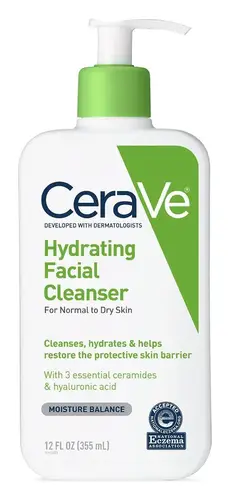
This cream cleanser uses mild cleansing ingredients, but contains alcohol that may feel drying for some.
This mild gel cleanser is made to cleanse without leaving your skin tight or dry.

What's inside
What's inside
 Key Ingredients
Benefits
Concerns
Ingredients Side-by-side
Water
Skin ConditioningCocamidopropyl Betaine
Cleansing



Sodium Lauroyl Glutamate
SurfactantSqualane
Emollient


Acrylates Copolymer
Glycerin
Humectant
Cetyl Alcohol
Emollient

Cetyl Phosphate
EmulsifyingXylitylglucoside
Humectant
Inulin
Skin Conditioning
Cetearyl Alcohol
Emollient

Coco-Caprylate
Emollient
Benzyl Alcohol
Perfuming




Anhydroxylitol
Humectant
Hydroxyacetophenone
Antioxidant
Glycolipids
Skin ConditioningXylitol
Humectant
Oat Amino Acids
Skin ConditioningGlucose
Humectant
Xanthan Gum
EmulsifyingDehydroacetic Acid
Preservative
Sodium Benzoate
Masking
Citric Acid
Buffering

Potassium Sorbate
Preservative
Sodium Hydroxide
BufferingTocopherol
Antioxidant


Water, Cocamidopropyl Betaine, Sodium Lauroyl Glutamate, Squalane, Acrylates Copolymer, Glycerin, Cetyl Alcohol, Cetyl Phosphate, Xylitylglucoside, Inulin, Cetearyl Alcohol, Coco-Caprylate, Benzyl Alcohol, Anhydroxylitol, Hydroxyacetophenone, Glycolipids, Xylitol, Oat Amino Acids, Glucose, Xanthan Gum, Dehydroacetic Acid, Sodium Benzoate, Citric Acid, Potassium Sorbate, Sodium Hydroxide, Tocopherol
Water
Skin ConditioningSodium Methyl Cocoyl Taurate
Cleansing
Sodium Cocoyl Alaninate
Surfactant
Cocamidopropyl Betaine
Cleansing
Glycerin
Humectant
Butylene Glycol Laurate
EmollientPEG-150 Distearate
Emulsifying
Honey
Humectant
Chamomilla Recutita Flower Extract
Masking
Curcuma Longa Root Extract
Antioxidant
PEG-150 Stearate
Surfactant
PEG-120 Methyl Glucose Triisostearate
Butylene Glycol
Humectant
PEG-4
HumectantPolysorbate 20
Emulsifying
Coceth-7
EmulsifyingPPG-1-PEG-9 Lauryl Glycol Ether
EmulsifyingPEG-40 Hydrogenated Castor Oil
Emulsifying
1,2-Hexanediol
Skin Conditioning
Caprylhydroxamic Acid
ChelatingStearic Acid
Cleansing
PEG-150
HumectantPropanediol
Solvent
Caramel
Cosmetic ColorantCitric Acid
Buffering
Hydroxyacetophenone
Antioxidant
Phenoxyethanol
Preservative
Ethylhexylglycerin
Skin ConditioningParfum
Masking
Leptospermum Scoparium Mel
Water, Sodium Methyl Cocoyl Taurate, Sodium Cocoyl Alaninate, Cocamidopropyl Betaine, Glycerin, Butylene Glycol Laurate, PEG-150 Distearate, Honey, Chamomilla Recutita Flower Extract, Curcuma Longa Root Extract, PEG-150 Stearate, PEG-120 Methyl Glucose Triisostearate, Butylene Glycol, PEG-4, Polysorbate 20, Coceth-7, PPG-1-PEG-9 Lauryl Glycol Ether, PEG-40 Hydrogenated Castor Oil, 1,2-Hexanediol, Caprylhydroxamic Acid, Stearic Acid, PEG-150, Propanediol, Caramel, Citric Acid, Hydroxyacetophenone, Phenoxyethanol, Ethylhexylglycerin, Parfum, Leptospermum Scoparium Mel
Reviews
Ingredients Explained
These ingredients are found in both products.
Ingredients higher up in an ingredient list are typically present in a larger amount.
Citric Acid is an alpha hydroxy acid (AHA) naturally found in citrus fruits like oranges, lemons, and limes.
Like other AHAs, citric acid can exfoliate skin by breaking down the bonds that hold dead skin cells together. This helps reveal smoother and brighter skin underneath.
However, this exfoliating effect only happens at high concentrations (20%) which can be hard to find in cosmetic products.
Due to this, citric acid is usually included in small amounts as a pH adjuster. This helps keep products slightly more acidic and compatible with skin's natural pH.
In skincare formulas, citric acid can:
While it can provide some skin benefits, research shows lactic acid and glycolic acid are generally more effective and less irritating exfoliants.
Most citric acid used in skincare today is made by fermenting sugars (usually from molasses). This synthetic version is identical to the natural citrus form but easier to stabilize and use in formulations.
Rosacea skin has a lower threshold for acids generally, with 62.5% of rosacea subjects in one study reacting to lactic acid in a sting test. This is why we mark citric acid as a potential rosacea trigger.
However, this ingredient shows up as a pH adjuster or chelator at roughly 0.1-1% in many products. These low levels are unlikely to be an issue for rosacea skin and becomes a potential trigger at exfoliating concentrations (20%). Because everybody's skin is unique, we recommend a patch test if you are unsure.
Learn more about Citric AcidCocamidopropyl Betaine is a fatty acid created by mixing similar compounds in coconut oil and dimethylaminopropylamine, a compound with two amino groups.
This ingredient is a surfactant and cleanser. It helps gather the dirt, pollutants, and other impurities in your skin to be washed away. It also helps thicken a product and make the texture more creamy.
Being created from coconut oil means Cocamidopropyl Betaine is hydrating for the skin.
While Cocamidopropyl Betaine was believed to be an allergen, a study from 2012 disproved this. It found two compounds in unpure Cocamidopropyl Betaine to be the irritants: aminoamide and 3-dimethylaminopropylamine. High-grade and pure Cocamidopropyl Betaine did not induce allergic reactions during this study.
Learn more about Cocamidopropyl BetaineGlycerin (or glycerol) is a compound naturally found in your skin. It's a powerhouse humectant that pulls water into the stratum corneum.
Topically, glycerin does several things at once:
Your skin makes glycerin on its own (mostly from sebaceous oil breakdown) and shuttles it to your outermost layer of skin, or your epidermis, via aquaporin-3.
Aquaporin-3 is a transporter that is essential for normal skin hydration, elasticity, and repair. Interestingly, mice lacking in AQP3 have dry and less elastic skin that can be fully corrected with glycerin.
This ingredient is non-irritating, plays well with almost every ingredient, and works across all skin types. Typical use is anywhere between 3-10% but can go up to 79% in some leave-on products.
Just know very high concentrations (>40%) can feel tacky in low humidity.
Glycerin is the name for this ingredient in American English. British English uses Glycerol/Glycerine.
Learn more about GlycerinHydroxyacetophenone is a small phenolic molecule that earns its place in a formulas as an antioxidant and preservative booster.
As a phenol, it is able to neutralize free radicals to protect both the product and the skin from oxidative stress.
Though it can't kill microbes on its own, it works as a good supporting agent when combined with other preservatives like Phenoxyethanol or 1,2-Hexanediol.
This ingredient naturally occurs as piceol in Norwegian spruce needles (~0.4-1.1% dry weight and in cloudberries). Though the cosmetic-grade material is synthesized for purity and consistency.
You'll usually see it used at low levels and suppliers recommend up to 1% added to a water phase.
Safety testing was done at concentrations like 0.05% in SPF products and 0.5% in a Human Repeated Insult Patch Test. The safety evidence is assuring; this ingredient is safe for cosmetics in current use and also holds safety status as a food flavoring as well.
An honest caveat: the "soothing" and "anti-inflammatory" claims come mostly from supplier marketing rather than published clinical trials. The Cosmetic Ingredient Review's own literature search found no useful efficacy studies on this ingredient.
So the antioxidant and preservative-boosting roles are the well supported ones while the calming benefit is plausible but thinly evidenced.
Overall, this is a well-tolerated, low-irritation multitasker that quietly helps a formula stay fresh and stable.
Learn more about HydroxyacetophenoneWater. It's the most common cosmetic ingredient of all. You'll usually see it at the top of ingredient lists, meaning that it makes up the largest part of the product.
So why is it so popular? Water most often acts as a solvent - this means that it helps dissolve other ingredients into the formulation.
You'll also recognize water as that liquid we all need to stay alive. If you see this, drink a glass of water. Remember to stay hydrated!
Learn more about Water