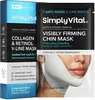
This anti-aging sheet mask is formulated around Retinol and Sodium Hyaluronate to soften the look of wrinkles and refine skin texture.
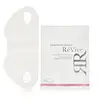
This anti-aging sheet mask is formulated around Acetyl Hexapeptide-8 and Copper Tripeptide-1 to soften the look of wrinkles.

What's inside
What's inside
 Key Ingredients
Benefits
Concerns
Ingredients Side-by-side
Water
Skin ConditioningGlycerin
Humectant


Laminaria Ochroleuca Extract
Skin Conditioning

Anthocyanins
Cosmetic ColorantTocopherol
Antioxidant




Hydrolyzed Collagen
Emollient
Sodium Hyaluronate
Humectant
Copper Tripeptide-1
Skin Conditioning
Acetyl Hexapeptide-8
Humectant
Palmitoyl Tripeptide-1
Skin Conditioning
Palmitoyl Tetrapeptide-7
Skin Conditioning
Retinol
Skin Conditioning





Aloe Barbadensis Leaf Extract
Emollient
Camellia Sinensis Leaf Extract
Antimicrobial
Centella Asiatica Extract
Cleansing
Caffeine
Skin Conditioning
Niacinamide
Smoothing
Panthenol
Skin Conditioning
3-O-Ethyl Ascorbic Acid
Skin Conditioning
Water, Glycerin, Laminaria Ochroleuca Extract, Anthocyanins, Tocopherol, Hydrolyzed Collagen, Sodium Hyaluronate, Copper Tripeptide-1, Acetyl Hexapeptide-8, Palmitoyl Tripeptide-1, Palmitoyl Tetrapeptide-7, Retinol, Aloe Barbadensis Leaf Extract, Camellia Sinensis Leaf Extract, Centella Asiatica Extract, Caffeine, Niacinamide, Panthenol, 3-O-Ethyl Ascorbic Acid
Water
Skin ConditioningGlycerin
Humectant
Sodium Polyacrylate
Absorbent
Sorbitol
Humectant
Ricinus Communis Seed Oil
Masking


Cellulose Gum
Emulsion StabilisingKaolin
Abrasive
Triethylhexanoin
MaskingPolyacrylic Acid
Emulsion StabilisingTrifluoroacetyl Tripeptide-2
Skin Conditioning
Acetyl Hexapeptide-8
Humectant
Copper Tripeptide-1
Skin Conditioning
Oligopeptide-29
Antioxidant
Oligopeptide-32
Antiseborrhoeic
Palmitoyl Pentapeptide-4
Skin Conditioning
Hexapeptide-9
Skin Conditioning
Sodium Hyaluronate
Humectant
Acorus Calamus Root Extract
Perfuming
Perilla Ocymoides Leaf Extract
TonicAllantoin
Skin Conditioning
Hydroxyacetophenone
Antioxidant
Natto Gum
Ethylhexylglycerin
Skin Conditioning1,2-Hexanediol
Skin Conditioning
Butylene Glycol
Humectant
Tartaric Acid
Buffering
Aluminum Glycinate
AstringentDisodium EDTA
ChelatingCI 77891
Cosmetic ColorantWater, Glycerin, Sodium Polyacrylate, Sorbitol, Ricinus Communis Seed Oil, Cellulose Gum, Kaolin, Triethylhexanoin, Polyacrylic Acid, Trifluoroacetyl Tripeptide-2, Acetyl Hexapeptide-8, Copper Tripeptide-1, Oligopeptide-29, Oligopeptide-32, Palmitoyl Pentapeptide-4, Hexapeptide-9, Sodium Hyaluronate, Acorus Calamus Root Extract, Perilla Ocymoides Leaf Extract, Allantoin, Hydroxyacetophenone, Natto Gum, Ethylhexylglycerin, 1,2-Hexanediol, Butylene Glycol, Tartaric Acid, Aluminum Glycinate, Disodium EDTA, CI 77891
Reviews
Ingredients Explained
These ingredients are found in both products.
Ingredients higher up in an ingredient list are typically present in a larger amount.
Acetyl Hexapeptide-8 (also known as Argireline) is a synthetic hexapeptide that is often called a "topical Botox alternative".
It works by mimicking how Botox relaxes muscles; it interferes with the signaling process that tells your facial muscles to contract. This can help soften expression lines like forehead wrinkles or crow's feet over time.
The comparison to Botox does have limits because the molecule is water-loving and relatively large.
Acetyl Hexapeptide-8 has a hard time absorbing deeply enough through the skin's outer barrier to actually reach the muscles.
So whether it truly works the way Botox does at a biological level is still up for debate, but early clinical outcomes are fairly encouraging.
A 12 week human study of a multi-ingredient regimen containing this ingredient saw:
While some studies have observed improvements in wrinkle appearance, it is important to note that more consistent results are seen in multi-ingredient formulations (vs just Acetyl Hexapeptide-8 alone).
Some research studies also used higher concentrations (up to 10%) while this ingredient is usually found in concentrations up to 0.005% in leave-on formulations.
Learn more about Acetyl Hexapeptide-8Copper Tripeptide-1 (GHK-Cu) is a skin repairing ingredient said to boost collagen, improve firmness, and support skin regeneration.
It is a complex made up of a naturally occurring peptide (glycine-histidine-lysine) and copper, an essential trace element.
While studying wound healing, researchers noticed GHK-Cu stimulated hair follicle enlargement and growth by keeping hair in its active growth phase longer. This has made it a promising ingredient for hair regrowth treatments.
Some people have reported increased facial hair. While GHK-Cu can make your hair follicles bigger, it usually doesn’t turn soft, barely-visible facial hairs into thick, dark ones.
Anecdotal reports suggest that overusing copper peptides might lead to premature aging due to excess free copper or enzyme imbalances. This claim isn’t backed by large-scale studies.
Unfortunately, there are limited human studies for this ingredient. While early results are promising, many studies are either small, in-vitro, or not rigorously controlled.
For example, there is a 1998 study that explored the effects of copper tripeptide, vitamin C, tretinoin, and melatonin on skin repair and collagen synthesis.
After one month, increased procollagen production was seen in 7 out of 10 participants using copper tripeptide (more than those using vitamin C, melatonin, or tretinoin.
While the study was exploratory, it offers early evidence that copper tripeptide may support collagen production. Larger, well-designed trials are still needed to confirm its potential and understand individual responses.
Read more about other common types of peptides here:
Learn more about Copper Tripeptide-1Glycerin (or glycerol) is a compound naturally found in your skin. It's a powerhouse humectant that pulls water into the stratum corneum.
Topically, glycerin does several things at once:
Your skin makes glycerin on its own (mostly from sebaceous oil breakdown) and shuttles it to your outermost layer of skin, or your epidermis, via aquaporin-3.
Aquaporin-3 is a transporter that is essential for normal skin hydration, elasticity, and repair. Interestingly, mice lacking in AQP3 have dry and less elastic skin that can be fully corrected with glycerin.
This ingredient is non-irritating, plays well with almost every ingredient, and works across all skin types. Typical use is anywhere between 3-10% but can go up to 79% in some leave-on products.
Just know very high concentrations (>40%) can feel tacky in low humidity.
Glycerin is the name for this ingredient in American English. British English uses Glycerol/Glycerine.
Learn more about GlycerinSodium Hyaluronate is the salt form of hyaluronic acid. It is a long sugar chain that is naturally found in your skin, joints, and connective tissue that maintains hydration and elasticity.
In skincare, it works as a humectant. It pulls water from the environment and deeper layers of skin and binds it to the surface.
Interestingly, the size of the molecule affects its behavior:
Some clinical evidence links low molecular weight versions to improved wrinkle depth, elasticity, anti-inflammatory effects, and barrier repair.
Many serums use a blend of both weights so you can get surface hydration plus longer-lasting and deeper effects.
You'll typically see concentrations between 0.1-2% for this ingredient.
Learn more about Sodium HyaluronateWater. It's the most common cosmetic ingredient of all. You'll usually see it at the top of ingredient lists, meaning that it makes up the largest part of the product.
So why is it so popular? Water most often acts as a solvent - this means that it helps dissolve other ingredients into the formulation.
You'll also recognize water as that liquid we all need to stay alive. If you see this, drink a glass of water. Remember to stay hydrated!
Learn more about Water

