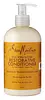
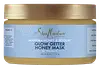
Shea Moisture Raw Shea Butter Restorative Conditioner Versus Shea Moisture Manuka Honey & Yogurt Glow Getter Honey Mask
This wash off mask is formulated around Salicylic Acid to clear breakouts and unclog pores.

What's inside
What's inside
 Key Ingredients
Benefits
Concerns
Ingredients Side-by-side
Water
Skin ConditioningStearyl Alcohol
Emollient


Olea Europaea Fruit Oil
Masking




Behentrimonium Chloride
Preservative
Cetyl Alcohol
Emollient
Butyrospermum Parkii Butter
Skin Conditioning

Glyceryl Caprylate
EmollientArgania Spinosa Kernel Oil
Emollient


Macrocystis Pyrifera Extract
Skin Conditioning
Simmondsia Chinensis Seed Oil
Emollient
Daucus Carota Sativa Seed Oil
Emollient
Hydrolyzed Silk
Humectant
Hydrolyzed Soy Protein
Humectant
Aloe Barbadensis Leaf Juice
Skin Conditioning
Panthenol
Skin Conditioning
Tocopheryl Acetate
Antioxidant


Dicaprylyl Ether
Emollient
Sodium Isostearoyl Lactylate
EmulsifyingSodium Benzoate
Masking
Hydroxyethylcellulose
Emulsion StabilisingGlyceryl Undecylenate
Emollient
Parfum
Masking

Water, Stearyl Alcohol, Olea Europaea Fruit Oil, Behentrimonium Chloride, Cetyl Alcohol, Butyrospermum Parkii Butter, Glyceryl Caprylate, Argania Spinosa Kernel Oil, Macrocystis Pyrifera Extract, Simmondsia Chinensis Seed Oil, Daucus Carota Sativa Seed Oil, Hydrolyzed Silk, Hydrolyzed Soy Protein, Aloe Barbadensis Leaf Juice, Panthenol, Tocopheryl Acetate, Dicaprylyl Ether, Sodium Isostearoyl Lactylate, Sodium Benzoate, Hydroxyethylcellulose, Glyceryl Undecylenate, Parfum
Water
Skin ConditioningHoney
Humectant
Glycerin
Humectant
Hydrogenated Vegetable Oil
Emollient
Ricinus Communis Seed Oil
Masking
Carthamus Tinctorius Seed Oil
Masking
Glyceryl Caprylate
EmollientXanthan Gum
EmulsifyingButyrospermum Parkii Butter
Skin Conditioning
Hydrogenated Ethylhexyl Olivate
EmollientAllantoin
Skin Conditioning
Salicylic Acid
Masking




Yogurt Powder
Hydrogenated Olive Oil Unsaponifiables
Emollient
Tetrahexyldecyl Ascorbate
Antioxidant
Inulin
Skin Conditioning
Mica
Cosmetic ColorantTitanium Dioxide
Cosmetic Colorant

Tin Oxide
Abrasive
Glyceryl Undecylenate
Emollient
Water, Honey, Glycerin, Hydrogenated Vegetable Oil, Ricinus Communis Seed Oil, Carthamus Tinctorius Seed Oil, Glyceryl Caprylate, Xanthan Gum, Butyrospermum Parkii Butter, Hydrogenated Ethylhexyl Olivate, Allantoin, Salicylic Acid, Yogurt Powder, Hydrogenated Olive Oil Unsaponifiables, Tetrahexyldecyl Ascorbate, Inulin, Mica, Titanium Dioxide, Tin Oxide, Glyceryl Undecylenate
Reviews
Ingredients Explained
These ingredients are found in both products.
Ingredients higher up in an ingredient list are typically present in a larger amount.
This ingredient is also known as shea butter. It is a plant-derived extract from the nuts of the Africa shea tree and one of the most well-studied emollients.
Because it has a high concentration of fatty acids (primarily oleic, stearic, and linoleic) it is able to form a protective barrier on the skin's surface. This helps seal in moisture and prevents transepidermal water loss (TEWL).
In vitro research found an increase in skin hydration by 58% and a decrease in TEWL by 37.8% after 24 hours of applying this ingredient (pretty impressive for a single ingredient!).
Besides hydration, shea butter also contains triterpenes that have anti-inflammatory potential. In particule, lupeol cinnamate has shown the highest anti-inflammatory activity in vivo.
Shea butter also contains vitamins A and E which may contribute to antioxidant activity.
While Shea Butter has an SPF rating of about 3-4, it is not a sunscreen replacement.
This ingredient may not be fungal acne safe because its fatty acids fall within the C11-C24 range that the Malassezia yeast can metabolize.
This ingredient shows up on a lot of "pore-clogging" lists but there's no real evidence behind that. It doesn't even have a comedogenic rating from an actual study; the numbers you'll find online come from blogs citing other blogs.
Ratings for other ingredients mostly come from a 1980s rabbit ear test. This test doesn't translate well to human skin or to real products because the ingredient sits at a much lower percentage.
Some people still find it breaks them out. So if that's you, definitely trust your skin. Just know this one's based on experience and not evidence.
Learn more about Butyrospermum Parkii ButterGlyceryl Caprylate comes from glycerin and caprylic acid. It is an emollient, co-emulsifier, and preservative booster.
Its short C8 fatty acid chain makes it behave differently from its longer-chain emollient cousins like Glyceryl Stearate. It feels more lightweight, fast-absorbing, and silky instead of rich and waxy.
As a co-emulsifier, its "head" and "tail" sit at the oil-water interface. But overall, the short C8 tail and not being water soluble means it doesn't really have the muscle to emulsify a formula on its own. That's why you'll often see it paired with a primary emulsifier like Cetearyl Glucoside.
Interestingly, Glyceryl Caprylate acts as a preservative booster. This is because its fatty-acid backbone disrupts microbial lipid membranes. It shows excellent activity against bacteria and yeast but is weaker against mold.
Typical concentrations range from 0.5-1% and this ingredient is generally non-irritating.
Because this ingredient has a C8 fatty acid chain, it is outside the range that the Malassezia yeast metabolizes (making it fungal acne safe).
Learn more about Glyceryl CaprylateGlyceryl Undecylenate is a gentle ester made by joining glycerin and undecylenic acid (a fatty acid pulled from castor oil).
In formulations, it pulls double duty as a skin-conditioning emollient and mild preservative.
The glycerin side attracts and binds water to support skin hydration and the undeclyenic acid side adds a bit of broad-spectrum antimicrobial activity.
Undecylenic acid inhibits the formation of fungal biofilm and the branching filaments that let fungi spread.
Typical use concentrations range from 0.1-5%, but it is generally used on the lower end and paired with other mild preservative boosters like caprylyl glycol.
On the fungal acne front:
This ingredient is described in the patent literature as a Malassezia-active ingredient used to treat an excess of Malassezia on the skin (Malassezia is actually a yeast and not fungal).
Though it leans anti-fungal, the leftover Malassezia yeast may feed on the Undecylenic Acid portion of this ingredient. Just know this ingredient may not be a trigger for everyone.
Learn more about Glyceryl UndecylenateWater. It's the most common cosmetic ingredient of all. You'll usually see it at the top of ingredient lists, meaning that it makes up the largest part of the product.
So why is it so popular? Water most often acts as a solvent - this means that it helps dissolve other ingredients into the formulation.
You'll also recognize water as that liquid we all need to stay alive. If you see this, drink a glass of water. Remember to stay hydrated!
Learn more about Water

