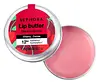
This lip moisturizer is formulated around Ricinus Communis Seed Oil and Prunus Amygdalus Dulcis Oil to hydrate lips.
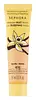
This hydrating lip mask is formulated around Butyrospermum Parkii Butter and Helianthus Annuus Seed Oil to hydrate lips and strengthen the lip barrier.

What's inside
What's inside
 Key Ingredients
Benefits
Concerns
Ingredients Side-by-side
Ricinus Communis Seed Oil
Masking




Octyldodecanol
Emollient
Oleic/Linoleic/Linolenic Polyglycerides
Emollient
Tribehenin
Emollient
Synthetic Wax
Abrasive

Prunus Amygdalus Dulcis Oil
Skin Conditioning

Prunus Armeniaca Kernel Oil
Masking
Prunus Avium Seed Oil
Emollient
Ethylene/Propylene Copolymer
Abrasive
Parfum
Masking

Tocopheryl Acetate
Antioxidant


Ammonium Glycyrrhizate
MaskingHelianthus Annuus Seed Oil
Emollient
CI 77891
Cosmetic ColorantGlyceryl Stearate Citrate
Emollient
Tocopherol
Antioxidant



CI 45410
Cosmetic ColorantAscorbyl Tetraisopalmitate
Antioxidant
CI 19140
Cosmetic ColorantSqualene
Emollient
Beta-Sitosterol
Emulsion Stabilising
CI 15850
Cosmetic ColorantRicinus Communis Seed Oil, Octyldodecanol, Oleic/Linoleic/Linolenic Polyglycerides, Tribehenin, Synthetic Wax, Prunus Amygdalus Dulcis Oil, Prunus Armeniaca Kernel Oil, Prunus Avium Seed Oil, Ethylene/Propylene Copolymer, Parfum, Tocopheryl Acetate, Ammonium Glycyrrhizate, Helianthus Annuus Seed Oil, CI 77891, Glyceryl Stearate Citrate, Tocopherol, CI 45410, Ascorbyl Tetraisopalmitate, CI 19140, Squalene, Beta-Sitosterol, CI 15850
Triisostearin
Skin Conditioning
Oleic/Linoleic/Linolenic Polyglycerides
Emollient
Butyrospermum Parkii Butter
Skin Conditioning
Trihydroxystearin
Skin Conditioning
Silica Dimethyl Silylate
EmollientHelianthus Annuus Seed Oil
Emollient
Parfum
Masking
Saccharin
MaskingBis-Diglyceryl Polyacyladipate-2
Emollient
Octyldodecanol
Emollient
CI 77947
Tocopherol
Antioxidant
Vanilla Planifolia Fruit Extract
Skin Conditioning
CI 19140
Cosmetic ColorantCI 77491
Cosmetic ColorantCitric Acid
Buffering
Triisostearin, Oleic/Linoleic/Linolenic Polyglycerides, Butyrospermum Parkii Butter, Trihydroxystearin, Silica Dimethyl Silylate, Helianthus Annuus Seed Oil, Parfum, Saccharin, Bis-Diglyceryl Polyacyladipate-2, Octyldodecanol, CI 77947, Tocopherol, Vanilla Planifolia Fruit Extract, CI 19140, CI 77491, Citric Acid
Reviews
Ingredients Explained
These ingredients are found in both products.
Ingredients higher up in an ingredient list are typically present in a larger amount.
CI 19140 is also known as Tartrazine. Tartrazine is a synthetic dye used in cosmetics, foods, and medicine to add a yellow color.
Tartrazine is created from petroleum and is water-soluble.
Some people may experience allergies from this dye, especially asthmatics and those with an aspirin intolerance.
Learn more about CI 19140Helianthus Annuus Seed Oil is a plant oil derived from the seeds of a sunflower.
It is rich in fatty acids, primarily linoleic acid and oleic acid. This gives it emollient and skin conditioning properties.
The reason this ingredient is so effective is because it forms a thin film on the skin that reduces transepidermal water loss (TEWL) while supplying linoleic acid to the stratum corneum to improve barrier strength.
The high linoleic acid content is particularly noteworthy for acne-prone skin.
Research suggests that acne-prone skin tends to be deficient in linoleic acid in sebum. Topical application may help replenish this to support a healthier follicular environment and less comedone-promoting sebum.
One randomized study found sunflower seed oil preserved skin barrier integrity in adult volunteers with and without atopic dermatitis (outperforming olive oil).
This ingredient is well-studied, gentle, and an effective emollient suitable for most skin types.
On fungal acne: This ingredient may not be Fungal acne (Malassezia folliculitis) safe. This is because it contains fatty acids with carbon chain lengths in the C11-C24 range.
Learn more about Helianthus Annuus Seed OilOctyldodecanol is a fatty alcohol sourced from plant oils like coconut or palm (or made synthetically).
It is:
You'll likely see this in many BHA products because this is the go-to solvent for salicylic acid.
This ingredient is typically used at levels between 2-20%.
Regarding fungal acne:
In 2019, this ingredient was tested against multiple Malassezia species (the yeast that causes fungal acne) and showed no growth.
Oleic/Linoleic/Linolenic Polyglycerides isn't fungal acne safe.
Parfum is a catch-all term for an ingredient or more that is used to give a scent to products.
Also called "fragrance", this ingredient can be a blend of hundreds of chemicals or plant oils. This means every product with "fragrance" or "parfum" in the ingredients list is a different mixture.
For instance, Habanolide is a proprietary trade name for a specific aroma chemical. When used as a fragrance ingredient in cosmetics, most aroma chemicals fall under the broad labeling category of “FRAGRANCE” or “PARFUM” according to EU and US regulations.
The term 'parfum' or 'fragrance' is not regulated in many countries. In many cases, it is up to the brand to define this term.
For instance, many brands choose to label themselves as "fragrance-free" because they are not using synthetic fragrances. However, their products may still contain ingredients such as essential oils that are considered a fragrance by INCI standards.
One example is Calendula flower extract. Calendula is an essential oil that still imparts a scent or 'fragrance'.
Depending on the blend, the ingredients in the mixture can cause allergies and sensitivities on the skin. Some ingredients that are known EU allergens include linalool and citronellol.
Parfum can also be used to mask or cover an unpleasant scent.
The bottom line is: not all fragrances/parfum/ingredients are created equally. If you are worried about fragrances, we recommend taking a closer look at an ingredient. And of course, we always recommend speaking with a professional.
Learn more about ParfumTocopherol is a fat-soluble antioxidant known as Vitamin E.
You'll find this ingredient in the vast majority of skincare (for good reason). It works to neutralize free radicals, or unstable molecules generated by UV exposure, pollution, and other environmental stressors, before they can cause oxidative damage to your skin cells.
Topically applied tocopherol has been shown to protect against UV damage by ramping up the skin's own natural defense enzymes.
It also acts as a skin conditioning agent; some studies show that regular topical use can improve the skin's water-binding capacity over 2-4 weeks.
This ingredient is especially loved for being a team player. When combined with Vitamin C, the photoprotective effect of both ingredients roughly doubles and the combo also helps reduce UV-induced DNA damage.
This ingredient has some brightening potential but it's more of a prevention ingredient than spot-fader. Cell studies show it can slow down melanin production but it's worth noting that it's not the most powerful brightener out there.
In formulations, it also serves as a stabilizer that helps protect other oxidation-prone ingredients from degrading.
Concentrations usually range from 0.1-1% in most leave-on products.
Learn more about Tocopherol

