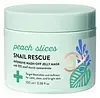
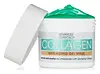
Peach Slices Snail Rescue Intensive Wash-Off Mask Versus Advanced Clinicals Collagen Anti Aging Gel Mask
This wash off mask is made with Snail Secretion Filtrate and Centella Asiatica Extract for a rinse-off calming boost.
This wash off mask is made with Aloe Barbadensis Leaf Juice and Ferulic Acid for a rinse-off hydration boost.


What's inside
What's inside
 Key Ingredients
Benefits
Concerns
No concerns
Ingredients Side-by-side
Snail Secretion Filtrate
Skin Conditioning





Ammonium Acryloyldimethyltaurate/Beheneth-25 Methacrylate Crosspolymer
Emulsion Stabilising1,2-Hexanediol
Skin Conditioning
Centella Asiatica Extract
Cleansing

Glycyrrhiza Glabra Root Extract
Bleaching

Hydrolyzed Hyaluronic Acid
Humectant
Sodium Hyaluronate
Humectant
Hyaluronic Acid
Humectant
Water
Skin ConditioningFragaria Chiloensis Fruit Extract
Skin Conditioning
Sodium Polyacrylate Starch
AbsorbentBetula Alba Juice
AstringentPropanediol
Solvent
Butylene Glycol
Humectant
Disodium EDTA
ChelatingPhenoxyethanol
Preservative
Snail Secretion Filtrate, Ammonium Acryloyldimethyltaurate/Beheneth-25 Methacrylate Crosspolymer, 1,2-Hexanediol, Centella Asiatica Extract, Glycyrrhiza Glabra Root Extract, Hydrolyzed Hyaluronic Acid, Sodium Hyaluronate, Hyaluronic Acid, Water, Fragaria Chiloensis Fruit Extract, Sodium Polyacrylate Starch, Betula Alba Juice, Propanediol, Butylene Glycol, Disodium EDTA, Phenoxyethanol
Aloe Barbadensis Leaf Juice
Skin Conditioning
Glycerin
Humectant
Pyrus Malus Fruit Extract
Skin Conditioning
PEG-12 Dimethicone
Skin Conditioning
Sodium Hyaluronate
Humectant
Rosa Damascena Flower Water
Masking
Cocos Nucifera Oil
Masking







Hydrolyzed Pearl
Skin ConditioningArctostaphylos Uva Ursi Leaf Extract
Skin Conditioning
Camellia Sinensis Leaf Extract
Antimicrobial


Glycyrrhiza Glabra Root Extract
Bleaching
Arginine Hcl
Skin ConditioningSoluble Collagen
Humectant
Propylene Glycol
Humectant
Vitis Vinifera Seed Extract
Antimicrobial
Hydrolyzed Silk
Humectant
Ferulic Acid
Antimicrobial
Hydroxyethylcellulose
Emulsion StabilisingParfum
Masking

Sodium Chloride
MaskingTocopheryl Acetate
Antioxidant
Disodium EDTA
ChelatingAmmonium Acryloyldimethyltaurate/Vp Copolymer
Sodium Hydroxide
BufferingPhenoxyethanol
Preservative
Caprylyl Glycol
Emollient
Ethylhexylglycerin
Skin ConditioningHexylene Glycol
EmulsifyingBlue 1 Lake
Cosmetic ColorantSolvent Yellow 33
Aloe Barbadensis Leaf Juice, Glycerin, Pyrus Malus Fruit Extract, PEG-12 Dimethicone, Sodium Hyaluronate, Rosa Damascena Flower Water, Cocos Nucifera Oil, Hydrolyzed Pearl, Arctostaphylos Uva Ursi Leaf Extract, Camellia Sinensis Leaf Extract, Glycyrrhiza Glabra Root Extract, Arginine Hcl, Soluble Collagen, Propylene Glycol, Vitis Vinifera Seed Extract, Hydrolyzed Silk, Ferulic Acid, Hydroxyethylcellulose, Parfum, Sodium Chloride, Tocopheryl Acetate, Disodium EDTA, Ammonium Acryloyldimethyltaurate/Vp Copolymer, Sodium Hydroxide, Phenoxyethanol, Caprylyl Glycol, Ethylhexylglycerin, Hexylene Glycol, Blue 1 Lake, Solvent Yellow 33
Reviews
Ingredients Explained
These ingredients are found in both products.
Ingredients higher up in an ingredient list are typically present in a larger amount.
Disodium EDTA is a chelating agent. It grabs onto and deactivates metal ions that sneak into your products from water, packaging, or air.
This ingredient mainly works behind the scenes and helps with:
On top of that, this ingredient can counteract the effects of hard water by binding to the minerals in it.
One thing worth knowing is that Disodium EDTA has been shown to be a mild penetration enhancer. It can help other ingredients absorb into skin more effectively which can be a double-edged sword (great for actives, but can also make the active too strong if you have sensitive skin).
Clinical patch testing showed no significant skin irritation at typical use concentrations and minimal dermal absorption.
You'll most likely see this ingredient near the end of an ingredient list. It's typically found in concentrations less than 1%.
Learn more about Disodium EDTAGlycyrrhiza Glabra Root Extract is an extract of the roots of Licorice. It has been found to have several benefits such as skin hydrating, conditioning, and soothing.
One component, glabridin, has extra potent antioxidant and soothing properties. It has also been found to block pigmentation from UVB rays in guinea pigs.
Licorice Root also contains a flavonoid. Flavonoids are a natural substance from in plants. Flavonoids also have antioxidant properties.
Another component, glycyrrhizin, has been found to have anti-inflammatory and antimicrobial benefits. This may make licorice root extract effective at treating acne. However, more research is needed to support this.
Liquiritin is one of the flavone compounds found in licorice. It has been found to help lighten skin by preventing tyrosinase from reacting with tyrosine. When the two react, protein is converted to melanin. Melanin is the substance in your body that gives your features pigmentation.
Learn more about Glycyrrhiza Glabra Root ExtractPhenoxyethanol is one of the most widely used preservatives in skincare (and for good reason!).
It has a large spectrum of antimicrobial activity and especially effective bacteria, yeast, and mold while only having a weak effect on your skin's natural microbiome.
On a cellular level, it disrupts the cell membranes of microbes by poking holes that make the cell leak. This shuts down the chemical reactions the microbe needs to make energy so it can no longer survive.
Another perk of this ingredient is that it stays functional across a wide pH range (3-10).
You'll often see it paired with boosters like Ethylhexylglycerin; one study showed that a 1:9 ratio of Ethylhexylglycerin to Phenoxyethanol damages bacterial membranes as effectively as doubling the Phenoxyethanol concentration on its own.
Typical use concentrations range from 0.3-1% depending on the formula, and this ingredient is capped at 1% int the EU.
Safety-wise, the fear mongering does not hold up to the evidence. The EU's Scientific Committee on Consumer Safety and FDA consider it safe as a preservative at up to 1%, including for children of all ages.
Adverse systemic effects only showed up in animal studies at exposures roughly 200x higher than what people get from cosmetics. And despite its very widespread use, this ingredient is a rare sensitizer and allergic reactions are uncommon.
Learn more about PhenoxyethanolSodium Hyaluronate is the salt form of hyaluronic acid. It is a long sugar chain that is naturally found in your skin, joints, and connective tissue that maintains hydration and elasticity.
In skincare, it works as a humectant. It pulls water from the environment and deeper layers of skin and binds it to the surface.
Interestingly, the size of the molecule affects its behavior:
Some clinical evidence links low molecular weight versions to improved wrinkle depth, elasticity, anti-inflammatory effects, and barrier repair.
Many serums use a blend of both weights so you can get surface hydration plus longer-lasting and deeper effects.
You'll typically see concentrations between 0.1-2% for this ingredient.
Learn more about Sodium Hyaluronate

