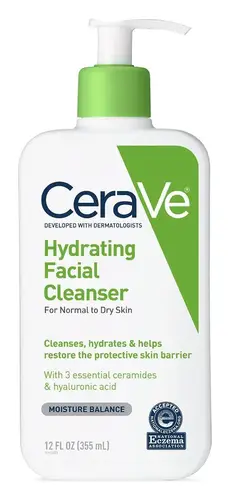
This oil-based makeup remover is made to dissolve makeup, sunscreen, and daily buildup.
This oil-based makeup remover is made to dissolve makeup, sunscreen, and daily buildup.


What's inside
What's inside
 Key Ingredients
No key ingredients
Benefits
Concerns
Ingredients Side-by-side
Hydrogenated Polyisobutene
EmollientWater
Skin ConditioningButylene Glycol
Humectant

Glycerin
Humectant
Olive Oil PEG-7 Esters
Emollient




Glyceryl Stearate
Emollient
Polysorbate 60
Emulsifying
Cetyl Alcohol
Emollient

Stearyl Alcohol
Emollient
Propylene Glycol Dicaprylate/Dicaprate
EmollientIsopropyl Myristate
Emollient

Prunus Persica Fruit Extract
Abrasive
Calendula Officinalis Flower Extract
Masking


Simmondsia Chinensis Seed Oil
Emollient
Macadamia Ternifolia Seed Oil
Emollient
PEG-40 Stearate
Emulsifying
PEG-100 Stearate
Surfactant
Beeswax
Emulsion Stabilising
Butyrospermum Parkii Butter
Skin Conditioning
Dimethicone
Emollient
Cyclohexasiloxane
Emollient
Sorbitan Stearate
Emulsifying
Caprylyl Glycol
Emollient
Chlorphenesin
Antimicrobial
Carbomer
Emulsion StabilisingTriethanolamine
BufferingCaprylhydroxamic Acid
ChelatingDisodium EDTA
ChelatingCyclopentasiloxane
Emollient
Lavandula Angustifolia Oil
Masking

Pelargonium Graveolens Flower Oil
Masking
Hydrogenated Polyisobutene, Water, Butylene Glycol, Glycerin, Olive Oil PEG-7 Esters, Glyceryl Stearate, Polysorbate 60, Cetyl Alcohol, Stearyl Alcohol, Propylene Glycol Dicaprylate/Dicaprate, Isopropyl Myristate, Prunus Persica Fruit Extract, Calendula Officinalis Flower Extract, Simmondsia Chinensis Seed Oil, Macadamia Ternifolia Seed Oil, PEG-40 Stearate, PEG-100 Stearate, Beeswax, Butyrospermum Parkii Butter, Dimethicone, Cyclohexasiloxane, Sorbitan Stearate, Caprylyl Glycol, Chlorphenesin, Carbomer, Triethanolamine, Caprylhydroxamic Acid, Disodium EDTA, Cyclopentasiloxane, Lavandula Angustifolia Oil, Pelargonium Graveolens Flower Oil



Reviews
Ingredients Explained
These ingredients are found in both products.
Ingredients higher up in an ingredient list are typically present in a larger amount.
Beeswax is natural wax produced by honey bees to build their honeycomb.
Because it forms a protective layer on your skin, it can help lock in moisture and reduce water loss. It is also widely used as a thickener and emulsifier in lip balms and lotions. Research suggests beeswax containing moisturizers can support skin barrier integrity.
In comedogenic testing, Beeswax scored a 0-2, which is on the low end. Whether or not a product clogs your pores really comes down to the formula as a whole (not any single ingredient on its own) and your skin.
Cera Alba is the white, bleached form of this ingredient.
Just so you know, beeswax is not vegan since it is animal-derived. It cannot be removed with water, but can be taken off with an oil cleanser.
People with a known Propolis allergy also report to have reactions from beeswax.
Beeswax's wax esters are derived primarily from palmitic and oleic acid (C16 and C18:1). Both of these fall within the C11-C24 feeding window.
The Malassezia yeast can potentially cleave these esters and release usable fatty acids, so this ingredient may not be fungal acne safe. However, not everyone will react to this ingredient.
Learn more about BeeswaxCarbomer is a synthetic thickening and gelling agent. It's basically the ingredient that gives a lot of serums, gels, creams, and sunscreens their smooth, non-sticky texture.
Although legally permitted at very high levels, carbomers are normally used at concentrations below 1%.
It also needs to be neutralized to actually thicken, and because it is a large molecule, it doesn't really penetrate the skin barrier.
Allergy-wise, the risk is very low. Clinical studies show carbomers have low potential for skin irritation/sensitization even at concentrations up to 100%.
A 2024 UK study patch-tested 1,302 patients and found true allergy to the parent group of carbomer to be rare with no confirmed relevant reactions.
Learn more about CarbomerCetyl Alcohol is a fatty alcohol. Fatty Alcohols are most often used as an emollient or to thicken a product.
Its main roles are:
Though it has "alcohol" in the name, it is not related to denatured alcohol or ethyl alcohol.
The FDA allows products labeled "alcohol-free" to have fatty alcohols.
This ingredient may not be fungal acne safe. It is a primary fatty alcohol with a chain length above 12 carbons. A study from 2019 show Malassezia can feed on fatty alcohols in this range, so it may trigger fungal acne in those prone to it.
Learn more about Cetyl AlcoholTriethanolamine (TEA) is an emulsifier and pH adjuster. It is created using ethylene oxide and ammonia. This gives Triethanolamine a nitrogen core and a similar scent to ammonia.
As an emulsifier, it prevents ingredients from separating and enhances texture by adding volume to a product.
PH adjusters are common in cosmetic products. The pH of a product can affect the effectiveness of other ingredients. A product with a high pH may also irritate the skin.
If you are looking for the tea leaf ingredient, click here.
Learn more about TriethanolamineWater. It's the most common cosmetic ingredient of all. You'll usually see it at the top of ingredient lists, meaning that it makes up the largest part of the product.
So why is it so popular? Water most often acts as a solvent - this means that it helps dissolve other ingredients into the formulation.
You'll also recognize water as that liquid we all need to stay alive. If you see this, drink a glass of water. Remember to stay hydrated!
Learn more about Water