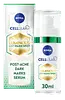
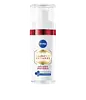
Nivea Cellular Luminous630 Anti Dark-Spot Post-Acne Marks Serum Versus Nivea Luminous630 AntiSpot Anti-Age & Spot Serum

What's inside
What's inside
 Key Ingredients
Benefits
Concerns
Ingredients Side-by-side
Water
Skin ConditioningAlcohol Denat.
Antimicrobial




Glycerin
Humectant


Tapioca Starch
Salicylic Acid
Masking






Carbomer
Emulsion StabilisingIsobutylamido Thiazolyl Resorcinol
Bleaching

Sodium Hyaluronate
Humectant


Camellia Sinensis Leaf Extract
Antimicrobial

Panthenol
Skin Conditioning
Pantolactone
Humectant
Isoquercitrin
Antioxidant
Glucosylrutin
Antioxidant
Glycyrrhiza Inflata Root Extract
Skin Conditioning
Ammonium Acryloyldimethyltaurate/Vp Copolymer
Decylene Glycol
Skin ConditioningCitric Acid
Buffering
Trisodium EDTA
Sodium Chloride
MaskingSodium Sulfate

Sodium Hydroxide
BufferingSodium Benzoate
Masking
Parfum
Masking

CI 42090
Cosmetic ColorantCI 16035
Cosmetic ColorantWater, Alcohol Denat., Glycerin, Tapioca Starch, Salicylic Acid, Carbomer, Isobutylamido Thiazolyl Resorcinol, Sodium Hyaluronate, Camellia Sinensis Leaf Extract, Panthenol, Pantolactone, Isoquercitrin, Glucosylrutin, Glycyrrhiza Inflata Root Extract, Ammonium Acryloyldimethyltaurate/Vp Copolymer, Decylene Glycol, Citric Acid, Trisodium EDTA, Sodium Chloride, Sodium Sulfate, Sodium Hydroxide, Sodium Benzoate, Parfum, CI 42090, CI 16035
Water
Skin ConditioningGlycerin
Humectant
Caprylic/Capric Triglyceride
Masking
Cocoglycerides
Emollient
Methylpropanediol
SolventGlyceryl Stearate
Emollient
Cetearyl Alcohol
Emollient


Distarch Phosphate
AbsorbentTapioca Starch
Butyrospermum Parkii Butter
Skin Conditioning
Cetyl Palmitate
Emollient
Squalane
Emollient
Isobutylamido Thiazolyl Resorcinol
Bleaching
Glycine Soja Germ Extract
EmollientSodium Hyaluronate
Humectant
Sodium Stearoyl Glutamate
CleansingEthylhexylglycerin
Skin ConditioningXanthan Gum
EmulsifyingTrisodium EDTA
Sodium Chloride
MaskingPhenoxyethanol
Preservative
Parfum
Masking
Water, Glycerin, Caprylic/Capric Triglyceride, Cocoglycerides, Methylpropanediol, Glyceryl Stearate, Cetearyl Alcohol, Distarch Phosphate, Tapioca Starch, Butyrospermum Parkii Butter, Cetyl Palmitate, Squalane, Isobutylamido Thiazolyl Resorcinol, Glycine Soja Germ Extract, Sodium Hyaluronate, Sodium Stearoyl Glutamate, Ethylhexylglycerin, Xanthan Gum, Trisodium EDTA, Sodium Chloride, Phenoxyethanol, Parfum
Reviews
Ingredients Explained
These ingredients are found in both products.
Ingredients higher up in an ingredient list are typically present in a larger amount.
Glycerin (or glycerol) is a compound naturally found in your skin. It's a powerhouse humectant that pulls water into the stratum corneum.
Topically, glycerin does several things at once:
Your skin makes glycerin on its own (mostly from sebaceous oil breakdown) and shuttles it to your outermost layer of skin, or your epidermis, via aquaporin-3.
Aquaporin-3 is a transporter that is essential for normal skin hydration, elasticity, and repair. Interestingly, mice lacking in AQP3 have dry and less elastic skin that can be fully corrected with glycerin.
This ingredient is non-irritating, plays well with almost every ingredient, and works across all skin types. Typical use is anywhere between 3-10% but can go up to 79% in some leave-on products.
Just know very high concentrations (>40%) can feel tacky in low humidity.
Glycerin is the name for this ingredient in American English. British English uses Glycerol/Glycerine.
Learn more about GlycerinYou probably know this ingredient as Thiamidol. It is often called the "hydroquinone alternative" because of it's pigment-fighting abilities.
This ingredient is patented by Beiersdorf (the owner of Nivea, Eucerin, and La Prairie).
It works by in inhibiting tyrosinase (the enzyme your melanocytes use to produce melanin) so less pigment ends up deposited in your skin.
Here's something interesting:
Most brightening ingredients you've heard of like kojic acid, arbutin, and even hydroquinone were originally tested on mushroom tyrosinase. And it turns out, mushroom tyrosinase works pretty differently from the human kind.
So Beiersdorf screened 50,000 compounds against actual human tyrosinase, and Thiamidol came out as the strongest. It showed to be more potent than hydroquinone or arbutin at blocking the human enzyme.
It's been shown to fade melasma, post-inflammatory hyperpigmentation, and sun spots at 0.1-0.2% twice daily with visible results in about four weeks. One randomized trial even found 0.2% Thiamidol worked just as well as 4% hydroquinone on melasma but with fewer side effects.
This ingredient is generally well-tolerated and minor irritation has been reported very infrequently.
Be sure to also check out Rucinol, another "hydroquinone alternative".
Learn more about Isobutylamido Thiazolyl ResorcinolParfum is a catch-all term for an ingredient or more that is used to give a scent to products.
Also called "fragrance", this ingredient can be a blend of hundreds of chemicals or plant oils. This means every product with "fragrance" or "parfum" in the ingredients list is a different mixture.
For instance, Habanolide is a proprietary trade name for a specific aroma chemical. When used as a fragrance ingredient in cosmetics, most aroma chemicals fall under the broad labeling category of “FRAGRANCE” or “PARFUM” according to EU and US regulations.
The term 'parfum' or 'fragrance' is not regulated in many countries. In many cases, it is up to the brand to define this term.
For instance, many brands choose to label themselves as "fragrance-free" because they are not using synthetic fragrances. However, their products may still contain ingredients such as essential oils that are considered a fragrance by INCI standards.
One example is Calendula flower extract. Calendula is an essential oil that still imparts a scent or 'fragrance'.
Depending on the blend, the ingredients in the mixture can cause allergies and sensitivities on the skin. Some ingredients that are known EU allergens include linalool and citronellol.
Parfum can also be used to mask or cover an unpleasant scent.
The bottom line is: not all fragrances/parfum/ingredients are created equally. If you are worried about fragrances, we recommend taking a closer look at an ingredient. And of course, we always recommend speaking with a professional.
Learn more about ParfumChances are, you eat sodium chloride every day. Sodium Chloride is also known as table salt. This ingredient has many purposes in skincare: thickener, emulsifier, and exfoliator.
You'll most likely find this ingredient in cleansers where it is used to create a gel-like texture. As an emulsifier, it also prevents ingredients from separating.
You might see people debate whether Sodium Chloride is comedogenic, but there actually haven't been any comedogenic tests done on it. Either way, the overall formulation of a product matters a lot more than any single ingredient.
You might see this ingredient used in scrubs as a primary exfoliating ingredient.
Learn more about Sodium ChlorideSodium Hyaluronate is the salt form of hyaluronic acid. It is a long sugar chain that is naturally found in your skin, joints, and connective tissue that maintains hydration and elasticity.
In skincare, it works as a humectant. It pulls water from the environment and deeper layers of skin and binds it to the surface.
Interestingly, the size of the molecule affects its behavior:
Some clinical evidence links low molecular weight versions to improved wrinkle depth, elasticity, anti-inflammatory effects, and barrier repair.
Many serums use a blend of both weights so you can get surface hydration plus longer-lasting and deeper effects.
You'll typically see concentrations between 0.1-2% for this ingredient.
Learn more about Sodium HyaluronateTapioca starch is a thickening agent and is made from the cassava root, also known as yucca.
According to a manufacturer, it is an excellent talc replacement.
It is gluten-free.
Learn more about Tapioca StarchTrisodium EDTA is one of those quietly essential helper ingredients that most people have never heard of. You'll most likely spot it near the end of ingredient lists in almost every category of skincare.
So what does it actually do?
Its main job is chelation; this is a fancy word to say it grabs onto metal ions and neutralizes them. This is because even purified water in cosmetics contains trace amounts of metals that can cause big problems in a formula.
These trace metals can break down actives faster, cause discoloration, promote rancidity in oils, and make preservatives less effective. Trisodium EDTA binds to these metals and takes them out of the equation so your products can stay stable and effective for longer.
There's also an added bonus: by neutralizing the metals ions that bacteria need to thrive, this ingredient also acts as a preservative booster.
The Cosmetic Ingredient Review has concluded this ingredient to be safe as used in cosmetic formulations. It is not considered an irritant, sensitizer, and is barely absorbed through the skin.
Learn more about Trisodium EDTAWater. It's the most common cosmetic ingredient of all. You'll usually see it at the top of ingredient lists, meaning that it makes up the largest part of the product.
So why is it so popular? Water most often acts as a solvent - this means that it helps dissolve other ingredients into the formulation.
You'll also recognize water as that liquid we all need to stay alive. If you see this, drink a glass of water. Remember to stay hydrated!
Learn more about Water
