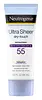
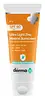
Neutrogena Ultra Sheer® Dry-Touch Sunscreen Broad Spectrum SPF 55 Versus The Derma Co Ultra Light Zinc Mineral Sunscreen SPF 50
This chemical sunscreen covers most of the UV range, lighter on the deep UVA that drives aging.
This mineral sunscreen covers the full UV range and blocks ~98% of UVB at SPF 50.


What's inside
What's inside
 Key Ingredients
Benefits
Concerns
Ingredients Side-by-side
Butyl Methoxydibenzoylmethane 3%
UV Absorber
Homosalate 10%
Skin Conditioning
Ethylhexyl Salicylate 5%
UV Absorber
Octocrylene 10%
UV Absorber

Water
Skin ConditioningStyrene/Acrylates Copolymer
Silica
Abrasive


Dimethicone
Emollient

Potassium Cetyl Phosphate
EmulsifyingBenzyl Alcohol
Perfuming




Beeswax
Emulsion Stabilising



Caprylyl Methicone
Skin Conditioning
Glyceryl Stearate
Emollient
PEG-100 Stearate
Surfactant
Cetyl Dimethicone
Emollient
Caprylyl Glycol
Emollient
Ethylhexylglycerin
Skin ConditioningAluminum Starch Octenylsuccinate
Absorbent
Behenyl Alcohol
Emollient
Acrylates/Dimethicone Copolymer
Skin Conditioning
Xanthan Gum
EmulsifyingSodium Polyacrylate
Absorbent
Chlorphenesin
Antimicrobial
Dimethicone/PEG-10/15 Crosspolymer
Hydrolyzed Jojoba Esters
Skin Conditioning
Parfum
Masking
Disodium EDTA
Ethylhexyl Stearate
Emollient
Tocopheryl Acetate
Antioxidant


BHT
Antioxidant
Trideceth-6
EmulsifyingJojoba Esters
Emollient
Butyl Methoxydibenzoylmethane 3%, Homosalate 10%, Ethylhexyl Salicylate 5%, Octocrylene 10%, Water, Styrene/Acrylates Copolymer, Silica, Dimethicone, Potassium Cetyl Phosphate, Benzyl Alcohol, Beeswax, Caprylyl Methicone, Glyceryl Stearate, PEG-100 Stearate, Cetyl Dimethicone, Caprylyl Glycol, Ethylhexylglycerin, Aluminum Starch Octenylsuccinate, Behenyl Alcohol, Acrylates/Dimethicone Copolymer, Xanthan Gum, Sodium Polyacrylate, Chlorphenesin, Dimethicone/PEG-10/15 Crosspolymer, Hydrolyzed Jojoba Esters, Parfum, Disodium EDTA, Ethylhexyl Stearate, Tocopheryl Acetate, BHT, Trideceth-6, Jojoba Esters
Water
Skin ConditioningZinc Oxide
Cosmetic Colorant
C12-15 Alkyl Benzoate
AntimicrobialIsostearic Acid
Cleansing
Polyhydroxystearic Acid
Emulsifying
Cyclopentasiloxane
Emollient
PEG/PPG-18/18 Dimethicone
Emulsifying
Caprylyl Methicone
Skin Conditioning
PEG-12 Dimethicone/PPG-20 Crosspolymer
Silica
Abrasive
Glycerin
Humectant
Dimethicone/Vinyl Dimethicone Crosspolymer
Skin Conditioning
Cetyl PEG/PPG-10/1 Dimethicone
Emulsifying
Sodium Chloride
MaskingPolymethylsilsesquioxane
Caprylyl Glycol
Emollient
Methylpropanediol
SolventDidecyldimonium Chloride
EmulsifyingPolyquaternium-80
CleansingXanthan Gum
EmulsifyingMagnesium Aluminum Silicate
Absorbent
Water, Zinc Oxide, C12-15 Alkyl Benzoate, Isostearic Acid, Polyhydroxystearic Acid, Cyclopentasiloxane, PEG/PPG-18/18 Dimethicone, Caprylyl Methicone, PEG-12 Dimethicone/PPG-20 Crosspolymer, Silica, Glycerin, Dimethicone/Vinyl Dimethicone Crosspolymer, Cetyl PEG/PPG-10/1 Dimethicone, Sodium Chloride, Polymethylsilsesquioxane, Caprylyl Glycol, Methylpropanediol, Didecyldimonium Chloride, Polyquaternium-80, Xanthan Gum, Magnesium Aluminum Silicate
Reviews
Ingredients Explained
These ingredients are found in both products.
Ingredients higher up in an ingredient list are typically present in a larger amount.
Caprylyl Glycol is a humectant, skin conditioner, emollient, and preservative booster derived from either caprylic acid or synthetically created.
Typical use levels vary from 0.3-1% as a preservative booster and go up to 2% to condition skin.
Because it is not a free-fatty acid, this ingredient is fungal acne safe (there's nothing for Malassezia to feed on).
Learn more about Caprylyl GlycolCaprylyl Methicone is a synthetic and lightweight silicone fluid. It gives products a silky, dry-touch finish without the heaviness of pure oils.
Though the EU CosIng Database lists this ingredient as a skin conditioner, it is also used for sensory reasons. It spreads easily, cuts greasiness, and reduces tackiness.
This ingredient is volatile which means it will mostly evaporate (but it evaporates slower than older cyclomethicones, like Cyclotetrasiloxane).
Typical concentration ranges from 1-30% depending on if it's being used to tweak the feel of a product or acting as the main emollient.
Learn more about Caprylyl MethiconeSilica, also known as silicon dioxide, is a naturally occurring mineral. It is used as a fine, spherical, and porous powder in cosmetics.
Though it has exfoliant properties, the function of silica varies depending on the product.
The unique structure of silica enhances the spreadability and adds smoothness, making it a great texture enhancer.
It is also used as an active carrier, emulsifier, and mattifier due to its ability to absorb excess oil.
In some products, tiny microneedles called spicules are made from silica or hydrolyzed sponge. When you rub them in, they lightly polish away dead skin layers and enhance the penetration of active ingredients.
Learn more about SilicaWater. It's the most common cosmetic ingredient of all. You'll usually see it at the top of ingredient lists, meaning that it makes up the largest part of the product.
So why is it so popular? Water most often acts as a solvent - this means that it helps dissolve other ingredients into the formulation.
You'll also recognize water as that liquid we all need to stay alive. If you see this, drink a glass of water. Remember to stay hydrated!
Learn more about WaterXanthan gum is used as a stabilizer and thickener within cosmetic products. It helps give products a sticky, thick feeling - preventing them from being too runny.
On the technical side of things, xanthan gum is a polysaccharide - a combination consisting of multiple sugar molecules bonded together.
Xanthan gum is a pretty common and great ingredient. It is a natural, non-toxic, non-irritating ingredient that is also commonly used in food products.
Learn more about Xanthan Gum

