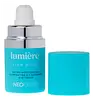
This anti-aging eye moisturizer is formulated around Caffeine and Tetrahexyldecyl Ascorbate to soften the look of wrinkles.
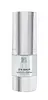
This anti-aging eye moisturizer is formulated around Palmitoyl Tetrapeptide-7 to soften the look of wrinkles and fade the look of dark spots.

What's inside
What's inside
 Key Ingredients
Benefits
Concerns
Ingredients Side-by-side
Water
Skin ConditioningC12-20 Acid PEG-8 Ester
Emulsifying

Petrolatum
Emollient



Caprylic/Capric Triglyceride
Masking

Hydrogenated Polyisobutene
EmollientGlycerin
Humectant
Butylene Glycol
Humectant
Saccharide Isomerate
Humectant
Hydroxyethyl Acrylate/Sodium Acryloyldimethyl Taurate Copolymer
Emulsion StabilisingBisabolol
Antioxidant

Caffeine
Skin Conditioning
Tetrahexyldecyl Ascorbate
Antioxidant



Fagus Sylvatica Bud Extract
TonicLecithin
Emollient
Cutaneous Lysate
MoisturisingTetrapeptide-21
Skin Conditioning
Sodium Hyaluronate
Humectant
Glycyrrhetinic Acid
Skin Conditioning
Citric Acid
Buffering
Dioscorea Villosa Root Extract
Skin Conditioning
Tocotrienols
Skin Conditioning
Elaeis Guineensis Oil
Emollient

Capryloyl Carnosine
Skin ConditioningTocopherol
Antioxidant
Benzoic Acid
Masking
Squalene
Emollient
Palmitoyl Tripeptide-1 Acetate
Skin Conditioning
Phytosterols
Skin Conditioning
Sodium Citrate
BufferingIsohexadecane
EmollientEthylhexylglycerin
Skin ConditioningPotassium Cetyl Phosphate
EmulsifyingAcrylates/C10-30 Alkyl Acrylate Crosspolymer
Emulsion StabilisingChlorphenesin
Antimicrobial
Polysorbate 60
Emulsifying
Sodium Hydroxide
BufferingDisodium EDTA
Sorbitan Isostearate
Emulsifying
Phenoxyethanol
Preservative
Benzyl Alcohol
Perfuming



Water, C12-20 Acid PEG-8 Ester, Petrolatum, Caprylic/Capric Triglyceride, Hydrogenated Polyisobutene, Glycerin, Butylene Glycol, Saccharide Isomerate, Hydroxyethyl Acrylate/Sodium Acryloyldimethyl Taurate Copolymer, Bisabolol, Caffeine, Tetrahexyldecyl Ascorbate, Fagus Sylvatica Bud Extract, Lecithin, Cutaneous Lysate, Tetrapeptide-21, Sodium Hyaluronate, Glycyrrhetinic Acid, Citric Acid, Dioscorea Villosa Root Extract, Tocotrienols, Elaeis Guineensis Oil, Capryloyl Carnosine, Tocopherol, Benzoic Acid, Squalene, Palmitoyl Tripeptide-1 Acetate, Phytosterols, Sodium Citrate, Isohexadecane, Ethylhexylglycerin, Potassium Cetyl Phosphate, Acrylates/C10-30 Alkyl Acrylate Crosspolymer, Chlorphenesin, Polysorbate 60, Sodium Hydroxide, Disodium EDTA, Sorbitan Isostearate, Phenoxyethanol, Benzyl Alcohol
Water
Skin ConditioningHuman Umbilical Mesenchymal Stem Cell Conditioned Media
HumectantHuman Neonatal Fibroblast Conditioned Media
Skin ConditioningGlycerin
Humectant
Hesperidin Methyl Chalcone
Antioxidant
N-Hydroxysuccinimide
Skin ConditioningChrysin
Skin ConditioningHydroxyethylcellulose
Emulsion StabilisingPalmitoyl Tetrapeptide-7
Skin Conditioning
Palmitoyl Tripeptide-1
Skin Conditioning
Dipeptide-2
Skin Conditioning
Benzyl Alcohol
Perfuming
Dehydroacetic Acid
Preservative
Sodium Butyroyl Hyaluronate
HumectantLactic Acid
Buffering
Water, Human Umbilical Mesenchymal Stem Cell Conditioned Media, Human Neonatal Fibroblast Conditioned Media, Glycerin, Hesperidin Methyl Chalcone, N-Hydroxysuccinimide, Chrysin, Hydroxyethylcellulose, Palmitoyl Tetrapeptide-7, Palmitoyl Tripeptide-1, Dipeptide-2, Benzyl Alcohol, Dehydroacetic Acid, Sodium Butyroyl Hyaluronate, Lactic Acid
Reviews
Ingredients Explained
These ingredients are found in both products.
Ingredients higher up in an ingredient list are typically present in a larger amount.
Benzyl Alcohol is an aromatic alcohol with several roles: it's a preservative, solvent, and mild fragrance component with a floral scent.
This ingredient has been deemed safe for use in cosmetic formulations at concentrations up to 5%, and up to 10% in hair dyes. You'll typically see 0.5-2% in most rinse-off or leave-on products.
As a preservative, it works by disrupting the membrane of microbial proteins. This helps keep bacteria and fungi from growing in your products.
The sensitization picture is actually quite assuring as well:of nearly 71,000 patients patch tested with benzyl alcohol, only 0.21% showed a positive reaction with most of them being weakly positive.
This led researchers to conclude that benzyl alcohol cannot be regarded as a significant contact allergen.
It is worth noting this ingredient is classified as one of the EU's regulated fragrance allergens and restricted to 1% in finished products.
Labels must also declare it in concentrations above 0.001% in leave-on products and 0.01% in rinse-off products.
At concentrations around 5%, localized redness and itching can appear as a direct irritant response and not as a true allergic reaction.
Learn more about Benzyl AlcoholGlycerin (or glycerol) is a compound naturally found in your skin. It's a powerhouse humectant that pulls water into the stratum corneum.
Topically, glycerin does several things at once:
Your skin makes glycerin on its own (mostly from sebaceous oil breakdown) and shuttles it to your outermost layer of skin, or your epidermis, via aquaporin-3.
Aquaporin-3 is a transporter that is essential for normal skin hydration, elasticity, and repair. Interestingly, mice lacking in AQP3 have dry and less elastic skin that can be fully corrected with glycerin.
This ingredient is non-irritating, plays well with almost every ingredient, and works across all skin types. Typical use is anywhere between 3-10% but can go up to 79% in some leave-on products.
Just know very high concentrations (>40%) can feel tacky in low humidity.
Glycerin is the name for this ingredient in American English. British English uses Glycerol/Glycerine.
Learn more about GlycerinWater. It's the most common cosmetic ingredient of all. You'll usually see it at the top of ingredient lists, meaning that it makes up the largest part of the product.
So why is it so popular? Water most often acts as a solvent - this means that it helps dissolve other ingredients into the formulation.
You'll also recognize water as that liquid we all need to stay alive. If you see this, drink a glass of water. Remember to stay hydrated!
Learn more about Water

