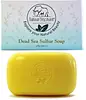
Natural Elephant Dead Sea Sulphur Soap Versus Tropic Skincare Smoothing Cleanser Complexion Purifier
This sulfur foaming cleanser is formulated around Sulfur to clear breakouts.
This mild cream cleanser is made to cleanse without leaving your skin tight or dry.


What's inside
What's inside
 Key Ingredients
Benefits
Concerns
Ingredients Side-by-side
Elaeis Guineensis Oil
Emollient





Elaeis Guineensis Kernel Oil
Emollient
Maris Sal
Skin ConditioningSulfur
Antiseborrhoeic


Aloe Barbadensis Leaf Extract
Emollient

Water
Skin ConditioningOlea Europaea Fruit Oil
Masking
Butyrospermum Parkii Butter
Skin Conditioning

Anthemis Nobilis Flower Oil
Masking
Persea Gratissima Oil
Skin Conditioning
Camellia Sinensis Leaf Extract
Antimicrobial




Glycerin
Humectant
Parfum
Masking
Tocopheryl Acetate
Antioxidant
Sodium Hydroxide
BufferingButylene Glycol
Humectant
Triticum Vulgare Germ Oil
Emollient
Hamamelis Virginiana Water
Astringent
Hydroxyisohexyl 3-Cyclohexene Carboxaldehyde
Masking
CI 47005
Cosmetic ColorantElaeis Guineensis Oil, Elaeis Guineensis Kernel Oil, Maris Sal, Sulfur, Aloe Barbadensis Leaf Extract, Water, Olea Europaea Fruit Oil, Butyrospermum Parkii Butter, Anthemis Nobilis Flower Oil, Persea Gratissima Oil, Camellia Sinensis Leaf Extract, Glycerin, Parfum, Tocopheryl Acetate, Sodium Hydroxide, Butylene Glycol, Triticum Vulgare Germ Oil, Hamamelis Virginiana Water, Hydroxyisohexyl 3-Cyclohexene Carboxaldehyde, CI 47005
Water
Skin ConditioningSimmondsia Chinensis Seed Oil
Emollient
Olea Europaea Fruit Oil
Masking
Macadamia Integrifolia/Tetraphylla Seed Oil
Emollient
Cetearyl Alcohol
Emollient

Glycerin
Humectant
Cetearyl Glucoside
Emulsifying
Aloe Barbadensis Leaf Extract
Emollient
Butyrospermum Parkii Butter
Skin Conditioning
Lecithin
Emollient
Persea Gratissima Oil
Skin Conditioning
Camellia Sinensis Leaf Extract
Antimicrobial
Sodium Levulinate
Skin ConditioningSodium Anisate
AntimicrobialSodium Gluconate
ChelatingRosmarinus Officinalis Extract
AntimicrobialCymbopogon Flexuosus Oil
Masking
Eucalyptus Globulus Leaf Oil
Perfuming
Citrus Aurantium Dulcis Peel Oil Expressed
Perfuming
Tocopherol
Antioxidant
Xanthan Gum
EmulsifyingSodium Hydroxide
BufferingLactic Acid
Buffering

Citral
Perfuming
Limonene
Perfuming
Water, Simmondsia Chinensis Seed Oil, Olea Europaea Fruit Oil, Macadamia Integrifolia/Tetraphylla Seed Oil, Cetearyl Alcohol, Glycerin, Cetearyl Glucoside, Aloe Barbadensis Leaf Extract, Butyrospermum Parkii Butter, Lecithin, Persea Gratissima Oil, Camellia Sinensis Leaf Extract, Sodium Levulinate, Sodium Anisate, Sodium Gluconate, Rosmarinus Officinalis Extract, Cymbopogon Flexuosus Oil, Eucalyptus Globulus Leaf Oil, Citrus Aurantium Dulcis Peel Oil Expressed, Tocopherol, Xanthan Gum, Sodium Hydroxide, Lactic Acid, Citral, Limonene
Reviews
Ingredients Explained
These ingredients are found in both products.
Ingredients higher up in an ingredient list are typically present in a larger amount.
Aloe Barbadensis Leaf Extract is a botanical extract pulled from the leaves of aloe vera and one of the most studied plant ingredients in cosmetics.
The inner leaf gel it comes from is mostly water (~99-99.5%) and the remaining fraction is made up of pretty good stuff: polysaccharides, vitamins, phenolics, and enzymes.
Its headline job is hydration.
The star polysaccharide in aloe, acemannan, is a humectant that retains moisture and helps reduce trans-epidermal water loss.
Aloe also has real soothing credentials; it contains anti-inflammatory compounds like bradykinase and C-glucosyl chromone that help calm irritation and redness.
On the repair side, lab work shows that acemannan wakes up your skin's repair cells (fibroblasts), prompting them to multiply and speed up healing.
There's some human data for cosmetic benefit too: a cream containing 10% Aloe Barbadensis leaf extract improved skin hydration and elasticity in a real-use study.
Safety-wise, this ingredient is well-regarded with just one rare downside; there have been some case reports of acute eczema, contact urticaria, and dermatitis in people who applied aloe-derived ingredients topically. Those with a known aloe or Liliaceae sensitivity should patch test.
Typical use levels range widely, from under 1% up to 90%+ depending on the format and the effect you are after.
Learn more about Aloe Barbadensis Leaf ExtractThis ingredient is also known as shea butter. It is a plant-derived extract from the nuts of the Africa shea tree and one of the most well-studied emollients.
Because it has a high concentration of fatty acids (primarily oleic, stearic, and linoleic) it is able to form a protective barrier on the skin's surface. This helps seal in moisture and prevents transepidermal water loss (TEWL).
In vitro research found an increase in skin hydration by 58% and a decrease in TEWL by 37.8% after 24 hours of applying this ingredient (pretty impressive for a single ingredient!).
Besides hydration, shea butter also contains triterpenes that have anti-inflammatory potential. In particule, lupeol cinnamate has shown the highest anti-inflammatory activity in vivo.
Shea butter also contains vitamins A and E which may contribute to antioxidant activity.
While Shea Butter has an SPF rating of about 3-4, it is not a sunscreen replacement.
This ingredient may not be fungal acne safe because its fatty acids fall within the C11-C24 range that the Malassezia yeast can metabolize.
This ingredient shows up on a lot of "pore-clogging" lists but there's no real evidence behind that. It doesn't even have a comedogenic rating from an actual study; the numbers you'll find online come from blogs citing other blogs.
Ratings for other ingredients mostly come from a 1980s rabbit ear test. This test doesn't translate well to human skin or to real products because the ingredient sits at a much lower percentage.
Some people still find it breaks them out. So if that's you, definitely trust your skin. Just know this one's based on experience and not evidence.
Learn more about Butyrospermum Parkii ButterCamellia Sinensis Leaf Extract (tea extract) is one of the most well-researched plant extracts in skincare with an impressive resume.
Black tea, green tea, and oolong tea are all harvested from the Camellia Sinensis plant.
Studies show green tea extract and its catechins (like epigallocatechin gallate (EGCG)) help your skin cells product energy more efficiently and reducing the number of free-radicals that can damage your skin from the inside.
In lab-grown skin models, this translated to younger, healthier, and stronger skin.
There's also good sun protection data; researchers saw less DNA damage and redness on human skin when green tea was applied before UVB exposure. And the more they applied, the better the protection.
Needless to say, this ingredient shouldn't replace your sunscreen. But it is a great supportive ingredient that you can already find in many sunscreens and antioxidant serums.
A 2009 study found a 2% green tea lotion was effective for mild-to-moderate acne thanks to its anti-inflammatory and mild antimicrobial activity.
The quality of the extract matters a lot here:
Good extracts contain 50-90% catechins while lower quality ones are mostly there for marketing. We recommend reaching out to the brand if you have questions about the quality or source of their ingredients.
Human Repeated Insult Patch Testing showed no irritation or sensitization at use concentrations (0.86% in leave-on products and up to 30% as leaf water).
Learn more about Camellia Sinensis Leaf ExtractGlycerin (or glycerol) is a compound naturally found in your skin. It's a powerhouse humectant that pulls water into the stratum corneum.
Topically, glycerin does several things at once:
Your skin makes glycerin on its own (mostly from sebaceous oil breakdown) and shuttles it to your outermost layer of skin, or your epidermis, via aquaporin-3.
Aquaporin-3 is a transporter that is essential for normal skin hydration, elasticity, and repair. Interestingly, mice lacking in AQP3 have dry and less elastic skin that can be fully corrected with glycerin.
This ingredient is non-irritating, plays well with almost every ingredient, and works across all skin types. Typical use is anywhere between 3-10% but can go up to 79% in some leave-on products.
Just know very high concentrations (>40%) can feel tacky in low humidity.
Glycerin is the name for this ingredient in American English. British English uses Glycerol/Glycerine.
Learn more about GlycerinThis ingredient is also known as olive oil. It has been used in skincare for centuries and science largely backs up its reputation as a nourishing emollient.
The main components of olive oil are oleic acid (55-83%), linoleic acid (3.5-20%), and palmitic acid (7-20%). Oleic acid promotes skin regeneration and helps regulate inflammatory responses.
Squalene is also naturally present in olive oil and exhibits moisturizing and antioxidant properties.
The polyphenols in olive oil also show anti-aging promise; one clinical study found a measurable improvement in skin appearance after 30 days of topical serum use.
Just be aware that applying olive oil directly to skin can weaken the barrier and cause redness. One study with volunteers found even people without sensitive skin experienced a significant reduction in stratum corneum integrity and induced mild erythema.
It's best to use this ingredient as part of a carefully crafted formula (instead of putting it on skin directly from the bottle).
Because it has a 0-2 on the comedogenic scale, it is low risk for acne-prone skin. Just remember the overall formulation of a product matters more than a few ingredients with comedogenic ratings.
This ingredient may not be fungal acne safe because of the oleic and palmitic acid content. These fall within the C11-24 fatty acid range that the Malassezia yeast can metabolize to grow.
Overall, olive oil is a well-studied and nourishing skincare ingredient.
Learn more about Olea Europaea Fruit OilThis ingredient is also known as Avocado oil. It's the cold-pressed oil from the flesh of the avocado fruit packed with fatty acids (mostly oleic acid).
The rich fatty acid profile allows it to function as a skin conditioning agent and emollient; it helps soften and smooth skin while reducing water loss.
Preclinical research has found that topical avocado oil increased collagen synthesis and reduced inflammation during wound healing, giving it some skin-repairing credibility.
The unsaponifiable fraction of the oil is also interesting: studies on avocado unsaponifiables showed that it helped skin produce more collagen and other structural compounds that support healing.
The CIR Expert Panel has found this ingredient to be non-irritating in formulations.
This ingredient may not be fungal acne safe. This is because the oleic acid content falls within the range that Malassezia can use as a food source.
This ingredient does have a comedogenic rating of 0-3, but this doesn't mean a formula with this ingredient will clog pores. Human testing has proved that any finished product with a comedogenic ingredient won't automatically make you break out; it really comes down to concentration, formula, and your skin.
Learn more about Persea Gratissima OilSodium Hydroxide is also known as lye or caustic soda. It is used to adjust the pH of products; many ingredients require a specific pH to be effective.
In small amounts, sodium hydroxide is considered safe to use. However, large amounts may cause chemical burns due to its high alkaline.
Your skin has a natural pH and acid mantle. This acid mantle helps prevent harmful bacteria from breaking through. The acid mantle also helps keep your skin hydrated.
"Alkaline" refers to a high pH level. A low pH level would be considered acidic.
Learn more about Sodium HydroxideWater. It's the most common cosmetic ingredient of all. You'll usually see it at the top of ingredient lists, meaning that it makes up the largest part of the product.
So why is it so popular? Water most often acts as a solvent - this means that it helps dissolve other ingredients into the formulation.
You'll also recognize water as that liquid we all need to stay alive. If you see this, drink a glass of water. Remember to stay hydrated!
Learn more about Water

