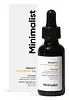
This brightening serum is formulated around Centella Asiatica Leaf Water and 3-O-Ethyl Ascorbic Acid to brighten dull-looking skin and fade the look of dark spots.
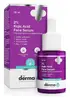
This brightening serum is formulated around Kojic Acid and Niacinamide to fade the look of dark spots and brighten dull-looking skin.

What's inside
What's inside
 Key Ingredients
Benefits
Ingredients Side-by-side
Centella Asiatica Leaf Water
Skin Conditioning


3-O-Ethyl Ascorbic Acid
Skin Conditioning




Ethoxydiglycol
HumectantDimethyl Isosorbide
SolventGluconolactone
Skin Conditioning



Glycerin
Humectant
Sodium Gluconate
Skin ConditioningAcetyl Glucosamine
Skin Conditioning
Sodium Hyaluronate
Humectant
Pullulan
Hydroxyethylcellulose
Emulsion StabilisingXanthan Gum
EmulsifyingSclerotium Gum
Emulsion StabilisingPhenoxyethanol
Preservative
Ethylhexylglycerin
Skin ConditioningLecithin
Emollient
Lactic Acid
Buffering



Citric Acid
Buffering
Centella Asiatica Leaf Water, 3-O-Ethyl Ascorbic Acid, Ethoxydiglycol, Dimethyl Isosorbide, Gluconolactone, Glycerin, Sodium Gluconate, Acetyl Glucosamine, Sodium Hyaluronate, Pullulan, Hydroxyethylcellulose, Xanthan Gum, Sclerotium Gum, Phenoxyethanol, Ethylhexylglycerin, Lecithin, Lactic Acid, Citric Acid
Water
Skin ConditioningPropanediol
Solvent
Ethoxydiglycol
HumectantKojic Acid
Antioxidant

Niacinamide
Smoothing
Dimethyl Isosorbide
SolventPentylene Glycol
Skin Conditioning
Glycerin
Humectant
Alpha-Arbutin
Antioxidant
Phenoxyethanol
Preservative
Ethylhexylglycerin
Skin ConditioningPanthenol
Skin Conditioning
Sclerotium Gum
Emulsion StabilisingSodium Metabisulfite
Antioxidant
Trisodium Ethylenediamine Disuccinate
Sodium Hyaluronate
Humectant
Proline
Skin Conditioning
Hydroxyproline
Skin ConditioningTris(Tetramethylhydroxypiperidinol) Citrate
UV AbsorberEpigallocatechin Gallatyl Glucoside
Antioxidant
Hydroxypropylcellulose
EmulsifyingHydroxypropyl Methylcellulose
Emulsion StabilisingCaprylyl Glycol
Emollient
Disodium EDTA
CI 19140
Cosmetic ColorantSilica
Abrasive
Astragalus Gummifer Gum
Emulsion StabilisingCitric Acid
Buffering
Water, Propanediol, Ethoxydiglycol, Kojic Acid, Niacinamide, Dimethyl Isosorbide, Pentylene Glycol, Glycerin, Alpha-Arbutin, Phenoxyethanol, Ethylhexylglycerin, Panthenol, Sclerotium Gum, Sodium Metabisulfite, Trisodium Ethylenediamine Disuccinate, Sodium Hyaluronate, Proline, Hydroxyproline, Tris(Tetramethylhydroxypiperidinol) Citrate, Epigallocatechin Gallatyl Glucoside, Hydroxypropylcellulose, Hydroxypropyl Methylcellulose, Caprylyl Glycol, Disodium EDTA, CI 19140, Silica, Astragalus Gummifer Gum, Citric Acid
Reviews
Ingredients Explained
These ingredients are found in both products.
Ingredients higher up in an ingredient list are typically present in a larger amount.
Citric Acid is an alpha hydroxy acid (AHA) naturally found in citrus fruits like oranges, lemons, and limes.
Like other AHAs, citric acid can exfoliate skin by breaking down the bonds that hold dead skin cells together. This helps reveal smoother and brighter skin underneath.
However, this exfoliating effect only happens at high concentrations (20%) which can be hard to find in cosmetic products.
Due to this, citric acid is usually included in small amounts as a pH adjuster. This helps keep products slightly more acidic and compatible with skin's natural pH.
In skincare formulas, citric acid can:
While it can provide some skin benefits, research shows lactic acid and glycolic acid are generally more effective and less irritating exfoliants.
Most citric acid used in skincare today is made by fermenting sugars (usually from molasses). This synthetic version is identical to the natural citrus form but easier to stabilize and use in formulations.
Rosacea skin has a lower threshold for acids generally, with 62.5% of rosacea subjects in one study reacting to lactic acid in a sting test. This is why we mark citric acid as a potential rosacea trigger.
However, this ingredient shows up as a pH adjuster or chelator at roughly 0.1-1% in many products. These low levels are unlikely to be an issue for rosacea skin and becomes a potential trigger at exfoliating concentrations (20%). Because everybody's skin is unique, we recommend a patch test if you are unsure.
Learn more about Citric AcidDimethyl Isosorbide (often shortened to DMI) is a sugar-derived solvent made from sorbitol. It's used to dissolve tricky ingredients and help them mix smoothly into a formula.
Many actives sit as gritty crystals when undissolved, so DMI swoops in to full dissolve them. This helps improve texture, stability, and how evenly an active is distributed.
It does have a penetration-enhancing reputation that is a bit more nuanced than marketing suggests; a cell study on human skin found that 10% DMI didn't significantly boost the permeation of Hydroquinone, Salicylic Acid, or Octadecenedioic Acid compared to controls (though it did improve their solubility in the formula itself).
Typical usage concentrations usually range from 1-10% depending on the formula's needs; this ingredient is also well tolerated at these levels.
Learn more about Dimethyl IsosorbideEthoxydiglycol (aka Diethylene Glycol Monoethyl Ether) is one of the cosmetic world's quiet problem solvers.
In a formula, it is a solvent that dissolves tricky ingredients that don't want to mix in and helps spread ingredients evenly across your skin without leaving a greasy or sticky feeling
This makes it great for hard-to-dissolve actives like vitamin C, benzoyl peroxide, and self-tanner DHA.
It also has mild humectant and penetration enhancer abilities so it can help some actives absorb a little deeper.
The penetration boost is backed by lab research: studies using human skin samples found it improved how well an active dissolves into the upper layer of skin rather than tearing down your skin barrier. Reviews of its mechanism also describe it interacting gently with the lipids and water in your outermost layer of skin.
Just know this penetration-enhancing effect is not universal. It helps a lot in some formulas and did very little in others (so the benefit really depends on the specific product).
Safety-wise, the evidence is reassuring. The Cosmetic Ingredient Review Expert Panel reviewed it and concluded it's safe for use in cosmetics and recognized it as non-irritating, non-sensitizing, and non-comedogenic in skincare.
Typical leave-on skincare usage lands around 1-10%. The EU has sets caps of 2.6% in non-spray products, 10% in rinse-offs, 7% in oxidative hair dye, and 5% in non-oxidative hair dye.
Learn more about EthoxydiglycolEthylhexylglycerin is created from glycerin. It is a multitasker ingredient that:
The CIR Expert Panel found minimal skin absorption or sensitization of any kind in a safety assessment. Though this ingredient is considered well-tolerated, a small number of cases of allergic dermatitis have been published since 2002. Just be sure to patch test if you are unsure.
Industry-reported use ranges from 8% in rinse-off products and 2% in leave-on formulations.
Learn more about EthylhexylglycerinGlycerin (or glycerol) is a compound naturally found in your skin. It's a powerhouse humectant that pulls water into the stratum corneum.
Topically, glycerin does several things at once:
Your skin makes glycerin on its own (mostly from sebaceous oil breakdown) and shuttles it to your outermost layer of skin, or your epidermis, via aquaporin-3.
Aquaporin-3 is a transporter that is essential for normal skin hydration, elasticity, and repair. Interestingly, mice lacking in AQP3 have dry and less elastic skin that can be fully corrected with glycerin.
This ingredient is non-irritating, plays well with almost every ingredient, and works across all skin types. Typical use is anywhere between 3-10% but can go up to 79% in some leave-on products.
Just know very high concentrations (>40%) can feel tacky in low humidity.
Glycerin is the name for this ingredient in American English. British English uses Glycerol/Glycerine.
Learn more about GlycerinPhenoxyethanol is one of the most widely used preservatives in skincare (and for good reason!).
It has a large spectrum of antimicrobial activity and especially effective bacteria, yeast, and mold while only having a weak effect on your skin's natural microbiome.
On a cellular level, it disrupts the cell membranes of microbes by poking holes that make the cell leak. This shuts down the chemical reactions the microbe needs to make energy so it can no longer survive.
Another perk of this ingredient is that it stays functional across a wide pH range (3-10).
You'll often see it paired with boosters like Ethylhexylglycerin; one study showed that a 1:9 ratio of Ethylhexylglycerin to Phenoxyethanol damages bacterial membranes as effectively as doubling the Phenoxyethanol concentration on its own.
Typical use concentrations range from 0.3-1% depending on the formula, and this ingredient is capped at 1% int the EU.
Safety-wise, the fear mongering does not hold up to the evidence. The EU's Scientific Committee on Consumer Safety and FDA consider it safe as a preservative at up to 1%, including for children of all ages.
Adverse systemic effects only showed up in animal studies at exposures roughly 200x higher than what people get from cosmetics. And despite its very widespread use, this ingredient is a rare sensitizer and allergic reactions are uncommon.
Learn more about PhenoxyethanolSclerotium Gum is a natural sugar-based fiber made by fermenting a fungus called Sclerotium rolfsii. It's often used as the plant-friendly alternative for synthetic thickeners like carbomer.
In skincare, it works as a thickener, gel former, and stabilizer that keeps heavy ingredients suspended so a product does not separate.
It is non-ionic and forms a triple helix in solution. This is just a fancy way of saying it builds a smooth, cushiony, and non-sticky gel that feels silkier than many other gums.
Another perk of this ingredient is that it is very sturdy and holds up across a wide pH range (~2-11). It's also good at resisting heat and hydrolysis.
Since it holds water at the skin surface, it can provide some light hydration as well.
Typical use levels are around 0.25-2%; formulators usually use 0.2-0.5% to thicken lotions and up to 2% for a firmer gel base.
This ingredient has been found safe in cosmetics with no meaningful evidence of skin sensitization.
Learn more about Sclerotium GumSodium Hyaluronate is the salt form of hyaluronic acid. It is a long sugar chain that is naturally found in your skin, joints, and connective tissue that maintains hydration and elasticity.
In skincare, it works as a humectant. It pulls water from the environment and deeper layers of skin and binds it to the surface.
Interestingly, the size of the molecule affects its behavior:
Some clinical evidence links low molecular weight versions to improved wrinkle depth, elasticity, anti-inflammatory effects, and barrier repair.
Many serums use a blend of both weights so you can get surface hydration plus longer-lasting and deeper effects.
You'll typically see concentrations between 0.1-2% for this ingredient.
Learn more about Sodium Hyaluronate

