LUSH Beauty Sleep Versus LUSH Don't Look At Me

What's inside
What's inside
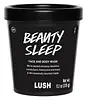 Key Ingredients
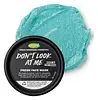
Benefits
Concerns
Ingredients Side-by-side
Valeriana Officinalis Root Extract
Skin ConditioningKaolin
Abrasive



Verbascum Thapsus Leaf Extract
Skin ConditioningGlycerin
Humectant


Talc
Abrasive
Phaseolus Angularis Seed
Abrasive
Citrus Aurantium Dulcis Fruit Water
MaskingCocos Nucifera Oil
Masking







Hectorite
AbsorbentCitrus Aurantium Amara Flower Extract
RefreshingCitrus Aurantium Dulcis Oil
Masking
Commiphora Myrrha Resin
MaskingLavandula Angustifolia Oil
Masking


Styrax Benzoin Resin Extract
Masking
Dipteryx Odorata Seed Extract
MaskingCananga Odorata Flower Oil
Masking
Simmondsia Chinensis Seed Oil
Emollient
Olea Europaea Fruit Oil
Masking
Illipe Butter
Skin ConditioningPersea Gratissima Oil
Skin Conditioning
Oenothera Biennis Oil
Emollient

Oenothera Biennis Seed
Abrasive
Triticum Vulgare Germ Oil
Emollient
Citrus Limon Juice
Skin Conditioning
Cucumis Sativus Juice
EmollientCitrus Aurantium Dulcis Juice
Skin ConditioningVitis Vinifera Seed Oil
Emollient
Water
Skin ConditioningTitanium Dioxide
Cosmetic Colorant

Synthetic Fluorphlogopite
Tin Oxide
Abrasive
Stearic Acid
Cleansing
Triethanolamine
BufferingCetearyl Alcohol
Emollient
Benzyl Benzoate
Antimicrobial
Benzyl Cinnamate
Perfuming
Cinnamal
Perfuming
Coumarin
Perfuming
Farnesol
Perfuming
Geraniol
Perfuming
Hydroxycitronellal
Perfuming
Limonene
Perfuming
Linalool
Perfuming
Parfum
Masking
CI 17200
Cosmetic ColorantCI 42090
Cosmetic ColorantValeriana Officinalis Root Extract, Kaolin, Verbascum Thapsus Leaf Extract, Glycerin, Talc, Phaseolus Angularis Seed, Citrus Aurantium Dulcis Fruit Water, Cocos Nucifera Oil, Hectorite, Citrus Aurantium Amara Flower Extract, Citrus Aurantium Dulcis Oil, Commiphora Myrrha Resin, Lavandula Angustifolia Oil, Styrax Benzoin Resin Extract, Dipteryx Odorata Seed Extract, Cananga Odorata Flower Oil, Simmondsia Chinensis Seed Oil, Olea Europaea Fruit Oil, Illipe Butter, Persea Gratissima Oil, Oenothera Biennis Oil, Oenothera Biennis Seed, Triticum Vulgare Germ Oil, Citrus Limon Juice, Cucumis Sativus Juice, Citrus Aurantium Dulcis Juice, Vitis Vinifera Seed Oil, Water, Titanium Dioxide, Synthetic Fluorphlogopite, Tin Oxide, Stearic Acid, Triethanolamine, Cetearyl Alcohol, Benzyl Benzoate, Benzyl Cinnamate, Cinnamal, Coumarin, Farnesol, Geraniol, Hydroxycitronellal, Limonene, Linalool, Parfum, CI 17200, CI 42090

Alternatives
Ingredients Explained
These ingredients are found in both products.
Ingredients higher up in an ingredient list are typically present in a larger amount.
Citrus Aurantium Dulcis Oil comes from the bitter orange, an orange native to Southeast Asia.
This orange is commonly used in cosmetics and food. It is a common ingredient for marmalade.
Citrus peels are often made up of mainly limonene, a fragrance with a citrus scent. They also contain flavonoids, which have anti-inflammatory properties.
Learn more about Citrus Aurantium Dulcis OilCitrus Limon juice is also lemon juice.
While lemon juice contains antioxidants and vitamins, it can sensitize the skin.
The acidity of lemons may work as an astringent for acne. This can cause sensitivity. Lemon juice can also increase photosensitivity, or sensitivity to the sun.
Learn more about Citrus Limon JuiceFarnesol is a compound extracted from essential oils such as lemongrass, rose, and more. It is used as a fragrance in products to help boost floral scents.
Farnesol is a known EU allergen and causes contact dermatitis.
This ingredient is hydrophobic, meaning it is not soluble in water.
Learn more about FarnesolGeraniol is used to add fragrance/parfum to a product. It is the main component of citronellol. It is a monoterpenoid and an alcohol.
Monoterpenes are naturally found in many parts of different plants.
Geraniol can be found in many essential oils including Rose Oil and Citronella Oil. The scent of Geraniol is often described as "rose-like". Many foods also contain Geraniol for fruit flavoring.
Geraniol can irritate the skin when exposed to air. However, irritation depends on the ability of geraniol to penetrate into the skin. In general, geraniol is not able to penetrate skin easily.
Geraniol is colorless and has low water-solubility. However, it is soluble in common organic solvents.
Like citronellol, it is a natural insect repellent.
2,6-Octadien-1-ol, 3,7-dimethyl-, (2E)-
Learn more about GeraniolGlycerin (or glycerol) is a compound naturally found in your skin. It's a powerhouse humectant that pulls water into the stratum corneum.
Topically, glycerin does several things at once:
Your skin makes glycerin on its own (mostly from sebaceous oil breakdown) and shuttles it to your outermost layer of skin, or your epidermis, via aquaporin-3.
Aquaporin-3 is a transporter that is essential for normal skin hydration, elasticity, and repair. Interestingly, mice lacking in AQP3 have dry and less elastic skin that can be fully corrected with glycerin.
This ingredient is non-irritating, plays well with almost every ingredient, and works across all skin types. Typical use is anywhere between 3-10% but can go up to 79% in some leave-on products.
Just know very high concentrations (>40%) can feel tacky in low humidity.
Glycerin is the name for this ingredient in American English. British English uses Glycerol/Glycerine.
Learn more about GlycerinKaolin is a clay. It is used for oil control and to help minimize pores. Like other clays, kaolin has the ability to absorb excess sebum or oil. This can help clean out pores and mattify the skin.
Some types of kaolin may have exfoliating properties. When water is added to kaolin, it becomes a paste with small abrasive particles.
Most kaolin is a white color, but may be pink/orange/red depending on where it comes from.
The name 'kaolin' comes from a Chinese village named 'Gaoling'. Kaolin clay comes from rocks rich in kaolinite. Kaolinite, the mineral, has a silicate layered structure. Kaolinite is formed from chemical weathering of aluminum siilicate minerals.
Besides skincare, kaolin is commonly used to make glossy paper, in ceramics, toothpaste, and as medicine to soothe stomach issues.
Learn more about KaolinLimonene is the compound that gives citrus peel its smell.
In skincare, it shows up as a standalone fragrance ingredient or as a natural compound of citrus and other essential oils.
You'll typically see this ingredient used in very small amounts; anything above 0.001% in a leave-on product or 0.01% in a rinse-off has to be named on the label in the EU. The citrus oils that carry it sit around 0.5-1% in a finished formula.
Fresh limonene is a weak allergen; the real issue is that it slowly reacts with air and then breaks down from oxidation to create hydroperoxides (which are strong sensitizers). This is why suppliers are required to keep the peroxide value below 20 mmol.
Positive reactions in people being investigated for eczema vary:
It's worth skipping if you have a known fragrance allergy or a compromised barrier, but the risk is low for most people.
Older or long-opened products are also more likely to bother you than fresh ones due to oxidation.
Learn more about LimoneneLinalool is a small, naturally occurring scent molecule found in plants like lavender, coriander, bergamot, and more.
It is one of the two most-used fragrance ingredients in cosmetics and added purely for smell. Since it's not used for a skin benefit, there's no "effective dose". Concentration depends on the fragrance load of the product.
The EU requires it to be named on the label above 0.001% in leave-on and 0.01% in rinse-off products.
Fresh linalool is a weak sensitizer but air exposure turns some of it into hydroperoxides, which are strong sensitizers. Those oxidation products are the actual allergy concern.
Patch-test clinics see positive reactions to linalool hydroperoxides in about 4% to 12% of dermatitis patients depending on country and test concentration.
Resassuringly, one analytical study found hydroperoxide levels in real fragranced products to be orders of magnitude below what induced sensitization in animal studies with no evidence of oxidation building up during normal storage.
The practical takeaway is that linalool is fine for most people but worth avoiding if you have a confirmed fragrance contact allergy or a badly compromised barrier.
Products stored a long time after opening are also the high-risk scenario since that is when oxidation happens.
The scent of linalool is described as floral, spicy tropical, and citrus-like.
Learn more about LinaloolParfum is a catch-all term for an ingredient or more that is used to give a scent to products.
Also called "fragrance", this ingredient can be a blend of hundreds of chemicals or plant oils. This means every product with "fragrance" or "parfum" in the ingredients list is a different mixture.
For instance, Habanolide is a proprietary trade name for a specific aroma chemical. When used as a fragrance ingredient in cosmetics, most aroma chemicals fall under the broad labeling category of “FRAGRANCE” or “PARFUM” according to EU and US regulations.
The term 'parfum' or 'fragrance' is not regulated in many countries. In many cases, it is up to the brand to define this term.
For instance, many brands choose to label themselves as "fragrance-free" because they are not using synthetic fragrances. However, their products may still contain ingredients such as essential oils that are considered a fragrance by INCI standards.
One example is Calendula flower extract. Calendula is an essential oil that still imparts a scent or 'fragrance'.
Depending on the blend, the ingredients in the mixture can cause allergies and sensitivities on the skin. Some ingredients that are known EU allergens include linalool and citronellol.
Parfum can also be used to mask or cover an unpleasant scent.
The bottom line is: not all fragrances/parfum/ingredients are created equally. If you are worried about fragrances, we recommend taking a closer look at an ingredient. And of course, we always recommend speaking with a professional.
Learn more about ParfumWater. It's the most common cosmetic ingredient of all. You'll usually see it at the top of ingredient lists, meaning that it makes up the largest part of the product.
So why is it so popular? Water most often acts as a solvent - this means that it helps dissolve other ingredients into the formulation.
You'll also recognize water as that liquid we all need to stay alive. If you see this, drink a glass of water. Remember to stay hydrated!
Learn more about Water

