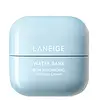
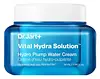
Laneige Water Bank Blue Hyaluronic Moisture Cream Versus Dr. Jart+ Vital Hydra Solution Hydro Plump Water Cream
This moisturizer is formulated around Limnanthes Alba Seed Oil and Hydrolyzed Hyaluronic Acid to hydrate skin.
This barrier-repair moisturizer is formulated around Niacinamide and Saccharide Isomerate to strengthen the skin barrier and hydrate skin.

What's inside
What's inside
 Key Ingredients
Benefits
Concerns
Ingredients Side-by-side
Water
Skin ConditioningPropanediol
Solvent

Glycerin
Humectant
Limnanthes Alba Seed Oil
Skin Conditioning


Betaine
Humectant
Behenyl Alcohol
Emollient
1,2-Hexanediol
Skin Conditioning
Carbomer
Emulsion StabilisingTromethamine
BufferingJojoba Esters
Emollient
Arachidyl Alcohol
Emollient
Glyceryl Caprylate
EmollientButylene Glycol
Humectant
Ethylhexylglycerin
Skin ConditioningDisodium EDTA
ChelatingArachidyl Glucoside
EmulsifyingMentha Arvensis Leaf Extract
MaskingParfum
Masking



Hydrolyzed Hyaluronic Acid
Humectant

Malachite Extract
Antioxidant
Aureobasidium Pullulans Ferment
Skin ConditioningTocopherol
Antioxidant



Undaria Pinnatifida Extract
Skin ConditioningWater, Propanediol, Glycerin, Limnanthes Alba Seed Oil, Betaine, Behenyl Alcohol, 1,2-Hexanediol, Carbomer, Tromethamine, Jojoba Esters, Arachidyl Alcohol, Glyceryl Caprylate, Butylene Glycol, Ethylhexylglycerin, Disodium EDTA, Arachidyl Glucoside, Mentha Arvensis Leaf Extract, Parfum, Hydrolyzed Hyaluronic Acid, Malachite Extract, Aureobasidium Pullulans Ferment, Tocopherol, Undaria Pinnatifida Extract
Water
Skin ConditioningPropanediol
Solvent
Phenyl Trimethicone
Skin Conditioning
Betaine
Humectant
Glycerin
Humectant
Niacinamide
Smoothing




Glyceryl Glucoside
Humectant
Saccharide Isomerate
Humectant
Vinyldimethicone
Caprylyl Glycol
Emollient
Sodium Hyaluronate
Humectant
Dimethiconol
Emollient
Ethylhexylglycerin
Skin ConditioningAdenosine
Skin Conditioning
Beta-Glucan
Skin Conditioning
Polymethylsilsesquioxane
Ammonium Acryloyldimethyltaurate/Vp Copolymer
1,2-Hexanediol
Skin Conditioning
Ammonium Acryloyldimethyltaurate/Beheneth-25 Methacrylate Crosspolymer
Emulsion StabilisingHydroxyethyl Acrylate/Sodium Acryloyldimethyl Taurate Copolymer
Emulsion StabilisingPentylene Glycol
Skin Conditioning
Sorbitan Isostearate
Emulsifying
Citric Acid
Buffering
Parfum
Masking
Sodium Citrate
BufferingWater, Propanediol, Phenyl Trimethicone, Betaine, Glycerin, Niacinamide, Glyceryl Glucoside, Saccharide Isomerate, Vinyldimethicone, Caprylyl Glycol, Sodium Hyaluronate, Dimethiconol, Ethylhexylglycerin, Adenosine, Beta-Glucan, Polymethylsilsesquioxane, Ammonium Acryloyldimethyltaurate/Vp Copolymer, 1,2-Hexanediol, Ammonium Acryloyldimethyltaurate/Beheneth-25 Methacrylate Crosspolymer, Hydroxyethyl Acrylate/Sodium Acryloyldimethyl Taurate Copolymer, Pentylene Glycol, Sorbitan Isostearate, Citric Acid, Parfum, Sodium Citrate
Reviews
Ingredients Explained
These ingredients are found in both products.
Ingredients higher up in an ingredient list are typically present in a larger amount.
1,2-Hexanediol is a synthetic liquid and another multi-functional powerhouse.
It is a:
- Humectant, drawing moisture into the skin
- Emollient, helping to soften skin
- Solvent, dispersing and stabilizing formulas
- Preservative booster, enhancing the antimicrobial activity of other preservatives
Betaine is a humectant. Like hyaluronic acid, it helps attract and retain moisture in the skin. It’s known for being gentle and for helping the skin maintain balanced hydration.
Betaine is mainly used to improve hydration and support calmer skin. It helps skin cells regulate water balance because it functions as an osmolyte.
Some studies suggest betaine may support making skin tone more even.
Fun fact: Betaine naturally exists in the skin and the body. In cosmetic products, it can be either plant-derived (most commonly from sugar beets) or synthetically produced for consistency and stability.
Betaine is also known as trimethylglycine.
Learn more about BetaineEthylhexylglycerin is created from glycerin. It is a multitasker ingredient that:
The CIR Expert Panel found minimal skin absorption or sensitization of any kind in a safety assessment. Though this ingredient is considered well-tolerated, a small number of cases of allergic dermatitis have been published since 2002. Just be sure to patch test if you are unsure.
Industry-reported use ranges from 8% in rinse-off products and 2% in leave-on formulations.
Learn more about EthylhexylglycerinGlycerin (or glycerol) is a compound naturally found in your skin. It's a powerhouse humectant that pulls water into the stratum corneum.
Topically, glycerin does several things at once:
Your skin makes glycerin on its own (mostly from sebaceous oil breakdown) and shuttles it to your outermost layer of skin, or your epidermis, via aquaporin-3.
Aquaporin-3 is a transporter that is essential for normal skin hydration, elasticity, and repair. Interestingly, mice lacking in AQP3 have dry and less elastic skin that can be fully corrected with glycerin.
This ingredient is non-irritating, plays well with almost every ingredient, and works across all skin types. Typical use is anywhere between 3-10% but can go up to 79% in some leave-on products.
Just know very high concentrations (>40%) can feel tacky in low humidity.
Glycerin is the name for this ingredient in American English. British English uses Glycerol/Glycerine.
Learn more about GlycerinParfum is a catch-all term for an ingredient or more that is used to give a scent to products.
Also called "fragrance", this ingredient can be a blend of hundreds of chemicals or plant oils. This means every product with "fragrance" or "parfum" in the ingredients list is a different mixture.
For instance, Habanolide is a proprietary trade name for a specific aroma chemical. When used as a fragrance ingredient in cosmetics, most aroma chemicals fall under the broad labeling category of “FRAGRANCE” or “PARFUM” according to EU and US regulations.
The term 'parfum' or 'fragrance' is not regulated in many countries. In many cases, it is up to the brand to define this term.
For instance, many brands choose to label themselves as "fragrance-free" because they are not using synthetic fragrances. However, their products may still contain ingredients such as essential oils that are considered a fragrance by INCI standards.
One example is Calendula flower extract. Calendula is an essential oil that still imparts a scent or 'fragrance'.
Depending on the blend, the ingredients in the mixture can cause allergies and sensitivities on the skin. Some ingredients that are known EU allergens include linalool and citronellol.
Parfum can also be used to mask or cover an unpleasant scent.
The bottom line is: not all fragrances/parfum/ingredients are created equally. If you are worried about fragrances, we recommend taking a closer look at an ingredient. And of course, we always recommend speaking with a professional.
Learn more about ParfumPropanediol is an all-star ingredient. It softens, hydrates, and smooths the skin.
It’s often used to:
Propanediol is not likely to cause sensitivity and considered safe to use. It is derived from corn or petroleum with a clear color and no scent.
Learn more about PropanediolWater. It's the most common cosmetic ingredient of all. You'll usually see it at the top of ingredient lists, meaning that it makes up the largest part of the product.
So why is it so popular? Water most often acts as a solvent - this means that it helps dissolve other ingredients into the formulation.
You'll also recognize water as that liquid we all need to stay alive. If you see this, drink a glass of water. Remember to stay hydrated!
Learn more about Water

