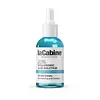
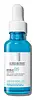
laCabine 20% Hyaluronic Acid Solution Serum Cream Versus La Roche-Posay Hyalu B5 Face Serum with Hyaluronic Acid
This hydrating serum is formulated around Squalane and Sodium Hyaluronate to hydrate skin and strengthen the skin barrier.
This hydrating serum is formulated around Panthenol and Madecassoside to hydrate skin and strengthen the skin barrier.


What's inside
What's inside
 Key Ingredients
Benefits
Concerns
Ingredients Side-by-side
Water
Skin ConditioningPropanediol
Solvent

Oryza Sativa Starch
AbsorbentGlyceryl Oleate Citrate
Emulsifying

Squalane
Emollient
Sodium Hyaluronate
Humectant

Allantoin
Skin Conditioning

Caprylyl Glycol
Emollient
Butyrospermum Parkii Butter
Skin Conditioning


Sodium Gluconate
ChelatingSodium Polyacryloyldimethyl Taurate
Emulsion StabilisingCaprylic/Capric Triglyceride
Masking
1,2-Hexanediol
Skin Conditioning
Parfum
Masking


Phenethyl Alcohol
MaskingWater
Skin ConditioningGlycerin
Humectant
Alcohol Denat.
Antimicrobial

Propylene Glycol
Humectant
Panthenol
Skin Conditioning
Pentylene Glycol
Skin Conditioning
Dimethicone
Emollient
PEG-6 Caprylic/Capric Glycerides
EmulsifyingPPG-6-Decyltetradeceth-30
EmulsifyingGlyceryl Isostearate
Emollient
Madecassoside
Antioxidant

Sodium Hyaluronate
Humectant
Ammonium Polyacryloyldimethyl Taurate
Emulsion StabilisingDisodium EDTA
ChelatingHydrolyzed Hyaluronic Acid
Humectant
Caprylyl Glycol
Emollient
Citric Acid
Buffering

Xanthan Gum
EmulsifyingButylene Glycol
Humectant
Tocopherol
Antioxidant

Phenoxyethanol
Preservative
Parfum
Masking
Water, Glycerin, Alcohol Denat., Propylene Glycol, Panthenol, Pentylene Glycol, Dimethicone, PEG-6 Caprylic/Capric Glycerides, PPG-6-Decyltetradeceth-30, Glyceryl Isostearate, Madecassoside, Sodium Hyaluronate, Ammonium Polyacryloyldimethyl Taurate, Disodium EDTA, Hydrolyzed Hyaluronic Acid, Caprylyl Glycol, Citric Acid, Xanthan Gum, Butylene Glycol, Tocopherol, Phenoxyethanol, Parfum
Reviews
Ingredients Explained
These ingredients are found in both products.
Ingredients higher up in an ingredient list are typically present in a larger amount.
Caprylyl Glycol is a humectant, skin conditioner, emollient, and preservative booster derived from either caprylic acid or synthetically created.
Typical use levels vary from 0.3-1% as a preservative booster and go up to 2% to condition skin.
Because it is not a free-fatty acid, this ingredient is fungal acne safe (there's nothing for Malassezia to feed on).
Learn more about Caprylyl GlycolParfum is a catch-all term for an ingredient or more that is used to give a scent to products.
Also called "fragrance", this ingredient can be a blend of hundreds of chemicals or plant oils. This means every product with "fragrance" or "parfum" in the ingredients list is a different mixture.
For instance, Habanolide is a proprietary trade name for a specific aroma chemical. When used as a fragrance ingredient in cosmetics, most aroma chemicals fall under the broad labeling category of “FRAGRANCE” or “PARFUM” according to EU and US regulations.
The term 'parfum' or 'fragrance' is not regulated in many countries. In many cases, it is up to the brand to define this term.
For instance, many brands choose to label themselves as "fragrance-free" because they are not using synthetic fragrances. However, their products may still contain ingredients such as essential oils that are considered a fragrance by INCI standards.
One example is Calendula flower extract. Calendula is an essential oil that still imparts a scent or 'fragrance'.
Depending on the blend, the ingredients in the mixture can cause allergies and sensitivities on the skin. Some ingredients that are known EU allergens include linalool and citronellol.
Parfum can also be used to mask or cover an unpleasant scent.
The bottom line is: not all fragrances/parfum/ingredients are created equally. If you are worried about fragrances, we recommend taking a closer look at an ingredient. And of course, we always recommend speaking with a professional.
Learn more about ParfumSodium Hyaluronate is the salt form of hyaluronic acid. It is a long sugar chain that is naturally found in your skin, joints, and connective tissue that maintains hydration and elasticity.
In skincare, it works as a humectant. It pulls water from the environment and deeper layers of skin and binds it to the surface.
Interestingly, the size of the molecule affects its behavior:
Some clinical evidence links low molecular weight versions to improved wrinkle depth, elasticity, anti-inflammatory effects, and barrier repair.
Many serums use a blend of both weights so you can get surface hydration plus longer-lasting and deeper effects.
You'll typically see concentrations between 0.1-2% for this ingredient.
Learn more about Sodium HyaluronateWater. It's the most common cosmetic ingredient of all. You'll usually see it at the top of ingredient lists, meaning that it makes up the largest part of the product.
So why is it so popular? Water most often acts as a solvent - this means that it helps dissolve other ingredients into the formulation.
You'll also recognize water as that liquid we all need to stay alive. If you see this, drink a glass of water. Remember to stay hydrated!
Learn more about Water

