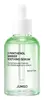
This barrier-repair serum is formulated around Niacinamide and Salicylic Acid to strengthen the skin barrier and calm redness.
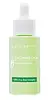
This calming serum is formulated around Niacinamide and Centella Asiatica Extract to calm redness and strengthen the skin barrier.


What's inside
What's inside
 Key Ingredients
Benefits
Concerns
No concerns
Ingredients Side-by-side
Water
Skin ConditioningButylene Glycol
Humectant

1,2-Hexanediol
Skin Conditioning
Niacinamide
Smoothing










Ethoxydiglycol
HumectantZinc PCA
Humectant
Glycyrrhizic Acid
HumectantSalicylic Acid
Masking





Panthenol
Skin Conditioning
Hydroxyethylcellulose
Emulsion StabilisingXanthan Gum
EmulsifyingC12-13 Alketh-9
EmulsifyingOctyldodecanol
Emollient
Asiaticoside
Antioxidant
Hydrogenated Lecithin
Emulsifying
Asiatic Acid
Skin Conditioning
Madecassic Acid
Skin Conditioning
Glycolipids
Skin ConditioningSodium Hyaluronate
Humectant
Hydrolyzed Sodium Hyaluronate
Skin Conditioning
Hyaluronic Acid
Humectant
Glycerin
Humectant
Hydrolyzed Hyaluronic Acid
Humectant
Hydrolyzed Glycosaminoglycans
HumectantEucommia Ulmoides Bark Extract
Antioxidant
Hydroxypropyltrimonium Hyaluronate
Sodium Hyaluronate Crosspolymer
Humectant
Sodium Acetylated Hyaluronate
Humectant
Dimethylsilanol Hyaluronate
Humectant
Centella Asiatica Leaf Extract
Skin Conditioning
Potassium Hyaluronate
Skin ConditioningWater, Butylene Glycol, 1,2-Hexanediol, Niacinamide, Ethoxydiglycol, Zinc PCA, Glycyrrhizic Acid, Salicylic Acid, Panthenol, Hydroxyethylcellulose, Xanthan Gum, C12-13 Alketh-9, Octyldodecanol, Asiaticoside, Hydrogenated Lecithin, Asiatic Acid, Madecassic Acid, Glycolipids, Sodium Hyaluronate, Hydrolyzed Sodium Hyaluronate, Hyaluronic Acid, Glycerin, Hydrolyzed Hyaluronic Acid, Hydrolyzed Glycosaminoglycans, Eucommia Ulmoides Bark Extract, Hydroxypropyltrimonium Hyaluronate, Sodium Hyaluronate Crosspolymer, Sodium Acetylated Hyaluronate, Dimethylsilanol Hyaluronate, Centella Asiatica Leaf Extract, Potassium Hyaluronate
Water
Skin ConditioningButylene Glycol
Humectant
Dipropylene Glycol
HumectantGlycerin
Humectant
Niacinamide
Smoothing
1,2-Hexanediol
Skin Conditioning
Centella Asiatica Extract
Cleansing
Acrylates/C10-30 Alkyl Acrylate Crosspolymer
Emulsion StabilisingEthylhexylglycerin
Skin ConditioningTromethamine
BufferingAllantoin
Skin Conditioning
Xanthan Gum
EmulsifyingDipotassium Glycyrrhizate
Humectant
Zinc PCA
Humectant
Panthenol
Skin Conditioning
Octyldodeceth-16
EmulsifyingHydroxypropyltrimonium Hyaluronate
Hydrolyzed Hyaluronic Acid
Humectant
Adenosine
Skin Conditioning
Sodium Hyaluronate
Humectant
Disodium EDTA
ChelatingTocopherol
Antioxidant
Hydrolyzed Sodium Hyaluronate
Skin Conditioning
Madecassic Acid
Skin Conditioning
Asiaticoside
Antioxidant
Asiatic Acid
Skin Conditioning
Water, Butylene Glycol, Dipropylene Glycol, Glycerin, Niacinamide, 1,2-Hexanediol, Centella Asiatica Extract, Acrylates/C10-30 Alkyl Acrylate Crosspolymer, Ethylhexylglycerin, Tromethamine, Allantoin, Xanthan Gum, Dipotassium Glycyrrhizate, Zinc PCA, Panthenol, Octyldodeceth-16, Hydroxypropyltrimonium Hyaluronate, Hydrolyzed Hyaluronic Acid, Adenosine, Sodium Hyaluronate, Disodium EDTA, Tocopherol, Hydrolyzed Sodium Hyaluronate, Madecassic Acid, Asiaticoside, Asiatic Acid
Reviews
Ingredients Explained
These ingredients are found in both products.
Ingredients higher up in an ingredient list are typically present in a larger amount.
1,2-Hexanediol is a synthetic liquid and another multi-functional powerhouse.
It is a:
- Humectant, drawing moisture into the skin
- Emollient, helping to soften skin
- Solvent, dispersing and stabilizing formulas
- Preservative booster, enhancing the antimicrobial activity of other preservatives
Asiatic Acid is one of the four main actives found in Centella Asiatica. Its headline job is stimulating collagen.
Lab tests on human skin cells show Asiatic Acid tells your skin to make more collagen, the protein that keeps skin firm and bouncy.
It also calms inflammation and acts as an antioxidant so it can help skin heal faster, rebuild itself, and repair a damaged barrier.
And on naming, even though "acid" is in the name, it's nothing like an AHA or BHA exfoliant. It's a gentle firming and soothing ingredient that supports your skin barrier.
Concentration-wise, Asiatic Acid is potent at very low doses and usually shows up as a small fraction of a broader centella extract.
Analyses of centella material put Asiatic Acid reported in the range of 0.2-3% of the extract.
This ingredient is non-sensitizing and guinea pig sensitization testing also found it to be a weak sensitizer. That means the risk of acquiring contact sensitivty is quite low.
Allergic contact dermatitis does exist but is also very rare; documented cases tend to involve prolonged use on broken skin plus co-sensitization to fragrance ingredients.
Learn more about Asiatic AcidAsiaticoside comes from the super popular skin-soothing ingredient, Centella asiatica. It's the reason centella-based products have a strong reputation for repairing and calming skin, along with its sibling compound Madecassoside.
Research from 2016-2025 supports its role in:
You'll usually find this in concentrations between 0.2-5%.
Learn more about AsiaticosideButylene Glycol (or BG) is used within cosmetic products for a few different reasons:
Overall, Butylene Glycol is a safe and well-rounded ingredient that works well with other ingredients.
Though this ingredient works well with most skin types, some people with sensitive skin may experience a reaction such as allergic rashes, closed comedones, or itchiness.
Learn more about Butylene GlycolGlycerin (or glycerol) is a compound naturally found in your skin. It's a powerhouse humectant that pulls water into the stratum corneum.
Topically, glycerin does several things at once:
Your skin makes glycerin on its own (mostly from sebaceous oil breakdown) and shuttles it to your outermost layer of skin, or your epidermis, via aquaporin-3.
Aquaporin-3 is a transporter that is essential for normal skin hydration, elasticity, and repair. Interestingly, mice lacking in AQP3 have dry and less elastic skin that can be fully corrected with glycerin.
This ingredient is non-irritating, plays well with almost every ingredient, and works across all skin types. Typical use is anywhere between 3-10% but can go up to 79% in some leave-on products.
Just know very high concentrations (>40%) can feel tacky in low humidity.
Glycerin is the name for this ingredient in American English. British English uses Glycerol/Glycerine.
Learn more about GlycerinHydrolyzed Hyaluronic Acid is hyaluronic acid (HA) that is broken down into lower molecular weight fragments.
It's a humectant that pulls and holds water in the skin to help with hydration, plumpness, and reduce transepidermal water loss.
Because hydrolyzed hyaluronic acid is smaller in size, it can slip past your outermost layer of skin more easily than full-sized HA.
Most formulations will combine all sizes to get the best of both worlds.
Typical usage levels range from 0.01-1%. Any percentage higher than 2% might become goopy and tacky.
Learn more about Hydrolyzed Hyaluronic AcidThis ingredient is created by putting sodium hyaluronate through hydrolysis.
You might know this as 'mini' or 'ultra low-molecular weight' hyaluronic acid. The small molecule size means it is able to travel deeper in the skin.
According to studies, low molecular-weight hyaluronic acid can:
One study from 2011 found ultra-low weight HA to show pro-inflammatory properties. Another study from 2022 found it to downregulate UV-B induced inflammation.
Hydrolysis is a process of changing a molecule using water or enzymes.
This ingredient is water-soluble.
Learn more about Hydrolyzed Sodium HyaluronateHydroxypropyltrimonium Hyaluronate is a positively charged version of hyaluronic acid.
This small change does a lot in a formula:
Regular hyaluronic acid carries a negative charge and so does the surface of your skin. This means the two repel each other and hyaluronic acid can be washed away easily. The positive charge here does the opposite: it makes the ingredient cling to your skin (also called "substantivity") so it keeps hydrating even in rinse-off products where it lays down a light, moisture-holding film.
The research backs this up too; a 2025 clinical study on a shower gel containing 0.1% positively charged hyaluronic acid increased skin hydration by 6.6% versus the baseline and 11.1% versus the placebo. This was measured 6 hours after 1 minute of contact and rinse, and on volunteers with very dry skin.
The same team's lab work showed it adhered to skin far better than unmodified hyaluronic acid (+107% vs. low molecular weight, +23% versus high molecular weight). They also found it increased two proteins tied to skin hydration, aquaporin-3 by 16% and filaggrin by 35%.
A separate 2024 study reached a similar conclusion and credited the hydrating benefits to its film-forming properties.
Both studies used the ingredient at 0.1% which also matches how much it usually shows up in products (at fractions of a percent).
One honesty note worth keeping in mind: the published research comes from the company that manufactures the ingredient so independent data would strengthen the picture. However, the results are consistent and the mechanism makes sense.
As a Hyaluronic Acid derivative, it has a well-tolerated profile and suits most skin types.
Learn more about Hydroxypropyltrimonium HyaluronateMadecassic Acid is one of the four star actives in Centella Asiatica. In skincare, it earns its keep as a calming and repairing ingredient.
It works through the same core pathways as the rest of the centella family.
First, it turns down inflammation so it helps with things like redness and general upset skin.
Second, it acts as an antioxidant which means it helps protect skin from daily stress and damage.
And third, it nudges the skin to make more collagen and rebuild its support structure.
That combination is why the whole Centella family is known for calming skin, strengthening the barrier, fading redness, and giving anti-aging benefits.
It's worth being honest about the evidence here; a lot of the strongest data is on the full extract or a Madecassoside/Asiaticoside rather than Madecassic Acid alone. Reviewers also note more long-term clinical trials are needed to confirm the full potential.
Concentration-wise, this ingredient is rarely used pure and usually shows up as part of a standardized centella extract where reported content ranges from 0.02-3.06%.
Finished products typically run somewhere in the 0.1-10% range depending on the format.
In real-world tolerance tests, a repeat-insult patch test on an eye lotion with 0.2% Centella extract showed no irritation or allergic contact dermatitis in 54 subjects. And a mascara with 0.5% Madecassoside caused neither irritation nor sensitization in 109 subjects.
Allergy risk is very low, but not zero. Centella and its constituents are classified as weak contact sensitizers and some rare cases of allergic contact dermatitis exist.
Learn more about Madecassic AcidNiacinamide is a multitasking form of vitamin B3 that strengthens the skin barrier, reduces pores and dark spots, regulates oil, and improves signs of aging.
And the best part? It's gentle and well-tolerated by most skin types, including sensitive and reactive skin.
You might have heard of "niacin flush", or the reddening of skin that causes itchiness. Niacinamide has not been found to cause this.
In very rare cases, some individuals may not be able to tolerate niacinamide at all or experience an allergic reaction to it.
If you are experiencing flaking, irritation, and dryness with this ingredient, be sure to double check all your products as this ingredient can be found in all categories of skincare.
When incorporating niacinamide into your routine, look out for concentration amounts. Typically, 5% niacinamide provides benefits such as fading dark spots. However, if you have sensitive skin, it is better to begin with a smaller concentration.
When you apply niacinamide to your skin, your body converts it into nicotinamide adenine dinucleotide (NAD). NAD is an essential coenzyme that is already found in your cells as "fuel" and powers countless biological processes.
In your skin, NAD helps repair cell damage, produce new healthy cells, support collagen production, strengthen the skin barrier, and fight environmental stressors (like UV and pollution).
Our natural NAD levels start to decline with age, leading to slower skin repair, visible aging, and a weaker skin barrier. By providing your skin niacinamide, you're recharging your skin's NAD levels. This leads to stronger, healthier, and younger looking skin.
Another name for vitamin B3 is nicotinamide. This vitamin is water-soluble and our bodies don't store it. We obtain Vitamin B3 from either food or skincare. Meat, fish, wheat, yeast, and leafy greens contain vitamin B3.
The type of niacinamide used in skincare is synthetically created.
Learn more about NiacinamidePanthenol is a common ingredient that helps hydrate and soothe the skin. It is found naturally in our skin and hair.
There are two forms of panthenol: D and L.
D-panthenol is also known as dexpanthenol. Most cosmetics use dexpanthenol or a mixture of D and L-panthenol.
Panthenol is famous due to its ability to go deeper into the skin's layers. Using this ingredient has numerous pros (and no cons):
Like hyaluronic acid, panthenol is a humectant. Humectants are able to bind and hold large amounts of water to keep skin hydrated.
This ingredient works well for wound healing. It works by increasing tissue in the wound and helps close open wounds.
Once oxidized, panthenol converts to pantothenic acid. Panthothenic acid is found in all living cells.
This ingredient is also referred to as pro-vitamin B5.
Learn more about PanthenolSodium Hyaluronate is the salt form of hyaluronic acid. It is a long sugar chain that is naturally found in your skin, joints, and connective tissue that maintains hydration and elasticity.
In skincare, it works as a humectant. It pulls water from the environment and deeper layers of skin and binds it to the surface.
Interestingly, the size of the molecule affects its behavior:
Some clinical evidence links low molecular weight versions to improved wrinkle depth, elasticity, anti-inflammatory effects, and barrier repair.
Many serums use a blend of both weights so you can get surface hydration plus longer-lasting and deeper effects.
You'll typically see concentrations between 0.1-2% for this ingredient.
Learn more about Sodium HyaluronateWater. It's the most common cosmetic ingredient of all. You'll usually see it at the top of ingredient lists, meaning that it makes up the largest part of the product.
So why is it so popular? Water most often acts as a solvent - this means that it helps dissolve other ingredients into the formulation.
You'll also recognize water as that liquid we all need to stay alive. If you see this, drink a glass of water. Remember to stay hydrated!
Learn more about WaterXanthan gum is used as a stabilizer and thickener within cosmetic products. It helps give products a sticky, thick feeling - preventing them from being too runny.
On the technical side of things, xanthan gum is a polysaccharide - a combination consisting of multiple sugar molecules bonded together.
Xanthan gum is a pretty common and great ingredient. It is a natural, non-toxic, non-irritating ingredient that is also commonly used in food products.
Learn more about Xanthan GumZinc PCA is a clever two-in-one molecule: the zinc salt of pyrrolidone carboxylic acid (PCA).
Think of it as two useful things bonded together; the PCA half is one of your skin's own natural moisturizing factors (NMF) so it helps hold water in the upper layers. On the other hand, the zinc half does the heavy lifting on oil and bacteria.
The zinc part slows down an enzyme that turns testosterone into DHT, the hormone that tells your oil glands to pump out more sebum. Less of that signal means less oil. It also gently fights acne-causing bacteria and soothes redness/irritation.
This is why Zinc PCA often shows up in products for oily, breakout-prone skin and greasy scalps.
One lab study also hinted it might have a small anti-aging perk because it seemed to protect collagen from UVA damage and even helped the skin make a bit more of it. That last bit is still early research done in a dish and not real skin, so take it as a nice bonus rather than a promise for now.
As for scar healing, the picture is more "maybe" than a firm yes. Zinc itself plays a real role in wound repair because it is a cofactor for the enzymes involved in collagen building, calming inflammation, and helping new skin cells cover a wound. Lower zinc levels are also linked to slower healing.
Most of the scar healing research is on zinc oxide or oral zinc rather than zinc PCA specifically, with a focus on healing fresh wounds instead of scars that are already there.
Direct evidence that zinc PCA improves the look of established scars is still limited at this time. Though it would be fair to say zinc PCA supports the general skin-repair environment thanks to its zinc content .
This ingredient is water-soluble and plays nicely with other actives like niacinamide and salicylic acid. It works best at mildly acidic formulas (~4-6 pH) and is effective at low levels. Around 0.1% is enough to be active and finished products commonly use it anywhere up to 4%.
Overall, this is a well-tolerated, low-drama multitasker that suits oily and acne-prone skin.
Learn more about Zinc PCA

