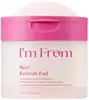
This hydrating treatment pad uses a pre-saturated pad with Niacinamide and Allantoin to hydrate skin and calm redness.
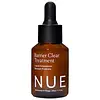
This barrier-repair treatment is formulated around Lactobacillus Ferment to strengthen the skin barrier and calm redness.


What's inside
What's inside
 Key Ingredients
Benefits
Concerns
Ingredients Side-by-side
Water
Skin ConditioningBeta Vulgaris Root Extract
Skin ConditioningGlycerin
Humectant


Dipropylene Glycol
HumectantPropanediol
Solvent
Niacinamide
Smoothing









Erythritol
Humectant
1,2-Hexanediol
Skin Conditioning
Hydroxyacetophenone
Antioxidant
Caprylyl Glycol
Emollient
Daucus Carota Sativa Root Extract
Skin Conditioning
Pyrus Malus Fruit Extract
Skin Conditioning
Polyglyceryl-10 Laurate
Skin Conditioning

Allantoin
Skin Conditioning
Xanthan Gum
EmulsifyingAdenosine
Skin Conditioning
Arginine
Masking
Carbomer
Emulsion StabilisingSodium Hyaluronate
Humectant
Glyceryl Acrylate/Acrylic Acid Copolymer
HumectantMelia Azadirachta Leaf Extract
Skin ConditioningPvm/Ma Copolymer
Emulsion StabilisingMelia Azadirachta Flower Extract
Skin ConditioningHydrolyzed Gardenia Florida Extract
Antioxidant
Dipotassium Glycyrrhizate
Humectant
Betaine
Humectant
Citric Acid
Buffering
Betaine Salicylate
Antimicrobial

Maltodextrin
Absorbent
Panthenol
Skin Conditioning
Ethylhexylglycerin
Skin ConditioningCoccinia Indica Fruit Extract
Skin Conditioning
Corallina Officinalis Extract
Skin Conditioning

Pantolactone
Humectant
Disodium EDTA
ChelatingWater, Beta Vulgaris Root Extract, Glycerin, Dipropylene Glycol, Propanediol, Niacinamide, Erythritol, 1,2-Hexanediol, Hydroxyacetophenone, Caprylyl Glycol, Daucus Carota Sativa Root Extract, Pyrus Malus Fruit Extract, Polyglyceryl-10 Laurate, Allantoin, Xanthan Gum, Adenosine, Arginine, Carbomer, Sodium Hyaluronate, Glyceryl Acrylate/Acrylic Acid Copolymer, Melia Azadirachta Leaf Extract, Pvm/Ma Copolymer, Melia Azadirachta Flower Extract, Hydrolyzed Gardenia Florida Extract, Dipotassium Glycyrrhizate, Betaine, Citric Acid, Betaine Salicylate, Maltodextrin, Panthenol, Ethylhexylglycerin, Coccinia Indica Fruit Extract, Corallina Officinalis Extract, Pantolactone, Disodium EDTA
Water
Skin ConditioningPropanediol
Solvent
Glycerin
Humectant
Pentylene Glycol
Skin Conditioning
Hydroxyacetophenone
Antioxidant
Maltodextrin
Absorbent
Xanthan Gum
EmulsifyingCaprylyl Glycol
Emollient
Ethylhexylglycerin
Skin ConditioningLactobacillus Ferment
Skin Conditioning
Cleome Gynandra Leaf Extract
AntiseborrhoeicSaccharomyces/Copper Ferment
Skin Conditioning
Saccharomyces/Iron Ferment
Skin Conditioning
Saccharomyces/Magnesium Ferment
Saccharomyces/Silicon Ferment
Skin Conditioning
Saccharomyces/Zinc Ferment
Skin Conditioning
Leuconostoc/Radish Root Ferment Filtrate
Antimicrobial
Sodium Hydroxide
BufferingPolylysine
Water, Propanediol, Glycerin, Pentylene Glycol, Hydroxyacetophenone, Maltodextrin, Xanthan Gum, Caprylyl Glycol, Ethylhexylglycerin, Lactobacillus Ferment, Cleome Gynandra Leaf Extract, Saccharomyces/Copper Ferment, Saccharomyces/Iron Ferment, Saccharomyces/Magnesium Ferment, Saccharomyces/Silicon Ferment, Saccharomyces/Zinc Ferment, Leuconostoc/Radish Root Ferment Filtrate, Sodium Hydroxide, Polylysine
Ingredients Explained
These ingredients are found in both products.
Ingredients higher up in an ingredient list are typically present in a larger amount.
Caprylyl Glycol is a humectant, skin conditioner, emollient, and preservative booster derived from either caprylic acid or synthetically created.
Typical use levels vary from 0.3-1% as a preservative booster and go up to 2% to condition skin.
Because it is not a free-fatty acid, this ingredient is fungal acne safe (there's nothing for Malassezia to feed on).
Learn more about Caprylyl GlycolEthylhexylglycerin is created from glycerin. It is a multitasker ingredient that:
The CIR Expert Panel found minimal skin absorption or sensitization of any kind in a safety assessment. Though this ingredient is considered well-tolerated, a small number of cases of allergic dermatitis have been published since 2002. Just be sure to patch test if you are unsure.
Industry-reported use ranges from 8% in rinse-off products and 2% in leave-on formulations.
Learn more about EthylhexylglycerinGlycerin (or glycerol) is a compound naturally found in your skin. It's a powerhouse humectant that pulls water into the stratum corneum.
Topically, glycerin does several things at once:
Your skin makes glycerin on its own (mostly from sebaceous oil breakdown) and shuttles it to your outermost layer of skin, or your epidermis, via aquaporin-3.
Aquaporin-3 is a transporter that is essential for normal skin hydration, elasticity, and repair. Interestingly, mice lacking in AQP3 have dry and less elastic skin that can be fully corrected with glycerin.
This ingredient is non-irritating, plays well with almost every ingredient, and works across all skin types. Typical use is anywhere between 3-10% but can go up to 79% in some leave-on products.
Just know very high concentrations (>40%) can feel tacky in low humidity.
Glycerin is the name for this ingredient in American English. British English uses Glycerol/Glycerine.
Learn more about GlycerinHydroxyacetophenone is a small phenolic molecule that earns its place in a formulas as an antioxidant and preservative booster.
As a phenol, it is able to neutralize free radicals to protect both the product and the skin from oxidative stress.
Though it can't kill microbes on its own, it works as a good supporting agent when combined with other preservatives like Phenoxyethanol or 1,2-Hexanediol.
This ingredient naturally occurs as piceol in Norwegian spruce needles (~0.4-1.1% dry weight and in cloudberries). Though the cosmetic-grade material is synthesized for purity and consistency.
You'll usually see it used at low levels and suppliers recommend up to 1% added to a water phase.
Safety testing was done at concentrations like 0.05% in SPF products and 0.5% in a Human Repeated Insult Patch Test. The safety evidence is assuring; this ingredient is safe for cosmetics in current use and also holds safety status as a food flavoring as well.
An honest caveat: the "soothing" and "anti-inflammatory" claims come mostly from supplier marketing rather than published clinical trials. The Cosmetic Ingredient Review's own literature search found no useful efficacy studies on this ingredient.
So the antioxidant and preservative-boosting roles are the well supported ones while the calming benefit is plausible but thinly evidenced.
Overall, this is a well-tolerated, low-irritation multitasker that quietly helps a formula stay fresh and stable.
Learn more about HydroxyacetophenoneMaltodextrin is a plant-derived carbohydrate made by breaking down starch (usually from corn, potato, or rice). In cosmetic formulas, it's a multitasking absorbent, emulsion stabilizer, and skin conditioner.
This ingredient is mostly used to stabilize emulsions and improve the powdery, non-greasy feel of products (like dry shampoos).
Safety-wise, this ingredient is pretty solid; it's even recognized as a food additive. Both animal and clinical studies found no adverse effects at the levels used in cosmetics.
Industry data shows this ingredient is used up to 45.7% in spray products and up to 33% in powder products.
Learn more about MaltodextrinPropanediol is an all-star ingredient. It softens, hydrates, and smooths the skin.
It’s often used to:
Propanediol is not likely to cause sensitivity and considered safe to use. It is derived from corn or petroleum with a clear color and no scent.
Learn more about PropanediolWater. It's the most common cosmetic ingredient of all. You'll usually see it at the top of ingredient lists, meaning that it makes up the largest part of the product.
So why is it so popular? Water most often acts as a solvent - this means that it helps dissolve other ingredients into the formulation.
You'll also recognize water as that liquid we all need to stay alive. If you see this, drink a glass of water. Remember to stay hydrated!
Learn more about WaterXanthan gum is used as a stabilizer and thickener within cosmetic products. It helps give products a sticky, thick feeling - preventing them from being too runny.
On the technical side of things, xanthan gum is a polysaccharide - a combination consisting of multiple sugar molecules bonded together.
Xanthan gum is a pretty common and great ingredient. It is a natural, non-toxic, non-irritating ingredient that is also commonly used in food products.
Learn more about Xanthan Gum

