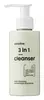
This mild cream cleanser is made to cleanse without leaving your skin tight or dry.
This mild gel cleanser is made to cleanse without leaving your skin tight or dry.


What's inside
What's inside
 Key Ingredients
Benefits
Concerns
Ingredients Side-by-side
Water
Skin ConditioningGossypium Herbaceum Seed Oil
Skin Conditioning




Isohexadecane
EmollientGlycerin
Humectant


Butyrospermum Parkii Butter
Skin Conditioning
Dicaprylyl Carbonate
EmollientPrunus Amygdalus Dulcis Oil
Skin Conditioning
Acrylates/C10-30 Alkyl Acrylate Crosspolymer
Emulsion StabilisingButylene Glycol
Humectant
Salvia Miltiorrhiza Root Extract
Skin ConditioningHydroxyphenyl Propamidobenzoic Acid
Skin ConditioningMacadamia Ternifolia Seed Oil
Emollient
Phospholipids
Skin Conditioning
Stearic Acid
Cleansing
Glycine Soja Sterols
Emollient
Sodium Hydroxide
BufferingPentylene Glycol
Skin Conditioning
Squalane
Emollient
Safflower Oil/Palm Oil Aminopropanediol Esters
Skin Conditioning
Tocopherol
Antioxidant




Ascorbyl Palmitate
Antioxidant
Hydroxyacetophenone
Antioxidant
Caprylyl Glycol
Emollient
1,2-Hexanediol
Skin Conditioning
Water, Gossypium Herbaceum Seed Oil, Isohexadecane, Glycerin, Butyrospermum Parkii Butter, Dicaprylyl Carbonate, Prunus Amygdalus Dulcis Oil, Acrylates/C10-30 Alkyl Acrylate Crosspolymer, Butylene Glycol, Salvia Miltiorrhiza Root Extract, Hydroxyphenyl Propamidobenzoic Acid, Macadamia Ternifolia Seed Oil, Phospholipids, Stearic Acid, Glycine Soja Sterols, Sodium Hydroxide, Pentylene Glycol, Squalane, Safflower Oil/Palm Oil Aminopropanediol Esters, Tocopherol, Ascorbyl Palmitate, Hydroxyacetophenone, Caprylyl Glycol, 1,2-Hexanediol
Water
Skin ConditioningGlycerin
Humectant
Prunus Amygdalus Dulcis Oil
Skin Conditioning
Rosa Damascena Flower Water
Masking
Disodium Cocoyl Glutamate
Cleansing
Coco-Glucoside
Cleansing
Xanthan Gum
Emulsifying1,2-Hexanediol
Skin Conditioning
Citric Acid
Buffering
Sodium Chloride
MaskingCarrageenan
Coconut Acid
Cleansing
O-Cymen-5-Ol
Antimicrobial
Cucumis Sativus Fruit Extract
Emollient
Helianthus Annuus Seed Oil
Emollient
Tocopherol
Antioxidant
Hydrolyzed Rice Protein
Skin ConditioningMaltodextrin
Absorbent
Aloe Barbadensis Leaf Juice Powder
Skin Conditioning
Camellia Sinensis Leaf Extract
Antimicrobial

Hydrogenated Lecithin
Emulsifying
Tocopheryl Acetate
Antioxidant
Alanyl Glutamine
HumectantArginine
Masking
Oligopeptide-177

Phenylalanine
Masking
Potassium Sorbate
Preservative
Sisymbrium Irio Seed Oil
Masking
Water, Glycerin, Prunus Amygdalus Dulcis Oil, Rosa Damascena Flower Water, Disodium Cocoyl Glutamate, Coco-Glucoside, Xanthan Gum, 1,2-Hexanediol, Citric Acid, Sodium Chloride, Carrageenan, Coconut Acid, O-Cymen-5-Ol, Cucumis Sativus Fruit Extract, Helianthus Annuus Seed Oil, Tocopherol, Hydrolyzed Rice Protein, Maltodextrin, Aloe Barbadensis Leaf Juice Powder, Camellia Sinensis Leaf Extract, Hydrogenated Lecithin, Tocopheryl Acetate, Alanyl Glutamine, Arginine, Oligopeptide-177, Phenylalanine, Potassium Sorbate, Sisymbrium Irio Seed Oil
Reviews
Ingredients Explained
These ingredients are found in both products.
Ingredients higher up in an ingredient list are typically present in a larger amount.
1,2-Hexanediol is a synthetic liquid and another multi-functional powerhouse.
It is a:
- Humectant, drawing moisture into the skin
- Emollient, helping to soften skin
- Solvent, dispersing and stabilizing formulas
- Preservative booster, enhancing the antimicrobial activity of other preservatives
Glycerin (or glycerol) is a compound naturally found in your skin. It's a powerhouse humectant that pulls water into the stratum corneum.
Topically, glycerin does several things at once:
Your skin makes glycerin on its own (mostly from sebaceous oil breakdown) and shuttles it to your outermost layer of skin, or your epidermis, via aquaporin-3.
Aquaporin-3 is a transporter that is essential for normal skin hydration, elasticity, and repair. Interestingly, mice lacking in AQP3 have dry and less elastic skin that can be fully corrected with glycerin.
This ingredient is non-irritating, plays well with almost every ingredient, and works across all skin types. Typical use is anywhere between 3-10% but can go up to 79% in some leave-on products.
Just know very high concentrations (>40%) can feel tacky in low humidity.
Glycerin is the name for this ingredient in American English. British English uses Glycerol/Glycerine.
Learn more about GlycerinThis ingredient is also known as sweet almond oil. It is a lightweight, cold-pressed oil from the ripe seeds of the sweet almond tree.
Sweet almond oil is rich in skin-nourishing fatty acids such as oleic acid (55-86%) and linolenic acid (7-35%).
As an emollient, it softens and hydrates skin by forming a thin barrier that locks in moisture.
Clinical studies have found it to be non-irritating and non-sensitizing. The CIR Expert Panel has evaluated the available safety data and concluded it is safe for topical use.
Because of the oleic acid content, this ingredient may not be fungal acne safe.
This ingredient does have a comedogenic rating of 3, but this doesn't mean a formula with this ingredient will clog pores.
Human testing has proved that any finished product with a comedogenic ingredient won't automatically make you break out; it really comes down to concentration, formula, and your skin.
Learn more about Prunus Amygdalus Dulcis OilTocopherol is a fat-soluble antioxidant known as Vitamin E.
You'll find this ingredient in the vast majority of skincare (for good reason). It works to neutralize free radicals, or unstable molecules generated by UV exposure, pollution, and other environmental stressors, before they can cause oxidative damage to your skin cells.
Topically applied tocopherol has been shown to protect against UV damage by ramping up the skin's own natural defense enzymes.
It also acts as a skin conditioning agent; some studies show that regular topical use can improve the skin's water-binding capacity over 2-4 weeks.
This ingredient is especially loved for being a team player. When combined with Vitamin C, the photoprotective effect of both ingredients roughly doubles and the combo also helps reduce UV-induced DNA damage.
This ingredient has some brightening potential but it's more of a prevention ingredient than spot-fader. Cell studies show it can slow down melanin production but it's worth noting that it's not the most powerful brightener out there.
In formulations, it also serves as a stabilizer that helps protect other oxidation-prone ingredients from degrading.
Concentrations usually range from 0.1-1% in most leave-on products.
Learn more about TocopherolWater. It's the most common cosmetic ingredient of all. You'll usually see it at the top of ingredient lists, meaning that it makes up the largest part of the product.
So why is it so popular? Water most often acts as a solvent - this means that it helps dissolve other ingredients into the formulation.
You'll also recognize water as that liquid we all need to stay alive. If you see this, drink a glass of water. Remember to stay hydrated!
Learn more about Water

