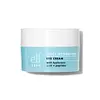
This anti-aging eye moisturizer is formulated around Palmitoyl Tripeptide-1 and Palmitoyl Tetrapeptide-7 to soften the look of wrinkles and hydrate skin.
This anti-aging eye moisturizer is formulated around Retinol and Retinyl Palmitate to soften the look of wrinkles and refine skin texture.


What's inside
What's inside
 Key Ingredients
Benefits
Concerns
Ingredients Side-by-side
Water
Skin ConditioningGlycerin
Humectant


Caprylic/Capric Triglyceride
Masking
Glyceryl Stearate Citrate
Emollient

Jojoba Esters
Emollient
Diisostearyl Malate
EmollientC10-18 Triglycerides
Emollient
Cetearyl Alcohol
Emollient



Silica
Abrasive


Palmitoyl Tripeptide-1
Skin Conditioning


Palmitoyl Tetrapeptide-7
Skin Conditioning
Soluble Collagen
Humectant
Sodium Hyaluronate
Humectant

Tocopherol
Antioxidant



Helianthus Annuus Seed Oil
Emollient
Butylene Glycol
Humectant
1,2-Hexanediol
Skin Conditioning
Potassium Cetyl Phosphate
EmulsifyingPolysorbate 20
Emulsifying
Polysorbate 80
Emulsifying
Isohexadecane
EmollientSodium Acrylate/Sodium Acryloyldimethyl Taurate Copolymer
Emulsion StabilisingCarbomer
Emulsion StabilisingHydroxyacetophenone
Antioxidant
Disodium EDTA
ChelatingWater, Glycerin, Caprylic/Capric Triglyceride, Glyceryl Stearate Citrate, Jojoba Esters, Diisostearyl Malate, C10-18 Triglycerides, Cetearyl Alcohol, Silica, Palmitoyl Tripeptide-1, Palmitoyl Tetrapeptide-7, Soluble Collagen, Sodium Hyaluronate, Tocopherol, Helianthus Annuus Seed Oil, Butylene Glycol, 1,2-Hexanediol, Potassium Cetyl Phosphate, Polysorbate 20, Polysorbate 80, Isohexadecane, Sodium Acrylate/Sodium Acryloyldimethyl Taurate Copolymer, Carbomer, Hydroxyacetophenone, Disodium EDTA
Water
Skin ConditioningGlycerin
Humectant
Ethylhexyl Stearate
Emollient
Retinol
Skin Conditioning


Retinyl Palmitate
Skin Conditioning
Prunus Avium Fruit Extract
Skin ConditioningHelianthus Annuus Seed Oil
Emollient
Tocopheryl Acetate
Antioxidant
Tocopherol
Antioxidant
Hydroxyethyl Acrylate/Sodium Acryloyldimethyl Taurate Copolymer
Emulsion StabilisingPolysorbate 20
Emulsifying
Polysorbate 60
Emulsifying
Phenoxyethanol
Preservative
Ethylhexylglycerin
Skin ConditioningIsohexadecane
EmollientCitric Acid
Buffering
Sodium Benzoate
Masking
Potassium Sorbate
Preservative
Water, Glycerin, Ethylhexyl Stearate, Retinol, Retinyl Palmitate, Prunus Avium Fruit Extract, Helianthus Annuus Seed Oil, Tocopheryl Acetate, Tocopherol, Hydroxyethyl Acrylate/Sodium Acryloyldimethyl Taurate Copolymer, Polysorbate 20, Polysorbate 60, Phenoxyethanol, Ethylhexylglycerin, Isohexadecane, Citric Acid, Sodium Benzoate, Potassium Sorbate
Reviews
Ingredients Explained
These ingredients are found in both products.
Ingredients higher up in an ingredient list are typically present in a larger amount.
Glycerin (or glycerol) is a compound naturally found in your skin. It's a powerhouse humectant that pulls water into the stratum corneum.
Topically, glycerin does several things at once:
Your skin makes glycerin on its own (mostly from sebaceous oil breakdown) and shuttles it to your outermost layer of skin, or your epidermis, via aquaporin-3.
Aquaporin-3 is a transporter that is essential for normal skin hydration, elasticity, and repair. Interestingly, mice lacking in AQP3 have dry and less elastic skin that can be fully corrected with glycerin.
This ingredient is non-irritating, plays well with almost every ingredient, and works across all skin types. Typical use is anywhere between 3-10% but can go up to 79% in some leave-on products.
Just know very high concentrations (>40%) can feel tacky in low humidity.
Glycerin is the name for this ingredient in American English. British English uses Glycerol/Glycerine.
Learn more about GlycerinHelianthus Annuus Seed Oil is a plant oil derived from the seeds of a sunflower.
It is rich in fatty acids, primarily linoleic acid and oleic acid. This gives it emollient and skin conditioning properties.
The reason this ingredient is so effective is because it forms a thin film on the skin that reduces transepidermal water loss (TEWL) while supplying linoleic acid to the stratum corneum to improve barrier strength.
The high linoleic acid content is particularly noteworthy for acne-prone skin.
Research suggests that acne-prone skin tends to be deficient in linoleic acid in sebum. Topical application may help replenish this to support a healthier follicular environment and less comedone-promoting sebum.
One randomized study found sunflower seed oil preserved skin barrier integrity in adult volunteers with and without atopic dermatitis (outperforming olive oil).
This ingredient is well-studied, gentle, and an effective emollient suitable for most skin types.
On fungal acne: This ingredient may not be Fungal acne (Malassezia folliculitis) safe. This is because it contains fatty acids with carbon chain lengths in the C11-C24 range.
Learn more about Helianthus Annuus Seed OilIsohexadecane is added to enhance texture, emulsify, and to help cleanse. It is an isoparrafin. It is a component of petrolatum.
Due to its large size, Isohexadecane is not absorbed by the skin. Instead, it sits on top and acts as an emollient. Emollients help keep your skin soft and smooth by trapping moisture within.
Isohexadecane is often used in products designed to help oily skin. It is lightweight and non-greasy while helping to moisturize. When mixed with silicones, it gives a product a silky feel.
Learn more about IsohexadecanePolysorbate 20 is a gentle, water-soluble emulsifier and mild surfactant. It stops oil and water from separating to keep your formulas blended and stable.
It also acts as a mild penetration enhancer by helping active ingredients absorb slightly better.
The common safety discussion around this ingredient involves a manufacturing byproduct called 1,4-dioxane.
Trace amounts can form during production but the EU's Scientific Committee on Consumer Safety has concluded that levels at/below 10 ppm in finished products are safe (commercial products consistently fall within acceptable margins).
True allergic reactions are uncommon and the CIR Expert Panel has confirmed this ingredient to be safe as used in cosmetics.
Because it is derived from lauric acid, it may not be fungal acne safe.
Learn more about Polysorbate 20Tocopherol is a fat-soluble antioxidant known as Vitamin E.
You'll find this ingredient in the vast majority of skincare (for good reason). It works to neutralize free radicals, or unstable molecules generated by UV exposure, pollution, and other environmental stressors, before they can cause oxidative damage to your skin cells.
Topically applied tocopherol has been shown to protect against UV damage by ramping up the skin's own natural defense enzymes.
It also acts as a skin conditioning agent; some studies show that regular topical use can improve the skin's water-binding capacity over 2-4 weeks.
This ingredient is especially loved for being a team player. When combined with Vitamin C, the photoprotective effect of both ingredients roughly doubles and the combo also helps reduce UV-induced DNA damage.
This ingredient has some brightening potential but it's more of a prevention ingredient than spot-fader. Cell studies show it can slow down melanin production but it's worth noting that it's not the most powerful brightener out there.
In formulations, it also serves as a stabilizer that helps protect other oxidation-prone ingredients from degrading.
Concentrations usually range from 0.1-1% in most leave-on products.
Learn more about TocopherolWater. It's the most common cosmetic ingredient of all. You'll usually see it at the top of ingredient lists, meaning that it makes up the largest part of the product.
So why is it so popular? Water most often acts as a solvent - this means that it helps dissolve other ingredients into the formulation.
You'll also recognize water as that liquid we all need to stay alive. If you see this, drink a glass of water. Remember to stay hydrated!
Learn more about Water

