

What's inside
What's inside
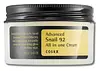 Key Ingredients
Benefits
Concerns
No concerns
Ingredients Side-by-side
Snail Secretion Filtrate
Skin Conditioning





Betaine
Humectant
Caprylic/Capric Triglyceride
Masking
Butylene Glycol
Humectant
Cetearyl Olivate

Sorbitan Olivate
Emulsifying
Cetearyl Alcohol
Emollient


Carbomer
Emulsion StabilisingEthyl Hexanediol
SolventPhenoxyethanol
Preservative
Arginine
Masking
Dimethicone
Emollient
Sodium Polyacrylate
Absorbent
Sodium Hyaluronate
Humectant

Allantoin
Skin Conditioning
Palmitic Acid
Emollient
Panthenol
Skin Conditioning
Xanthan Gum
EmulsifyingStearic Acid
Cleansing
Adenosine
Skin Conditioning
Water
Skin ConditioningMyristic Acid
Cleansing
Snail Secretion Filtrate, Betaine, Caprylic/Capric Triglyceride, Butylene Glycol, Cetearyl Olivate, Sorbitan Olivate, Cetearyl Alcohol, Carbomer, Ethyl Hexanediol, Phenoxyethanol, Arginine, Dimethicone, Sodium Polyacrylate, Sodium Hyaluronate, Allantoin, Palmitic Acid, Panthenol, Xanthan Gum, Stearic Acid, Adenosine, Water, Myristic Acid
Water
Skin ConditioningGlycerin
Humectant
Niacinamide
Smoothing






1,2-Hexanediol
Skin Conditioning
Propanediol
Solvent
Arbutin
Antioxidant

Betaine
Humectant
Glycyrrhiza Glabra Root Extract
Bleaching
3-O-Ethyl Ascorbic Acid
Skin Conditioning
Ethylhexylglycerin
Skin ConditioningCarbomer
Emulsion StabilisingTromethamine
BufferingTrisodium Ethylenediamine Disuccinate
Theobroma Cacao Seed Extract
Antioxidant
Sodium Hyaluronate
Humectant
Dextrin
AbsorbentTocopherol
Antioxidant
Reviews
Ingredients Explained
These ingredients are found in both products.
Ingredients higher up in an ingredient list are typically present in a larger amount.
Betaine is a humectant. Like hyaluronic acid, it helps attract and retain moisture in the skin. It’s known for being gentle and for helping the skin maintain balanced hydration.
Betaine is mainly used to improve hydration and support calmer skin. It helps skin cells regulate water balance because it functions as an osmolyte.
Some studies suggest betaine may support making skin tone more even.
Fun fact: Betaine naturally exists in the skin and the body. In cosmetic products, it can be either plant-derived (most commonly from sugar beets) or synthetically produced for consistency and stability.
Betaine is also known as trimethylglycine.
Learn more about BetaineCarbomer is a high-molecular weight polymer of acrylic acid. It is used to form gels and thicken formulas.
Due to its large molecular size, carbomer has minimal skin penetration and is considered an inert ingredient.
A high amount of carbomer can cause pilling or balling up of products. Don't worry, most products contain 1% or less of carbomer.
Learn more about CarbomerSodium Hyaluronate is the salt form of hyaluronic acid. It is a long sugar chain that is naturally found in your skin, joints, and connective tissue that maintains hydration and elasticity.
In skincare, it works as a humectant. It pulls water from the environment and deeper layers of skin and binds it to the surface.
Interestingly, the size of the molecule affects its behavior:
Some clinical evidence links low molecular weight versions to improved wrinkle depth, elasticity, anti-inflammatory effects, and barrier repair.
Many serums use a blend of both weights so you can get surface hydration plus longer-lasting and deeper effects.
You'll typically see concentrations between 0.1-2% for this ingredient.
Learn more about Sodium HyaluronateWater. It's the most common cosmetic ingredient of all. You'll usually see it at the top of ingredient lists, meaning that it makes up the largest part of the product.
So why is it so popular? Water most often acts as a solvent - this means that it helps dissolve other ingredients into the formulation.
You'll also recognize water as that liquid we all need to stay alive. If you see this, drink a glass of water. Remember to stay hydrated!
Learn more about Water
